
Nigerian Museum Revamp Demands Return of Looted Treasures
The National Museum in Lagos has transformed itself into one of the most talked-about cultural spaces in West Africa this season — not just for its gleaming white walls and Afrobeats soundtrack, but for the pointed message it sends to museums across Europe and America. A renovated gallery now invites visitors to touch 16th-century artefacts and snap unrestricted photos, while e
The National Museum in Lagos has transformed itself into one of the most talked-about cultural spaces in West Africa this season — not just for its gleaming white walls and Afrobeats soundtrack, but for the pointed message it sends to museums across Europe and America. A renovated gallery now invites visitors to touch 16th-century artefacts and snap unrestricted photos, while empty display cases carry a direct challenge in Nigerian Pidgin: "British museum, how far??"
Nigerian Museum Revamp Amplifies Calls for Return of Looted Treasures
Lagos, Nigeria — The National Museum Lagos reopened its completely renovated gallery, Echoes of the Past, in April 2026 after a major transformation sponsored by IHS Nigeria in partnership with the National Commission for Museums and Monuments. Minister for Arts, Culture, Tourism and the Creative Economy Hannatu Musawa officially commissioned the space, marking a new chapter for one of Nigeria's most important cultural institutions.
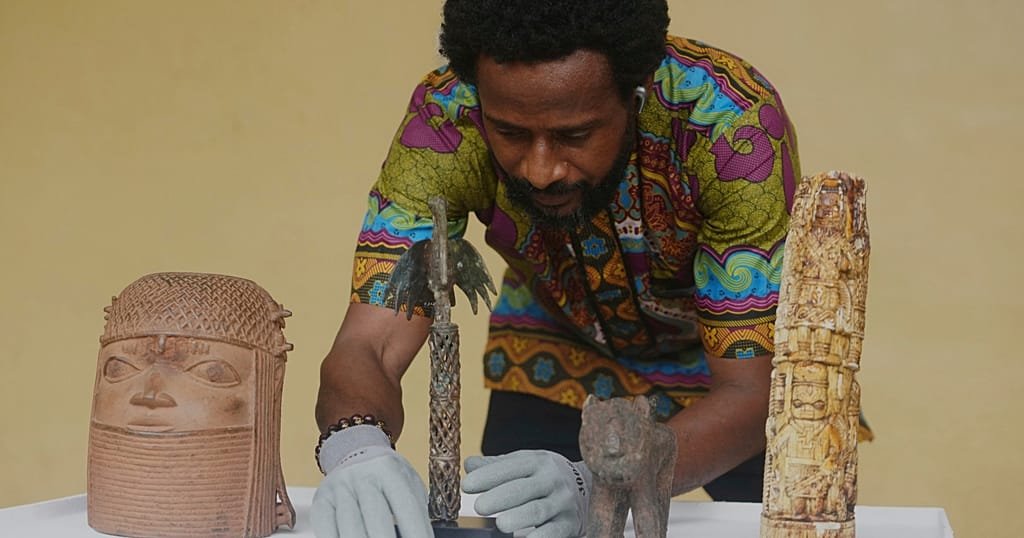
Interior designer Tinuke Odunfa created the immersive layout with white walls, low ambient lighting, and artefacts displayed in glass cases arranged chronologically from the oldest to the newest. Afrobeats plays softly through overhead speakers as visitors move among 5th-century terracotta pieces from the indigenous Nok people and two large engraved 16th-century elephant tusks — which guests are now invited to touch gently.
A Museum That Lets You Touch History
The most striking change is how visitors now experience the collection. Selected wood and metal artefacts are laid out so guests can feel their texture — reversing the usual museum rule against handling objects. Head of exhibition Olusegun Adeleye, 51, said the arrangement allows people to truly connect with the pieces on display.
"Everything was intentional in terms of how the space should be experienced, in terms of the colours, how the space leads you," Odunfa told AFP. The gallery also allows unrestricted photography throughout its Instagram-ready spaces, drawing a wave of schoolchildren, young adults, and content creators who share their visits online.
Curator Nkechi Adedeji said the renovated gallery has been drawing more visitors since April. "They come here, do content and before you know it, it is all over the place," she said. "Youths are coming in droves now." Oyin Isioye, a 25-year-old photographer visiting the museum for the first time, said: "I love the way the artefacts are displayed. I learned a lot of things — where the artefacts are from, what they represent."
Empty Cases, Loud Message: The Repatriation Demand
In one corner of the gallery, three empty display cases contain a sheet of paper bearing the inscription "British museum, how far??" — Nigerian Pidgin for "what's up?" The installation sends a clear message to foreign museums that Nigeria is ready to pursue the full return of its looted artefacts.
Western museums, including those in Britain, the Netherlands and Germany, have returned several hundred artefacts in recent years, but countless more remain in galleries across Europe and America. The Netherlands returned 119 artefacts directly to the Oba's Palace in Benin, while Germany transferred over 1,000 pieces. The British Museum holds one of the largest collections but faces legal barriers under the 1963 British Museum Act, often discussing loans rather than permanent returns.
"This renovation shows that we can protect and preserve our objects ourselves, we do not need any other country to do it for us," Adedeji said. The remodelling, funded by a private entity, also aimed at creating more display areas for the collection, the bulk of which are kept in storage.
The MOWAA Project and Benin City's Museum Revolution
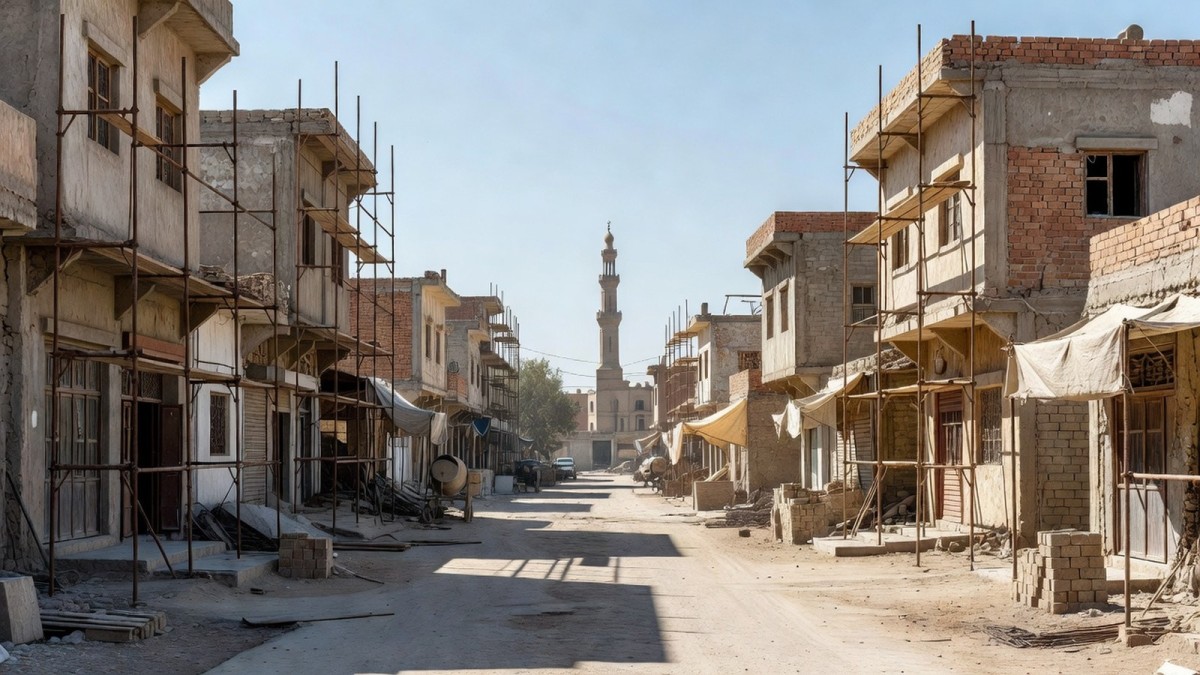
Parallel to the Lagos renovation, the Museum of West African Art in Benin City, designed by Adjaye Associates using rammed-earth construction, is preparing to house returned Benin Bronzes looted during the 1897 British punitive expedition. The MOWAA Institute building has been completed and features in architecture discussions, though the full museum opening and land ownership questions remain unresolved between state authorities, the Oba of Benin's palace, and federal bodies.
What happens in Lagos and Benin City ripples across West Africa. The renovated National Museum demonstrates that Nigeria can present and protect its heritage at international standards. More projects are in the works — another gallery at the Lagos museum has been shut for renovation, and Nigerian authorities are seeking partners to support future upgrades in preparation for more repatriated artefacts.
West Africa's Cultural Institutions Rising
Across the region, museums are asserting their role as custodians of African heritage. The renovation at the National Museum Lagos comes at a time when cultural institutions from Dakar to Accra are positioning themselves as vibrant spaces that connect the continent's past with its creative future.
In Senegal, the Museum of Black Civilisations in Dakar houses collections that trace continental histories and cultural connections. The Saint-Louis Jazz Festival and the Dakar Biennale draw international audiences and treat heritage as living material rather than frozen display. The music of Youssou N'Dour and Baaba Maal — Senegal's global musical ambassadors — demonstrates how cultural expressions from the continent travel the world while staying rooted in their communities.
The Lagos renovation echoes a broader cultural renaissance across Africa. Film festivals such as FESPACO in Burkina Faso and MASA in Abidjan showcase the continent's storytelling traditions. The vibrant film industries of Nollywood and Ghallywood continue to reshape how African stories are told and consumed globally. Music genres from Mbalax to Amapiano, from Soukous to Afrobeats, carry cultural narratives across borders in ways that traditional museum displays are only beginning to match.
What This Means for African Audiences and Tourism
The shift toward interactive, visitor-friendly museums has direct implications for cultural tourism in Africa. When young photographers, content creators, and students enter these spaces and share their experiences online, they create a new wave of interest in African heritage. The National Museum Lagos is already benefiting from this — its Instagram-ready design and hands-on approach are drawing visitors who might never have stepped into a museum before.
For African consumers of culture, this matters deeply. The ability to see — and in some cases touch — artefacts that tell the continent's story builds cultural confidence. When school groups and young adults like Oyin Isioye encounter their history on their own terms, they develop a connection to heritage that galleries behind glass walls could never provide.
Looking Ahead: What to Watch For
More repatriations from European museums are expected in the coming months and years. Nigeria is actively seeking international partners to support additional museum upgrades. The Lagos renovation has set a new standard, and other Nigerian sites are scheduled for similar transformations.
In Benin City, the resolution of ownership questions around MOWAA will determine how returned Benin Bronzes are housed and displayed. The success of the Lagos model — combining thoughtful design with clear political messaging — offers a template that other African nations may follow as they pursue restitution and build world-class cultural institutions at home.
When any West African museum succeeds in making heritage accessible and meaningful, the entire region benefits. The Lagos gallery proves that African institutions can preserve treasures, attract visitors, and keep the conversation about restitution moving forward — all at the same time.
By Amara Diop, Staff Writer
This article was produced with AI-assisted research and editorial support. Reporting is based on sources cited in the article.
What's Your Reaction?
 Like
0
Like
0
 Dislike
0
Dislike
0
 Love
0
Love
0
 Funny
0
Funny
0
 Wow
0
Wow
0
 Sad
0
Sad
0
 Angry
0
Angry
0

West Africa/Sahel Correspondent at Global1.News. Dakar-based journalist covering politics, security, climate, and development across Francophone and Anglophone West Africa. Tells the stories of a region undergoing profound transformation.













Comments (0)