
Netanyahu Vows Israeli Troops Remain in Southern Lebanon as Occupation Fears Mount
Benjamin Netanyahu's declaration that Israeli forces will remain in southern Lebanon "for as long as necessary" has plunged the fragile ceasefire into uncertainty and reignited fears of a permanent Israeli occupation. The decision, announced as US-Iran talks proceed in Switzerland, directly tests whether Washington can translate its interim understanding with Tehran into territ
Benjamin Netanyahu's declaration that Israeli forces will remain in southern Lebanon "for as long as necessary" has plunged the fragile ceasefire into uncertainty and reignited fears of a permanent Israeli occupation. The decision, announced as US-Iran talks proceed in Switzerland, directly tests whether Washington can translate its interim understanding with Tehran into territorial de-escalation on the ground.
Netanyahu Vows Israeli Troops Remain in Southern Lebanon as Occupation Fears Mount
Beirut, Lebanon – June 22, 2026 — Israeli Prime Minister Benjamin Netanyahu confirmed on June 21 that the Israel Defense Forces would maintain their presence in a designated security zone inside southern Lebanon, linking the open-ended deployment directly to the absence of a verified Hezbollah withdrawal north of the Litani River. The announcement came after Hezbollah and Israel agreed to a ceasefire on June 19, though intermittent clashes and cross-border fire have continued.
Netanyahu's Declaration and the Expanded Security Zone
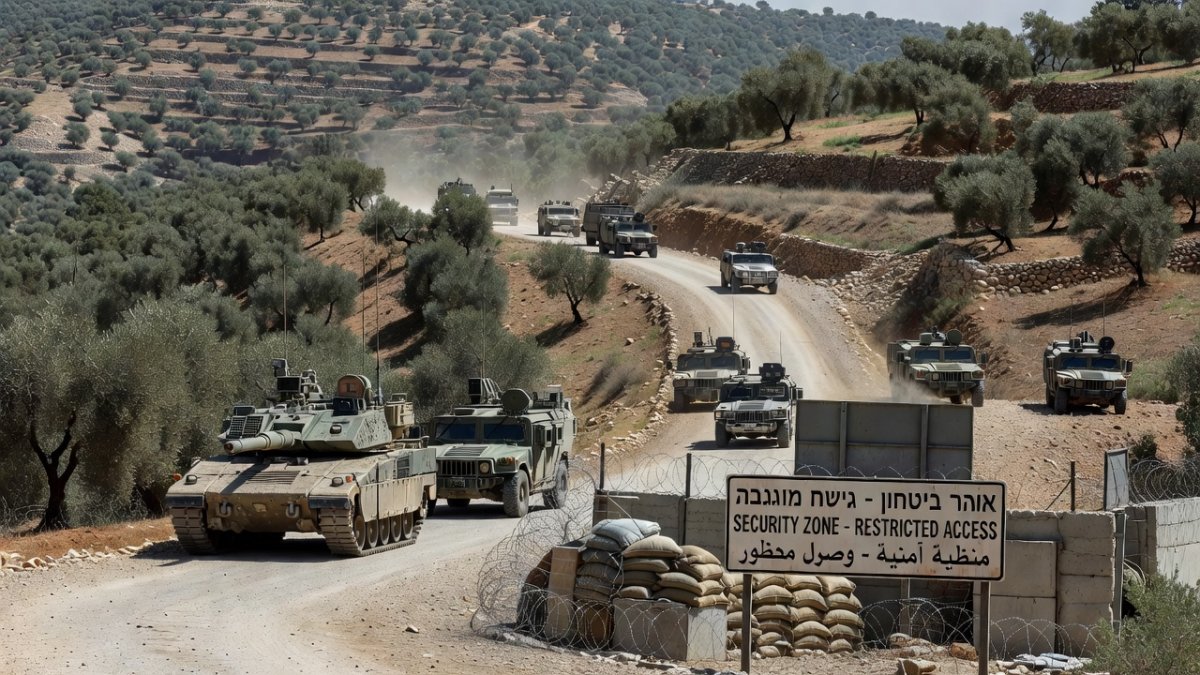
Speaking on June 20, Netanyahu stated that Israeli troops would guarantee the safety of northern Israeli communities "for as long as necessary," drawing a direct link between the IDF deployment and the absence of a verified Hezbollah withdrawal north of the Litani River. The Israel Defense Forces simultaneously published an updated map showing control over roughly 230 square miles (600 square kilometers) inside Lebanese territory — a zone extending approximately 10 kilometers from the border.
The newly mapped area now incorporates the Tebnit and Ali al-Taher ridgelines, strategic high ground that has emerged as a dangerous flashpoint in recent weeks. Israeli commanders have stated they retain "full freedom of action" inside the security zone, permitting patrols, drone surveillance, and targeted strikes without prior coordination with the Lebanese Armed Forces or UN peacekeepers.
Lebanon's Sovereignty Warning
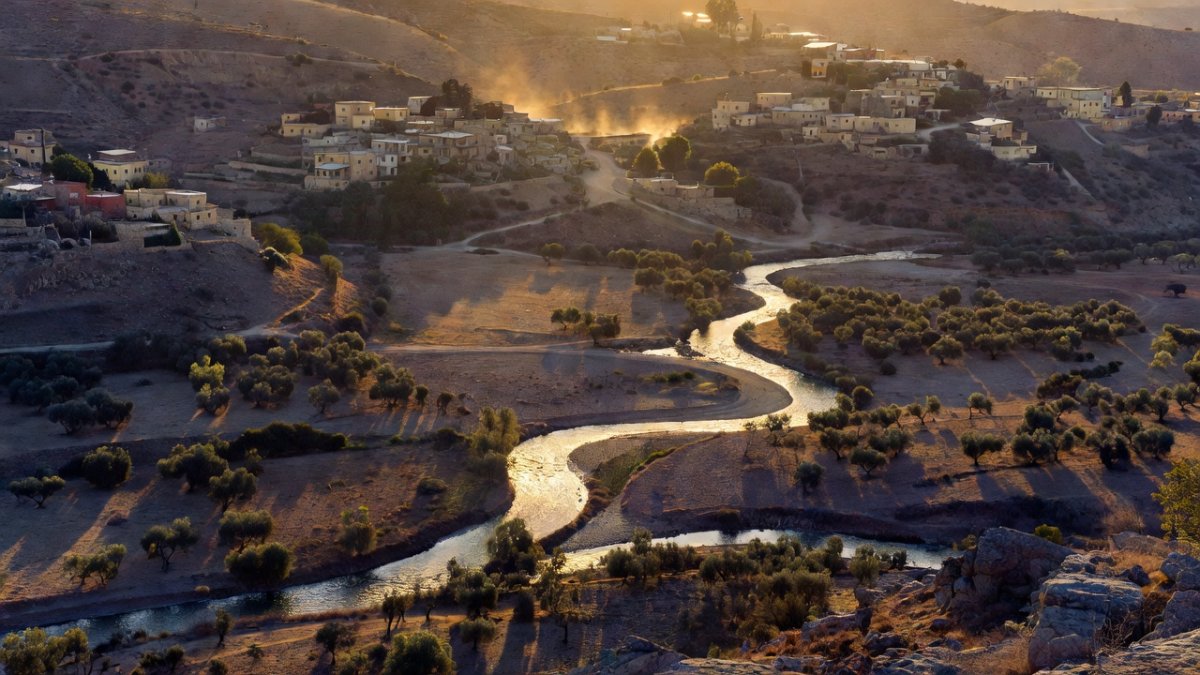
Lebanese Deputy Prime Minister Tarek Metri issued a stark warning that the prolonged Israeli military presence risks converting a temporary security arrangement into permanent occupation. Metri expressed hope that phased Israeli withdrawal would feature prominently in upcoming negotiations under US auspices, noting that any indefinite deployment violates Lebanese sovereignty and undermines the authority of the central government in Beirut, which remains severely weakened by years of political paralysis and economic collapse.
Historical Context and UN Resolution 1701
United Nations Security Council Resolution 1701, adopted after the 2006 Israel-Hezbollah war, explicitly calls for Israeli withdrawal from all Lebanese territory and the disarmament of Hezbollah south of the Litani River, located roughly 29 kilometers from the border. The resolution also mandates that the area between the Litani and the Blue Line — the UN-demarcated boundary — be free of any armed personnel or weapons other than those of the Lebanese state and the UN Interim Force in Lebanon (UNIFIL).
Israel's earlier 18-year occupation of southern Lebanon, which ended in 2000, demonstrated how security zones can harden into de facto control, fueling local resentment and strengthening Hezbollah's narrative of resistance. The current security zone's breadth — at 10 km deep compared to the Litani's 29 km — revives memories of that period among Lebanese communities still reeling from mass displacement.
The US-Iran Dimension: Lebanon as a Bargaining Chip
The Israel-Lebanon standoff is unfolding against the backdrop of high-stakes US-Iran negotiations at Switzerland's Burgenstock resort. US Vice President JD Vance, speaking during the talks, credited President Donald Trump with advancing the Lebanon ceasefire, stating that Trump has done more to stop the Lebanon conflict than "any government in the world." The interim US-Iran memorandum of understanding, signed in Islamabad, includes a 60-day phased Israeli withdrawal from Lebanon as part of the broader framework.
Iran has informed Hezbollah that Israeli withdrawal from Lebanon is now linked to progress in the nuclear and sanctions tracks, raising the stakes for all parties. Tehran's decision to re-close the Strait of Hormuz, citing Israeli strikes on Lebanon, illustrates how the southern Lebanese front has become a key pressure point in the wider confrontation. US intelligence agencies have reportedly warned the Trump administration that Netanyahu may take actions designed to undermine the Iran peace deal, according to a June 2026 assessment.
Regional Dynamics and Strategic Calculus
For Netanyahu, the security zone serves multiple purposes: preventing Hezbollah rocket fire on northern Israeli communities, maintaining military leverage ahead of any broader diplomatic settlement, and projecting resolve domestically. Hezbollah, meanwhile, aims to portray any Israeli presence as an occupation, thereby justifying continued armament and political influence inside Lebanon's fragile sectarian system.
Gulf Arab states, particularly Saudi Arabia and the UAE, watch the situation with growing unease. Any escalation threatens energy markets at a time when Gulf sovereign wealth funds — estimated at over US$3 trillion collectively — are pursuing economic diversification under Vision 2030 and similar frameworks. Turkey has offered mediation but remains wary of expanded Israeli control near its southern periphery.
Regional Implications
If the 60-day withdrawal timeline in the Islamabad MOU is implemented, it could reinforce Arab-Israeli normalization momentum and ease pressure on energy routes through the Eastern Mediterranean and Strait of Hormuz. Failure to reach a mutually acceptable security arrangement, however, risks renewed escalation, further displacement of Lebanese civilians, and a return to the cycle of low-intensity conflict that has defined the Blue Line since 2006.
The next weeks will reveal whether Netanyahu's open-ended security zone serves as a temporary deterrent while a broader agreement takes shape — or whether it becomes the foundation of a new, more entrenched occupation that reshapes the Israeli-Lebanese border for years to come. For the more than one million displaced Lebanese civilians, and the communities of northern Israel living under rocket threat, the answer cannot come soon enough.
By Malik Hassan, Staff Writer
This article was produced with AI-assisted research and editorial support. Reporting is based on sources cited in the article.
What's Your Reaction?
 Like
0
Like
0
 Dislike
0
Dislike
0
 Love
0
Love
0
 Funny
0
Funny
0
 Wow
0
Wow
0
 Sad
0
Sad
0
 Angry
0
Angry
0

Middle East Correspondent at Global1.News. Based in Beirut, covering politics, conflict, energy, and society across the Middle East. Brings context and depth to a region often reduced to headlines.












Comments (0)