
China Reaffirms Rejection of 2016 South China Sea Arbitration Award
China Reaffirms Rejection of 2016 South China Sea Arbitration Award In a recent CGTN report titled "China reiterates rejection of 2016 'South China Sea Arbitration award'," Beijing's position is presented as unchanged, underscoring that the 2016 ruling by the Permanent Court of Arbitration holds no legal weight for China. The video highlights official statements from the Chines
Historical Context from the 1947 Map to Present Claims
China's maritime assertions in the South China Sea trace directly to the 1947 nine-dash line map issued by the Republic of China government. This demarcation encompassed the majority of the sea's features, including the Spratly Islands, Paracel Islands, and Scarborough Shoal. Successive Chinese administrations have maintained that these lines reflect long-standing sovereignty supported by centuries of navigation, fishing, and administrative records.
Following the establishment of the People's Republic, these claims were incorporated into official maps and diplomatic notes. The 1982 United Nations Convention on the Law of the Sea introduced exclusive economic zones that created overlapping assertions with neighboring states, yet China has consistently argued that historical rights supersede the convention's provisions in this specific geography.
The 2016 Permanent Court of Arbitration Ruling and Sustained Rejection
The 2016 award addressed a case brought by the Philippines concerning features such as Second Thomas Shoal and Scarborough Shoal. The tribunal concluded that China's nine-dash line claims exceeded entitlements under the convention and that several features were not islands capable of generating extended maritime zones. Chinese officials, including spokespersons from the Ministry of Foreign Affairs, immediately declared the proceedings invalid because the Philippines had not exhausted bilateral channels and because China had made a prior declaration excluding maritime boundary disputes from compulsory arbitration.
Subsequent white papers issued by the Chinese government have reiterated that the award is null and void. This stance aligns with the principle that sovereignty questions cannot be adjudicated without the consent of all parties. No timeline for acceptance has been suggested, and enforcement language remains absent from official communications.

ASEAN Claimant Positions and Regional Interactions
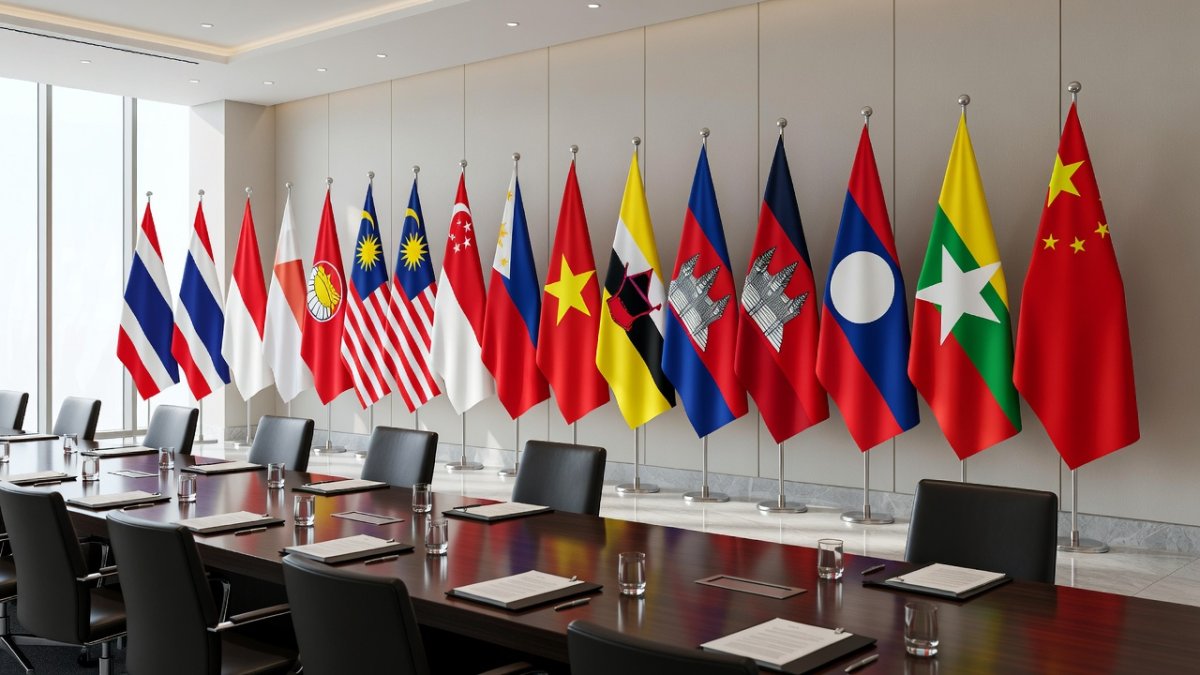
Among ASEAN members, the Philippines has pursued legal and diplomatic avenues while Vietnam maintains overlapping claims around the Paracel and Spratly Islands. Malaysia and Brunei assert rights near their respective coastlines that intersect with the nine-dash line. These differences have prevented unified ASEAN positions on the arbitration outcome.
China has engaged each state bilaterally while advancing multilateral talks on a Code of Conduct. Negotiations have progressed through successive drafts, yet core disagreements persist over whether the code should be legally binding and how existing claims are referenced. Recent joint patrols and fishery agreements with select ASEAN partners illustrate efforts to manage tensions without conceding legal ground.
Recent Military and Diplomatic Developments
China has continued infrastructure development on features it controls in the Spratly and Paracel Islands, including airstrips and port facilities. These activities are framed domestically as necessary for search-and-rescue and environmental monitoring. Joint naval exercises with regional partners have increased in frequency, often conducted near the Paracel Islands and involving live-fire components.
Diplomatic activity centers on the Ministry of Foreign Affairs and the Ministry of National Defense, which coordinate responses to perceived encroachments. At Second Thomas Shoal, periodic resupply missions by Philippine vessels have prompted Chinese coast guard deployments, yet both sides have avoided direct kinetic confrontation through established hotlines.
US-China Strategic Competition and Broader Implications
The United States maintains freedom-of-navigation operations that pass near contested features, arguing these uphold international maritime order. China views such transits as attempts to internationalize the dispute and undermine its regional influence. This dynamic intersects with Beijing's Dual Circulation strategy, which prioritizes technological self-reliance and secure sea lanes for energy imports.
Second-order effects extend to the Global South, where many states observe the dispute for precedents on arbitration versus bilateral negotiation. ASEAN centrality remains a stated Chinese objective, yet external involvement risks diluting that framework. For the European Union, supply-chain stability tied to South China Sea routes adds indirect stakes without direct territorial involvement.
Strategic Outlook for Maritime Order
China's rejection of the 2016 award continues to shape interactions across the South China Sea. The emphasis on historical rights and bilateral management reflects a preference for outcomes that preserve flexibility while advancing infrastructure and presence. Regional stability hinges on sustained communication channels and incremental progress on the Code of Conduct, even as external naval activity persists.
Over the longer term, the interplay between China's base development, ASEAN cohesion efforts, and great-power competition will determine whether overlapping claims evolve into managed coexistence or renewed friction. Beijing's approach prioritizes preventing any single ruling from constraining its strategic options in waters vital to its economic and security interests. By Prof. Marcus Chen, Staff Writer
This article was produced with AI-assisted research and editorial support. Reporting is based on sources cited in the article.
What's Your Reaction?
 Like
0
Like
0
 Dislike
0
Dislike
0
 Love
0
Love
0
 Funny
0
Funny
0
 Wow
0
Wow
0
 Sad
0
Sad
0
 Angry
0
Angry
0

World Politics Analyst at Global1.News. Based in Beijing, covering US-China relations, global trade, and geopolitical strategy. Brings deep analytical perspective to the power dynamics shaping international affairs.















Comments (0)