
Turkey's Institutional Reforms After July 15 Coup Attempt
Reflections from Ankara on a Defining Moment Turkish Vice President Cevdet Yilmaz addressed a symposium organized by the Foundation for Political, Economic and Social Research (SETA) in Ankara, underscoring how state institutions absorbed lessons from the July 15, 2016 coup attempt. The event gathered academics, researchers, jurists, and journalists to examine the decade that f
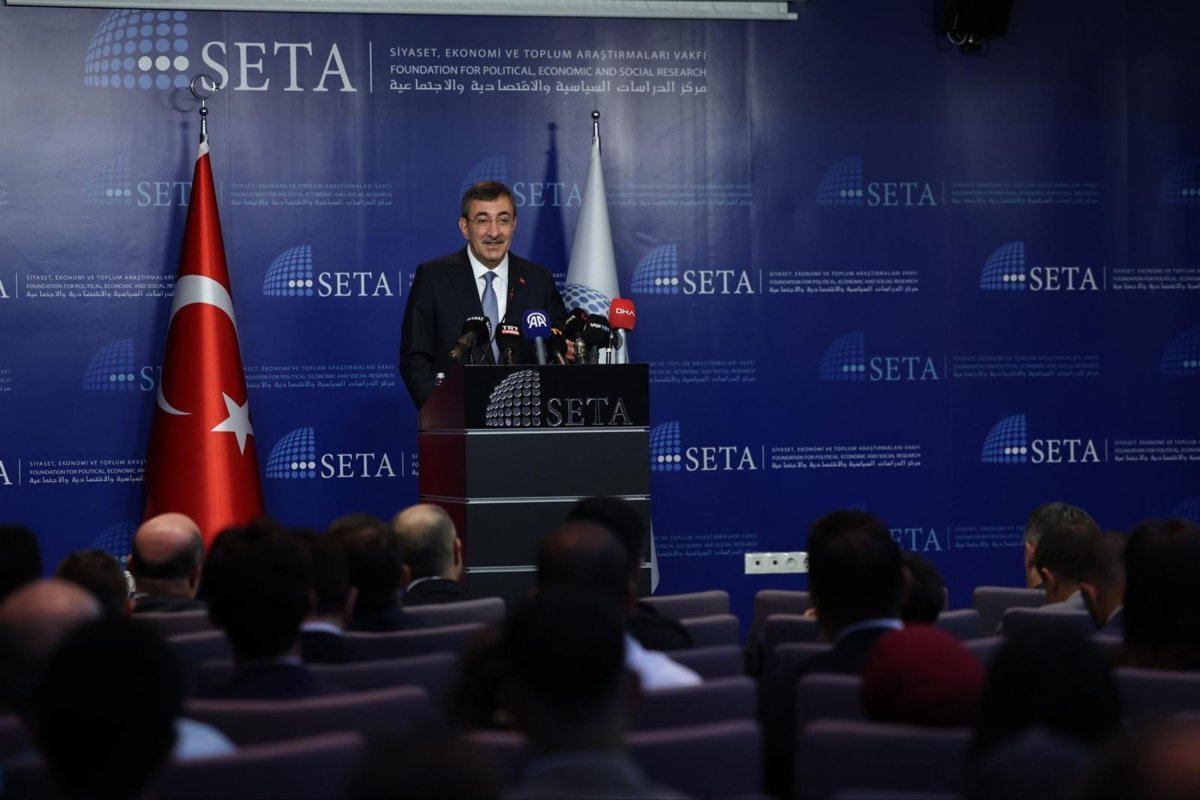
Reflections from Ankara on a Defining Moment
Turkish Vice President Cevdet Yilmaz addressed a symposium organized by the Foundation for Political, Economic and Social Research (SETA) in Ankara, underscoring how state institutions absorbed lessons from the July 15, 2016 coup attempt. The event gathered academics, researchers, jurists, and journalists to examine the decade that followed. Yilmaz, who served as deputy chair of the Justice and Development Party at the time, described the period as one of comprehensive restructuring rather than immediate completion of all changes.
Strengthening Institutional Capacity
Yilmaz noted that institutions gained stronger capacity to address a shifting security environment and emerging threats. He stressed that correctly assessing major incidents helps build social conscience, and that explaining events accurately matters as much as remembering them. Reforms touched security structures, public administration, intelligence coordination, and the judiciary, with decision-making processes becoming faster and coordination among agencies improving. These steps, he indicated, enhanced the state's ability to maneuver during crises, though full realization of benefits continues to unfold gradually.
Cross-Border Operations and Security Doctrine
The execution of cross-border operations against terrorist groups soon after the coup attempt stands as a clear illustration of renewed effectiveness, according to Yilmaz. Some Western arguments at the time suggested that purges would weaken institutions, yet the removal of FETO infiltrators allowed the military and other bodies to focus more directly on core responsibilities. Operations in Syria and Iraq, as well as areas of Northern Iraq, reflect Turkey's evolving security doctrine aimed at addressing threats near its borders. This approach ties into broader regional power projection, where Ankara seeks to shape outcomes rather than react solely to events.
Remaining Vigilant Against FETO Networks
Although FETO has been significantly diminished inside Turkey, Yilmaz emphasized the need for continued alertness against similar networks. Turkey retains responsibility to confront the group internationally, as its structures persist in various countries. This international dimension connects to FETO/Gulenist networks operating across Europe, the United States, and parts of the Middle East, requiring sustained diplomatic and legal efforts. The strategic calculus here involves preventing any resurgence that could again threaten state institutions or influence foreign perceptions of Turkish stability.
NATO Dynamics and Relations with the West
Turkey's post-coup trajectory intersects with its NATO membership and relations with Western partners. Initial Western skepticism regarding institutional purges gave way to recognition that the armed forces could perform core duties more effectively once infiltrators were removed. At the same time, Ankara continues to navigate alliance expectations while pursuing independent security measures. This balance affects joint operations, intelligence sharing, and defense procurement, particularly as Turkey advances its domestic defense industry capabilities to reduce external dependencies.
Regional Power Projection and Great Power Competition
Turkey's security reforms occur within a Middle East marked by competition among regional actors including Iran, Saudi Arabia, the UAE, Egypt, and Greece. Cross-border actions in Syria and Iraq demonstrate Ankara's determination to limit threats from instability spilling over its frontiers. These moves also position Turkey amid wider great power rivalries, where influence in energy routes, migration management, and counterterrorism shapes long-term leverage. The institutional resilience Yilmaz described supports a more assertive posture, yet it requires careful calibration to avoid overextension or unnecessary friction with neighbors.
Strategic Calculus Behind the Reforms
The reforms under President Recep Tayyip Erdogan's leadership reflect a vision that aligns state structures with future requirements rather than solely past events. Faster coordination and greater maneuverability during crises provide practical advantages in an unpredictable region. However, Yilmaz's remarks suggest these gains represent ongoing processes rather than finished achievements. Sustained attention to both domestic cohesion and international partnerships will determine how effectively Turkey translates institutional changes into lasting strategic gains across the Middle East and within NATO frameworks.
By Malik Hassan, Staff Writer
This article was produced with AI-assisted research and editorial support. Reporting is based on sources cited in the article.
What's Your Reaction?
 Like
0
Like
0
 Dislike
0
Dislike
0
 Love
0
Love
0
 Funny
0
Funny
0
 Wow
0
Wow
0
 Sad
0
Sad
0
 Angry
0
Angry
0

India/South Asia Correspondent at Global1.News. Analytical voice with a background in science and health journalism. Based in New Delhi, covering Indian politics, education, healthcare, technology, and policy. Breaks down complex data into clear, actionable reporting.










Comments (0)