
US-Iran Talks Yield 60-Day Roadmap; Israel Objects
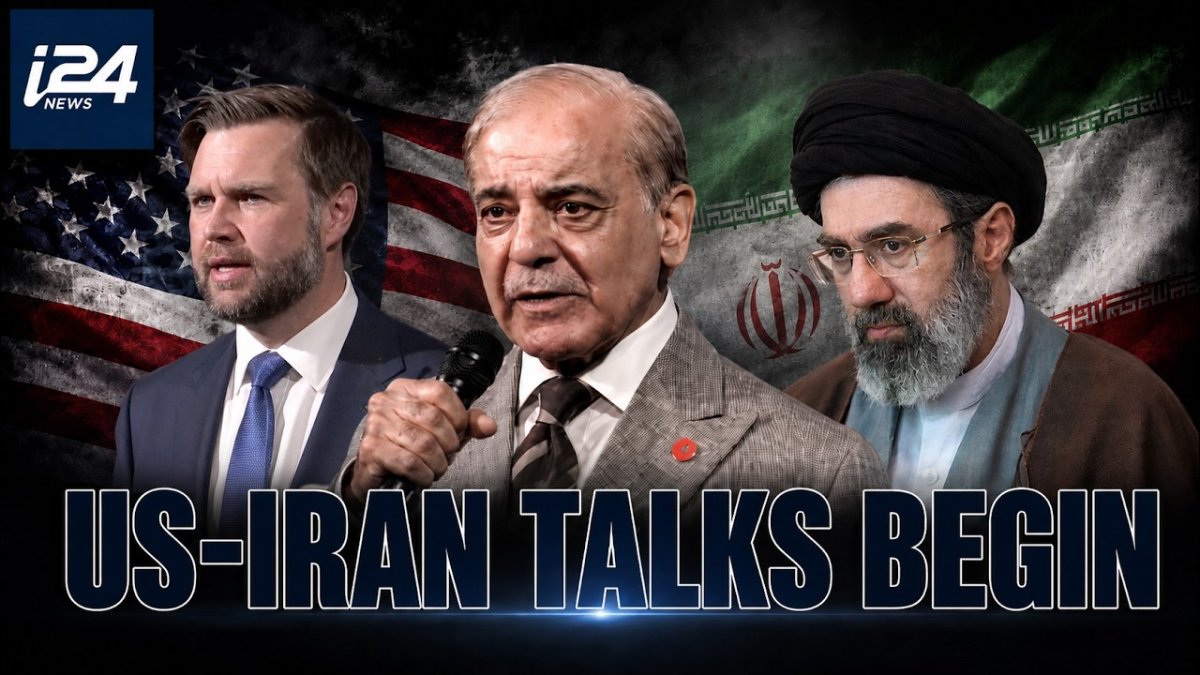
In a recent i24NEWS report covering the opening of US-Iran negotiations in Switzerland, the channel detailed the first direct engagement between Vice President JD Vance and Iranian officials in Burgenstock, with Qatari and Pakistani mediators facilitating the session under the Islamabad Memorandum of Understanding. US-Iran Negotiations in Burgenstock Produce Fragile 60-Day Road
In a recent i24NEWS report covering the opening of US-Iran negotiations in Switzerland, the channel detailed the first direct engagement between Vice President JD Vance and Iranian officials in Burgenstock, with Qatari and Pakistani mediators facilitating the session under the Islamabad Memorandum of Understanding.
US-Iran Negotiations in Burgenstock Produce Fragile 60-Day Roadmap
Burgenstock, Switzerland – June 23, 2026 — Vice President JD Vance concluded an 80-minute opening session with Iranian representatives on June 22 in Burgenstock, establishing a 60-day roadmap overseen by a High Level Committee that will convene in Doha within 10 days. The session addressed nuclear limits, Strait of Hormuz navigation, and regional de-escalation measures under the Islamabad Memorandum of Understanding signed earlier this year.
The Burgenstock Session and Vance's Role
Vice President JD Vance led the American delegation during the June 22 session that lasted exactly 80 minutes at the Burgenstock resort overlooking Lake Lucerne. Iranian Foreign Minister Abbas Araghchi headed the Tehran team, while Vance presented a draft 60-day roadmap that includes monthly reviews by the newly formed High Level Committee. The committee will hold its first follow-up meeting in Doha on July 2, 2026. Vance emphasized that any agreement must include verifiable restrictions on uranium enrichment below 3.67 percent and full IAEA inspector access to sites at Natanz and Fordow. Iranian negotiators countered with demands for immediate sanctions relief totaling 50 billion dollars. Technical experts from both sides recorded 14 points of preliminary agreement before the session ended. Vance warned that failure to meet the 60-day deadline would trigger renewed maximum pressure measures already approved by President Trump.
Qatar and Pakistan as Mediators
Qatari Prime Minister Mohammed bin Abdulrahman Al Thani and Pakistani Foreign Minister Ishaq Dar coordinated the logistics under the Islamabad Memorandum of Understanding signed in March 2026. Qatar provided the secure venue in Burgenstock and covered 12 million dollars in conference costs. Pakistan supplied encrypted communication channels and hosted a parallel technical channel in Islamabad. The mediators scheduled three additional rounds: Geneva on July 15 for nuclear issues, Muscat on July 22 for maritime security in the Strait of Hormuz, and a final review in Doha on August 20. Qatari officials confirmed that 18 bilateral meetings occurred between June 21 and 22 alone. Pakistani diplomats reported that both delegations accepted the 60-day timeline without amendment. The mediators will issue a joint progress report every 15 days starting July 7.
Nuclear Framework and IAEA Access
The draft nuclear framework requires Iran to cap enrichment at 3.67 percent for 10 years and grant IAEA inspectors daily access to all declared facilities beginning July 10, 2026. Technical working groups will meet in Geneva on July 15 to finalize monitoring protocols for the 5,060 centrifuges currently operating at Natanz. Iran must also ship 300 kilograms of enriched uranium to Russia by September 1 under the proposed terms. IAEA Director General Rafael Grossi stated on June 20 that verification teams stand ready to deploy within 72 hours of any signed agreement. Iranian negotiators accepted the enrichment cap but requested removal of all secondary sanctions within 30 days of signature. The High Level Committee will review compliance metrics on August 5 and September 5 before the 60-day period concludes on August 21.
Lebanon Ceasefire as the Primary Obstacle
Israeli officials identified the Lebanon ceasefire as the central unresolved issue blocking progress. Hezbollah maintains 8,000 fighters and 150,000 rockets north of the Litani River despite the November 2024 ceasefire agreement. IDF operations in Kfar Kila and Marjayoun on June 19 destroyed three Hezbollah weapons depots containing 400 rockets. Iran continues to transfer 200 million dollars annually to Hezbollah through Iraqi and Syrian intermediaries. Lebanese Prime Minister Najib Mikati requested an additional 500 million dollars in reconstruction aid tied to full Hezbollah withdrawal by December 2026. Vance informed Iranian negotiators that any US-Iran deal would remain conditional on Hezbollah compliance verified by UNIFIL forces. Israeli Defense Minister Israel Katz stated on June 21 that the IDF would expand operations if Hezbollah rearmament continues past July 15.
Israel's Position: Not Bound by Any Deal
Prime Minister Benjamin Netanyahu declared on June 22 that Israel would not consider itself bound by any US-Iran agreement reached in Switzerland. The Israeli security cabinet will convene on June 25 to review military options independent of the 60-day timeline. Netanyahu cited Iran's June 18 closure of the Strait of Hormuz as evidence that Tehran cannot be trusted. Israeli intelligence assessments indicate Iran maintains 60 percent enriched uranium stockpiles sufficient for three nuclear devices. Defense officials confirmed that Israel retains full operational freedom to strike Iranian nuclear sites if enrichment exceeds agreed limits. The Knesset Foreign Affairs Committee passed a resolution on June 20 rejecting any linkage between the Swiss talks and Israeli security requirements in Lebanon and Syria.
Domestic Israeli Opposition: Smotrich and Ben-Gvir
Finance Minister Bezalel Smotrich and National Security Minister Itamar Ben-Gvir publicly opposed the Swiss negotiations on June 21, warning that any deal would weaken Israel's deterrence. Smotrich stated that the 60-day roadmap ignores Iran's 200 million dollar annual funding to Hezbollah and demanded immediate sanctions on Qatari banks facilitating transfers. Ben-Gvir called for the security cabinet to authorize preemptive strikes on Iranian weapons convoys in Syria before the July 2 Doha meeting. Both ministers boycotted the June 25 cabinet session and announced plans to introduce legislation requiring Knesset approval for any future US-brokered agreements. Their parties control 14 seats in the current coalition and have threatened to withdraw support if Netanyahu accepts the roadmap without explicit Israeli veto rights.
Shin Bet Assessments on Iranian Weapons Transfers
Shin Bet Director Ronen Bar briefed the security cabinet on June 20 that Iran shipped 1,200 precision-guided missiles to Hezbollah through Syria in the first five months of 2026. The agency documented 47 convoys crossing the Iraq-Syria border between January and May, each carrying components valued at 4 million dollars. Bar reported that Iranian Revolutionary Guard units in Damascus maintain direct control over distribution to Hezbollah units north of the Litani River. The assessments also identified 35 Iranian drone assembly sites operating inside Lebanon with monthly production capacity of 200 units. Bar recommended maintaining current IDF operations in Kfar Kila and Marjayoun until all identified sites are dismantled. The briefing concluded that Iranian funding remains the decisive factor sustaining Hezbollah capabilities despite the ceasefire.
60-Day Timeline, Doha, Geneva, and Muscat
The 60-day roadmap concludes on August 21, 2026, with mandatory review meetings scheduled in Doha on July 2, Geneva on July 15, and Muscat on July 22. Technical working groups in Geneva will address nuclear enrichment limits while Muscat sessions focus on guaranteeing free navigation through the Strait of Hormuz after its closure on June 18. Doha will host the High Level Committee to assess compliance and approve sanctions relief tranches. President Trump issued warnings on June 22 that any Iranian violation of the enrichment cap would end the process immediately. Israeli officials will receive daily updates from the US delegation throughout the timeline. The roadmap requires final signatures by August 21 or automatic reversion to prior sanctions regimes.
This article was produced with AI-assisted research and editorial support. Reporting is based on sources cited in the article.
What's Your Reaction?
 Like
0
Like
0
 Dislike
0
Dislike
0
 Love
0
Love
0
 Funny
0
Funny
0
 Wow
0
Wow
0
 Sad
0
Sad
0
 Angry
0
Angry
0
Israel Correspondent at Global1.News. Based in Tel Aviv, covering Israeli politics, security, technology, and society. Provides balanced, deeply-sourced reporting on one of the most closely-watched regions in the world.











Comments (0)