
US-Iran Talks: 'Encouraging Progress' in 60-Day Roadmap
In a recent BBC News report, US Vice-President JD Vance declared that 'great progress' had been made in the first round of US-Iran peace talks held in Bürgenstock, Switzerland, as mediators from Qatar and Pakistan confirmed a roadmap toward a final deal within 60 days. US-Iran Talks End First Round with 'Encouraging Progress' as 60-Day Roadmap Agreed Bürgenstock, Switzerland –
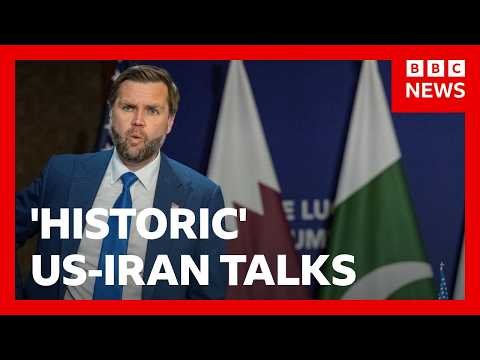
In a recent BBC News report, US Vice-President JD Vance declared that 'great progress' had been made in the first round of US-Iran peace talks held in Bürgenstock, Switzerland, as mediators from Qatar and Pakistan confirmed a roadmap toward a final deal within 60 days.
US-Iran Talks End First Round with 'Encouraging Progress' as 60-Day Roadmap Agreed
Bürgenstock, Switzerland – 22 June 2026 — US Vice-President JD Vance declared 'great progress' after the first round of direct US-Iran peace negotiations concluded at the Bürgenstock resort, with mediators Qatar and Pakistan announcing a roadmap toward a final deal within 60 days. The talks, which began on Sunday and stretched into Monday, brought together senior delegations from both countries for face-to-face discussions on the Strait of Hormuz, the Lebanon ceasefire, and nuclear confidence-building measures.
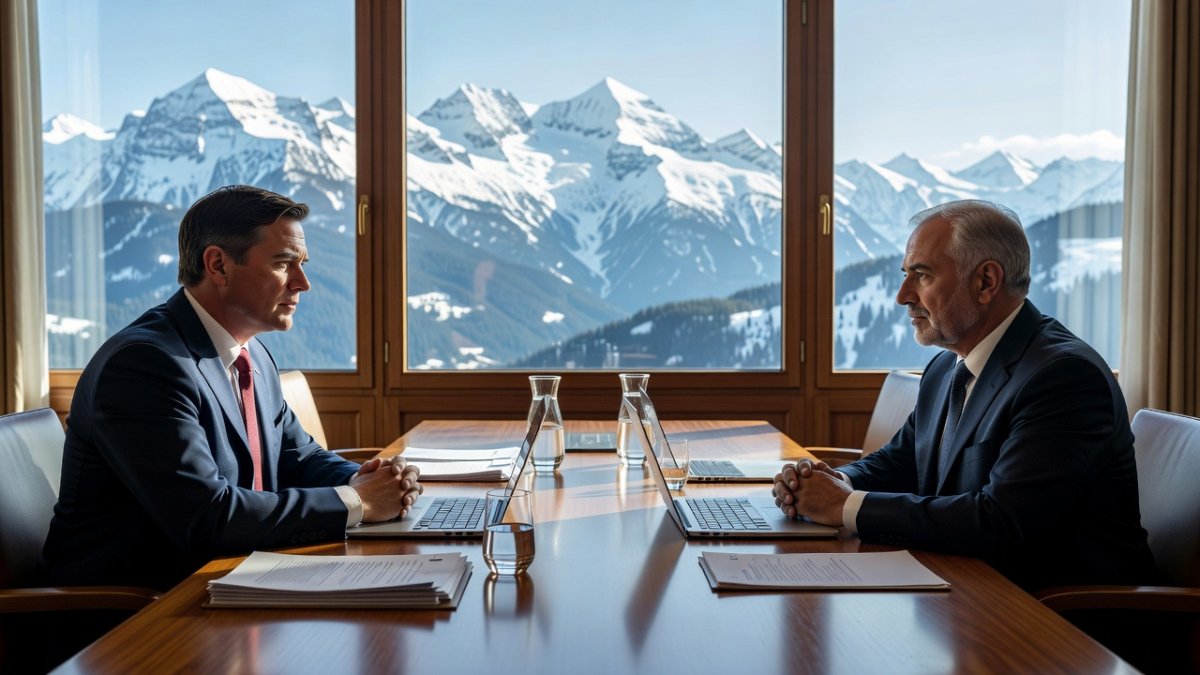
The Bürgenstock Talks: A Diplomatic Breakthrough
The Bilderberg-style Bürgenstock resort in central Switzerland played host this weekend to what diplomats are already describing as the most consequential US-Iran negotiations since the 2015 Joint Comprehensive Plan of Action. US Vice-President JD Vance, leading the American delegation, described the atmosphere as "historic" and confirmed that "great progress" had been achieved across multiple tracks simultaneously. The talks, which extended into Monday morning, represent the first face-to-face encounter between senior US and Iranian officials since the initial ceasefire framework was signed in early June. Mediators from Qatar and Pakistan shuttled between the two delegations, with the Qatari Prime Minister personally overseeing the final session that produced the joint statement.
The US team included Vice-President JD Vance, Jared Kushner, and special envoy Steve Witkoff. On the Iranian side, Parliament Speaker Mohammad Bagher Ghalibaf served as lead negotiator alongside Foreign Minister Abbas Araghchi. Pakistan's prime minister and army chief also attended, underscoring Islamabad's role as a key facilitator. The presence of these figures lent immediate weight to the proceedings, distinguishing them from previous indirect contacts. Vance noted that President Donald Trump had instructed the delegation to explore whether Iran was prepared to "turn over a new leaf" in its regional posture.
Switzerland's selection as host carried symbolic resonance, given its history of hosting sensitive nuclear talks. The secluded Bürgenstock setting allowed for discreet movement between suites without media scrutiny. Technical experts from both sides worked through the night on preliminary texts, while political principals focused on high-level principles. Qatar's Sheikh Mohammed bin Abdul Rahman Al Thani coordinated logistics, drawing on Doha's established channels with Tehran. This layered approach produced the joint statement by Monday evening.
From a broader geopolitical vantage, the choice of a neutral Alpine venue echoes earlier Cold War-era summits where physical isolation helped defuse immediate tensions between rival powers. Switzerland's long-standing role as a discreet interlocutor in nuclear diplomacy provides a structural advantage that neither Washington nor Tehran could replicate in regional capitals. The presence of Pakistan's military leadership alongside its civilian prime minister further signals Islamabad's dual-track influence, rooted in its historical security ties to both Gulf states and Tehran, allowing it to bridge Sunni-Shia divides that have complicated prior mediation efforts.
Delegation dynamics also reflect internal coalition management on each side. The inclusion of Jared Kushner alongside Vance suggests continuity with earlier Abraham Accords frameworks, while Iran's pairing of a parliamentary speaker with the foreign minister underscores the need to secure domestic legislative buy-in before any binding commitments. These configurations indicate that both capitals are treating the Bürgenstock process as more than a photo opportunity, embedding political insurance against potential reversals once negotiators return home.
The 60-Day Roadmap: What Was Actually Agreed
The joint statement issued on Monday established a High Level Committee to oversee implementation of the roadmap toward a final deal within 60 days. Technical talks are scheduled to continue throughout the week in Switzerland and via secure video links. The committee will address three core baskets: reopening of the Strait of Hormuz, enforcement of the Lebanon ceasefire, and nuclear confidence-building measures. A dedicated communication line for commercial vessel transit through the Strait of Hormuz was agreed as an immediate confidence-building step.
Under the roadmap, a deconfliction cell will manage the termination of military operations in southern Lebanon. This mechanism aims to prevent accidental clashes between Israeli forces and Hezbollah units. Nuclear elements discussed include expanded International Atomic Energy Agency access and limits on uranium enrichment levels, though Iran continues to insist its programme remains entirely peaceful. The 60-day timeline requires weekly progress reports to the mediators from Qatar and Pakistan.
Both delegations acknowledged that the roadmap builds on last week's initial agreement covering an end to fighting on all fronts and Hormuz reopening. Ghalibaf stressed that any final accord must respect Iran's sovereign right to peaceful nuclear technology. US officials indicated willingness to consider sanctions relief phased to verified compliance milestones. The structure allows for parallel workstreams so that delays in one area do not halt others.
Interpreted through the lens of historical precedent, the 60-day structure recalls the phased implementation schedules of the 2015 JCPOA, yet with tighter reporting intervals designed to limit the window for spoiler actions by domestic hardliners in either capital. The deconfliction cell concept draws on earlier UN-monitored mechanisms in the Golan Heights, adapted here to a more fluid Lebanese theater where Hezbollah's command structure operates independently of state authority. Such cells function less as enforcement bodies and more as early-warning systems, their value lying in the daily data exchange that reduces the fog of war rather than in any coercive mandate.
Nuclear confidence-building measures, in this context, are likely to prioritize transparency steps short of full enrichment caps, such as real-time monitoring of known facilities and voluntary limits on centrifuge cascades. This incremental approach acknowledges Iran's insistence on retaining enrichment infrastructure while addressing Western concerns over breakout timelines, a balance that has defined every serious negotiation since the 2000s.
The Strait of Hormuz: Closing and Reopening
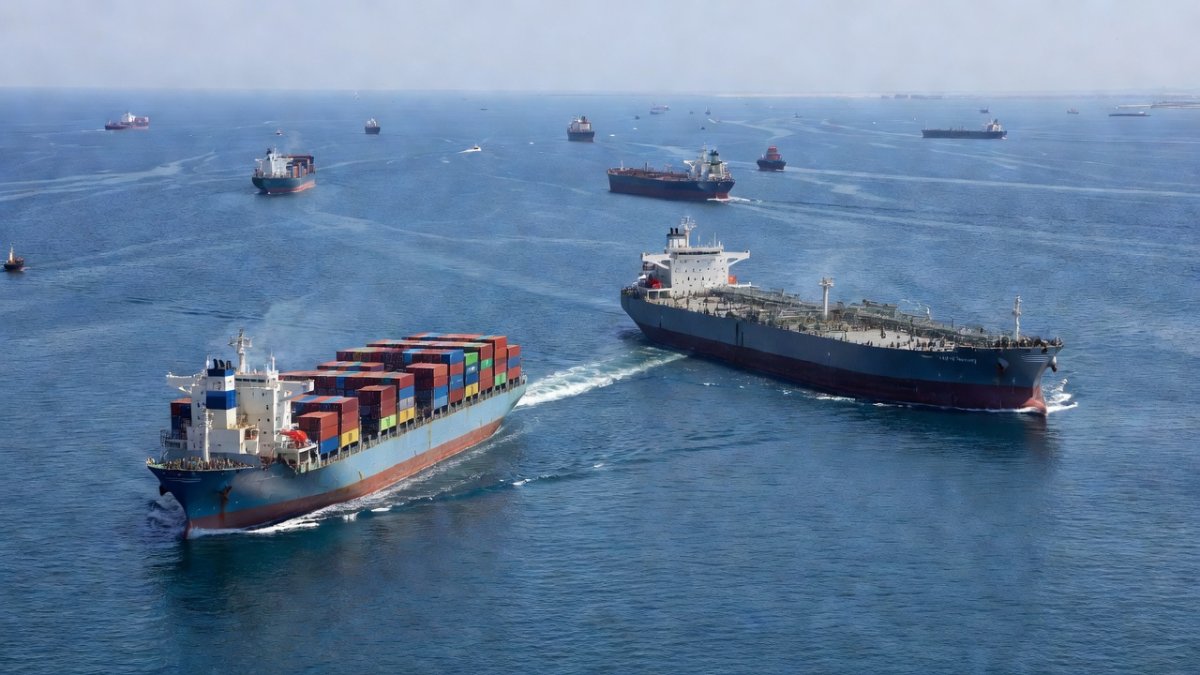
Iran announced the closure of the Strait of Hormuz on Saturday, yet commercial tracking data showed vessels continuing to transit the waterway. US military sources confirmed at least 55 merchant ships passed through the strait in the 48 hours following the announcement. The discrepancy highlights the gap between declaratory policy and operational reality in the Gulf. A new communication line established during the talks is intended to provide safe passage assurances for tankers and container ships.
President Trump had warned on social media that Iran would face severe consequences if it attempted to block the strait, including potential tolls on Iranian oil exports. The agreed communication line allows Iranian naval authorities to coordinate directly with international shipping coordinators, reducing the risk of miscalculation. Qatar and Pakistan will monitor compliance through shared maritime tracking feeds.
Energy markets reacted cautiously to the mixed signals. Brent crude prices rose modestly on Monday before easing as tracking data confirmed continued traffic. The mechanism does not yet address long-term guarantees, which remain a central item for the High Level Committee. Iranian officials maintain that any closure threat was defensive and tied to broader regional tensions rather than an active blockade.
Geopolitically, sustained Hormuz stability would recalibrate risk premiums that have long benefited non-Gulf producers, particularly as European and Asian importers seek to diversify away from spot-market volatility. The US Navy's longstanding presence in the region provides an implicit backstop, yet any formal coordination line risks drawing Washington into day-to-day operational disputes that could escalate if Iranian Revolutionary Guard units interpret commercial traffic differently from civilian authorities. Gulf Arab states, meanwhile, view the mechanism as a temporary reprieve rather than a structural solution, given their own strategic dependence on the waterway for LNG and crude exports.
Lebanon and the Fragile Ceasefire
An upsurge in Hezbollah-Israel fighting in southern Lebanon occurred despite the US-declared ceasefire on Friday. Israeli forces conducted additional strikes, while Hezbollah responded with rocket fire into northern Israel. Prime Minister Benjamin Netanyahu stated that Israeli troops would remain in southern Lebanon for as long as necessary to prevent future attacks. Hezbollah leader Naim Qassem rejected any permanent Israeli presence and vowed that the group would defend Lebanese territory.
The deconfliction cell created under the roadmap is designed to manage these flashpoints through daily liaison officers. US officials hope the cell can reduce incidents while broader political talks proceed. Qatar's mediation experience in previous Lebanon arrangements gives it a central role in staffing the mechanism. Pakistan's army chief offered technical support for monitoring arrangements along the border.
Both Israeli and Hezbollah positions remain entrenched. Netanyahu's government faces domestic pressure to demonstrate tangible security gains. Hezbollah, for its part, views withdrawal as a precondition for any lasting calm. The 60-day window will test whether the deconfliction cell can create enough breathing space for political compromises.
Humanitarian conditions in southern Lebanon have deteriorated markedly since the latest round of exchanges, with displacement figures compounding an already strained UNIFIL presence that has operated under Chapter VI constraints for decades. The cell's daily liaison function may therefore serve a secondary purpose of channeling information to humanitarian agencies, a pattern observed in earlier Qatari-brokered pauses. Yet the underlying territorial dispute over the Blue Line remains unresolved, suggesting that operational deconfliction alone cannot substitute for the political settlement that has eluded negotiators since 2006.
Trump's Threats and Ghalibaf's Defiance
President Trump's social media post threatening to "hit very hard again" if Iran failed to restrain its proxies drew an immediate response from Ghalibaf. The Iranian parliament speaker stated that such threats had lost their force and that Iran would not be pressured into concessions. This exchange illustrated the contrasting styles within the US delegation, where Vance's emphasis on relationship transformation sits alongside Trump's more confrontational rhetoric.
Vance articulated a conditional offer: if Iran ceased acting as a "driver of regional instability" and curbed nuclear ambitions, Washington would consider fundamentally transforming the bilateral relationship. Iranian negotiators viewed the statement as an opening but insisted that sanctions relief must precede major steps on enrichment. The dynamic suggests that technical progress may outpace political signaling in the coming weeks.
Mediators from Qatar and Pakistan worked to insulate the talks from public exchanges. They stressed that private channels remain open even when public statements harden. This separation has allowed modest advances on operational issues despite rhetorical friction.
The rhetoric-reality gap reflects a classic bargaining pattern in which maximalist public statements serve domestic audiences while private channels test narrower accommodations. Ghalibaf's parliamentary platform allows him to project defiance without foreclosing Araghchi's diplomatic maneuvering, a division of labor that has characterized Iranian negotiating teams since the Khatami era. Whether this dual-track approach survives the 60-day timeline will depend on whether early technical deliverables can generate sufficient momentum to marginalize hardline critics in both Tehran and Washington.
Analysis — A 60-Day Race Against the Clock
The energy market implications of sustained Hormuz stability extend well beyond immediate tanker traffic. Any durable reopening mechanism would ease pressure on global oil supplies and potentially moderate prices heading into winter. Russia's perspective on US-Iran rapprochement is cautious; Moscow benefits from elevated energy prices but also seeks to avoid further Western sanctions coordination that could target its own exports. Kremlin analysts note that a US-Iran deal might reduce Iran's reliance on Russian arms and diplomatic cover, altering power balances in the Caspian and Caucasus regions.
China's stake in Gulf stability is equally significant. Beijing imports substantial volumes of Iranian crude and maintains major infrastructure investments along the Maritime Silk Road. Disruption in the strait would threaten those interests and complicate China's efforts to diversify energy sources. Failure of the 60-day process could therefore prompt Beijing to increase its own mediation profile.
Should the roadmap collapse, renewed escalation risks drawing in additional actors and raising the prospect of direct US-Iran confrontation. The current window offers a narrow but tangible opportunity to lock in operational restraints before domestic political calendars in Washington and Tehran constrain flexibility.
Russian calculations extend beyond energy prices to the broader Eurasian chessboard. A stabilized Hormuz corridor could accelerate Chinese investment in Iranian infrastructure, potentially diluting Moscow's leverage in the Shanghai Cooperation Organisation where Tehran holds observer status. Chinese perspectives similarly weigh the risk that prolonged instability might push Gulf monarchies deeper into American security architectures, complicating Beijing's efforts to court Riyadh and Abu Dhabi as Belt and Road partners. Both powers therefore have incentive to quietly support incremental progress even while publicly maintaining distance from the US-led process.
What Comes Next
Technical talks resume this week with working groups focused on verification protocols, Hormuz coordination procedures, and Lebanon deconfliction rules of engagement. The High Level Committee is expected to reconvene in ten days to assess initial deliverables. Key sticking points include the scope of nuclear inspections, binding guarantees on Hormuz transit, Hezbollah's future force posture, and Israel's security requirements along the border.
Qatar and Pakistan will continue their shuttle diplomacy, with the Qatari prime minister scheduled to visit Tehran mid-week. Progress on any single basket could generate momentum for others, but delays in one area risk stalling the entire timeline. The 60-day deadline creates both urgency and a clear endpoint against which success or failure will be measured.
Verification challenges will center on the granularity of IAEA access and the durability of any Hormuz communication protocol once initial confidence-building steps conclude. Milestones at the ten-day and thirty-day marks will likely determine whether parallel workstreams can absorb setbacks in one basket without derailing the overall schedule, a test that has historically proven decisive in previous multilateral Gulf negotiations.
By Irina Volkov, Staff Writer
This article was produced with AI-assisted research and editorial support. Reporting is based on sources cited in the article.
What's Your Reaction?
 Like
0
Like
0
 Dislike
0
Dislike
0
 Love
0
Love
0
 Funny
0
Funny
0
 Wow
0
Wow
0
 Sad
0
Sad
0
 Angry
0
Angry
0
Russia/Eastern Europe Correspondent at Global1.News. Covering Russian politics, energy, security, and the shifting dynamics of the post-Soviet space. Provides clear-eyed analysis on one of the world's most opaque regions.









Comments (0)