
Netanyahu Defies Trump, Again — Can Israel Take On Tehran Alone?
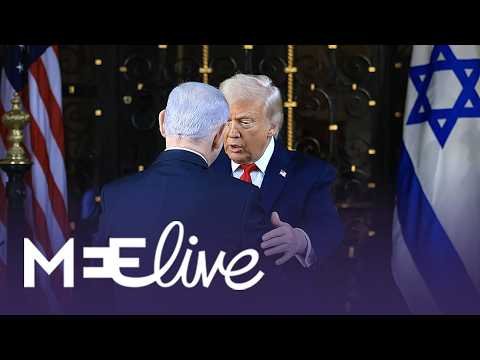
Introduction The Middle East Eye video titled "Netanyahu Defies Trump, Again — Can He Take Tehran Alone?" captures a moment of acute tension in the long-running shadow war between Israel and Iran. In the footage, analysts dissect how Israeli Prime Minister Benjamin Netanyahu has repeatedly ignored or circumvented American directives, pushing forward with operations that risk dr
Introduction
The Middle East Eye video titled "Netanyahu Defies Trump, Again — Can He Take Tehran Alone?" captures a moment of acute tension in the long-running shadow war between Israel and Iran. In the footage, analysts dissect how Israeli Prime Minister Benjamin Netanyahu has repeatedly ignored or circumvented American directives, pushing forward with operations that risk dragging the United States into direct confrontation. The core conflict centers on Netanyahu's determination to neutralize Iran's nuclear and missile capabilities even as President Trump publicly insists on restraint and diplomatic off-ramps. This defiance is not new, yet the current iteration carries heightened stakes because of fragile regional ceasefires, volatile energy markets, and domestic political pressures in both Washington and Tel Aviv. Netanyahu's calculus appears driven by the belief that only decisive military action can secure Israel's long-term survival, while Trump seeks to project strength without another Middle Eastern quagmire. The video underscores how personal rapport between the two leaders has frayed into open friction, leaving Arab states and global powers watching nervously for signs of uncontrolled escalation.
The Widening Divide Between Washington and Tel Aviv
President Trump's assertion that "I call all the shots" was meant to reassert American primacy, yet it has been undermined by a series of Israeli actions that directly contradict U.S. preferences. A leaked profanity-laced phone call between the two leaders revealed Netanyahu's refusal to halt planned strikes, exposing the limits of Trump's influence. Despite U.S. assurances to regional mediators, Israel conducted an airstrike on Beirut on June 7 that killed several Hezbollah commanders and triggered Iranian missile barrages in response. These exchanges trace their immediate origins to February 28, when Israeli forces launched preemptive operations against Iranian-backed positions in Syria and Lebanon, claiming intelligence of imminent attacks. The episode illustrates a structural problem: Netanyahu treats U.S. red lines as suggestions rather than binding constraints. Washington fears that continued Israeli unilateralism will collapse ongoing back-channel talks with Tehran and alienate Arab partners whose cooperation is needed for any durable security architecture. Tel Aviv, however, views American caution as dangerous naivete that invites further Iranian encirclement.
The Strait of Hormuz and Global Economic Fallout
Iran's credible threat to close the Strait of Hormuz has already sent oil prices spiking above $120 per barrel, reviving memories of the 1970s energy crises. Any sustained disruption would hammer global supply chains and inflict particular damage on Trump's domestic standing ahead of critical political tests. Democrats are already positioning themselves to capitalize on potential economic pain during upcoming midterm cycles, framing Republican foreign policy as reckless. The United States is scheduled to host the World Cup, an event that could be overshadowed by fuel shortages, travel disruptions, and security alerts if maritime traffic through the Gulf narrows dramatically. European and Asian economies heavily dependent on Gulf crude are lobbying Washington for immediate de-escalation, yet Netanyahu's government shows little interest in accommodating those concerns. The economic dimension transforms a bilateral dispute into a worldwide crisis, raising the possibility that financial markets rather than battlefield developments will ultimately force a pause in hostilities.
Netanyahu's Political Calculus
Israeli elections scheduled before October have locked Netanyahu into a strategy of sustained confrontation. His coalition's survival depends on maintaining a state of emergency that keeps far-right partners inside the government and prevents corruption trials from advancing. The doctrine of "absolute victory" over Iran serves as both ideological banner and electoral glue, allowing the prime minister to portray any compromise as surrender. By drawing the United States deeper into planning and logistics, Netanyahu hopes to lock Washington into supporting whatever scale of operation Israel deems necessary. Far-right ministers openly advocate permanent reoccupation of Gaza and preemptive war with Iran, positions that once seemed fringe but now shape official policy. This internal dynamic makes diplomatic flexibility politically suicidal for Netanyahu, regardless of American pressure or international warnings about the human and economic costs of prolonged conflict.
Palestinian and Arab Lives Caught in the Crossfire
The widening confrontation has intensified suffering across Gaza, where Israeli operations have already destroyed large portions of civilian infrastructure including hospitals, schools, and water systems. Lebanon's displacement crisis has surged past one million people as cross-border exchanges intensify, overwhelming an already fragile economy. Trade routes through the Red Sea and Gulf have been disrupted, driving up food and medicine prices for populations far from the front lines. In the West Bank, accelerated settlement expansion continues under the cover of regional distraction, further eroding prospects for any future Palestinian state. Arab governments that normalized relations with Israel now face domestic backlash as images of civilian casualties circulate on social media. The human cost is not incidental but structural, as each round of escalation between Israel and Iran produces new waves of refugees, destroyed livelihoods, and generational trauma that will shape regional politics for decades.
Iran's Strategic Reckoning
Tehran has demanded the release of $12 billion in frozen assets as a precondition for any new nuclear talks, viewing the funds as leverage against further Israeli strikes. Iranian officials have concluded that Trump cannot or will not restrain Netanyahu, leading them to accelerate missile and drone production in anticipation of a wider war. Military planners in Tehran believe they can exhaust Israeli air defenses through sustained, multi-front barrages that force expensive interceptor use. Some voices inside the Iranian leadership now openly regret the June 2025 ceasefire that halted earlier exchanges, arguing that a more decisive response at that time might have deterred subsequent Israeli operations. This hardening of positions reduces the space for compromise and increases the likelihood that future incidents will trigger uncontrolled spirals rather than managed de-escalation.
Diplomatic Pathways and Obstacles
Negotiations over a new memorandum of understanding between Washington and Tel Aviv have stalled amid mutual recriminations. A Pakistani-brokered ceasefire proposal gained brief traction before Netanyahu's government launched a public campaign to discredit it as Iranian appeasement. The sabotage effort included selective leaks to friendly media outlets and direct appeals to Trump's political base, framing any deal as weakness. The central question remains whether Trump possesses real leverage or merely the appearance of it. Past attempts at personal diplomacy have repeatedly collapsed when Israeli security assessments diverged from American political calculations. Without credible enforcement mechanisms or domestic political incentives for Netanyahu to compromise, existing diplomatic channels appear more like theater than genuine pathways to resolution.
Analysis and Regional Outlook
Three scenarios dominate current planning: limited Israeli strikes on Iranian nuclear sites followed by Iranian retaliation and a new ceasefire; sustained attrition warfare that draws in additional actors; or a diplomatic breakthrough imposed by economic panic in global markets. Each carries severe human costs. Continued escalation would produce thousands more casualties, further refugee flows, and long-term damage to energy infrastructure. De-escalation would require Netanyahu to accept constraints he has so far rejected and for Iran to offer verifiable limits on its nuclear program. Absent such shifts, the region faces a prolonged period of shadow and open conflict whose ultimate boundaries remain dangerously unclear.
By Fatima Al-Rashid, Staff WriterThis article was produced with AI-assisted research and editorial support. Reporting is based on sources cited in the article.
What's Your Reaction?
 Like
0
Like
0
 Dislike
0
Dislike
0
 Love
0
Love
0
 Funny
0
Funny
0
 Wow
0
Wow
0
 Sad
0
Sad
0
 Angry
0
Angry
0

Gulf/MENA Correspondent at Global1.News. Based in Doha, covering Gulf politics, energy markets, diplomacy, and development across the Middle East and North Africa. Tracks the economic transformation of the Gulf states.













Comments (0)