
King Tut's Curse Could Cure Cancer — The Fungus That Could Revolutionize Leukemia Treatment
Back in 1922, when Howard Carter cracked open King Tutankhamun’s tomb, the world whispered about a deadly curse that struck down explorers. Today, scientists at the University of Pennsylvania have turned that same ancient threat into something far more hopeful: a potential new weapon against leukemia. The Curse That Wasn't The legend of the Pharaoh’s Curse grew quickly after th
Back in 1922, when Howard Carter cracked open King Tutankhamun’s tomb, the world whispered about a deadly curse that struck down explorers. Today, scientists at the University of Pennsylvania have turned that same ancient threat into something far more hopeful: a potential new weapon against leukemia.
The Curse That Wasn't
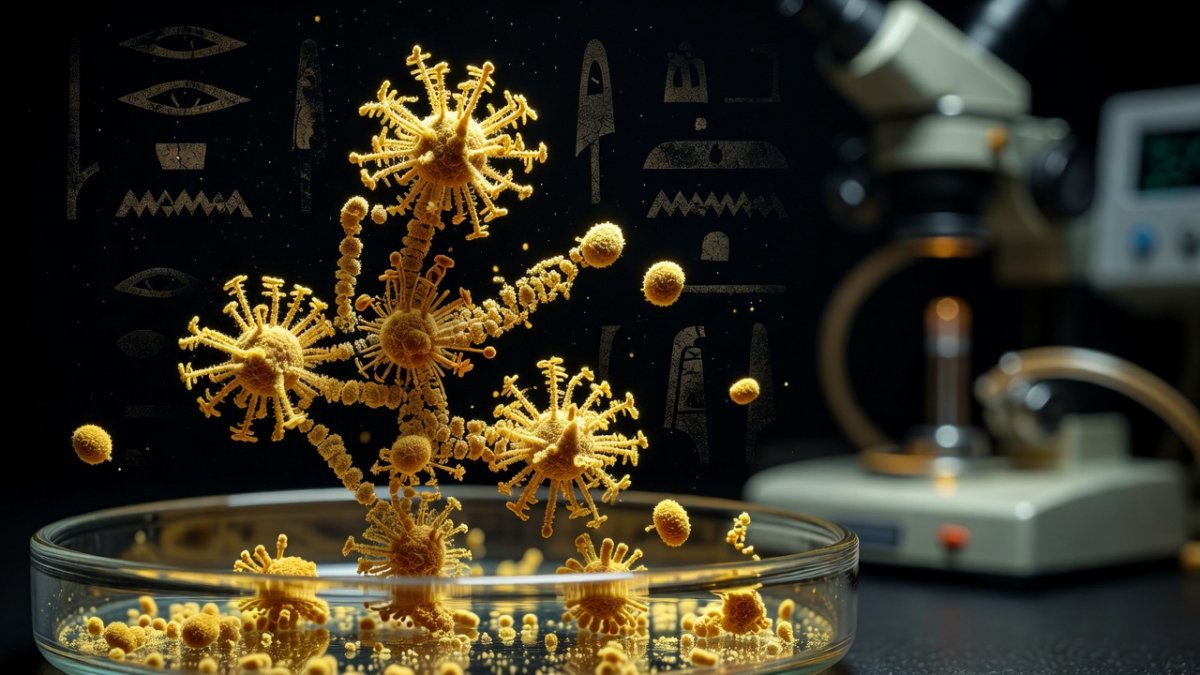
The legend of the Pharaoh’s Curse grew quickly after the tomb’s discovery. Several members of the excavation team died in the years that followed, and newspapers at the time loved the dramatic story. A similar pattern appeared decades later in Poland, where ten of twelve researchers who entered the tomb of King Casimir IV fell ill and died within weeks. In both cases, the real culprit wasn’t supernatural. It was a common but dangerous fungus called Aspergillus flavus. Its spores can lie dormant for centuries inside sealed spaces. When people breathed them in, the fungus sometimes triggered serious lung infections in those with weaker immune systems. What once looked like a curse was actually a microscopic survivor from the ancient world.
From Curse to Cure
Fast-forward to the labs at Penn, where engineers decided to take a closer look at this same fungus. They isolated four special compounds known as RiPPs—short for ribosomally synthesized and post-translationally modified peptides. These molecules are produced by the fungus as a kind of chemical defense. The team named them asperigimycins. Two of the four showed strong activity against leukemia cells in lab dishes. One modified version, called 2-L6, performed on par with established chemotherapy drugs like cytarabine and daunorubicin. Senior author Sherry Gao put it plainly: “Fungi gave us penicillin. These results show many more medicines remain to be found.” First author Qiuyue Nie added that even though only a handful of these compounds have been studied so far, “almost all of them have strong bioactivity.”
How It Works
The asperigimycins work by interfering with microtubules, the tiny internal scaffolding that cells use to divide. Without proper microtubule function, cancer cells cannot split and multiply. What makes these compounds especially interesting is their selectivity. They show little effect on breast, liver, or lung cancer cells, but they are potent against leukemia. Researchers discovered that a protein called SLC46A3 acts like a doorway, letting the compounds enter the right cells. Once inside, the disruption of cell division becomes very effective. This targeted approach could one day mean treatments that spare healthy tissue better than some current options.
What This Means for Cancer Treatment
Current leukemia therapies already save many lives, yet they often come with tough side effects and don’t work for every patient. A compound that matches the power of approved drugs while acting through a different mechanism opens new possibilities. Because the asperigimycins come from a natural source that has evolved over millions of years, they may also offer chemists fresh starting points for designing even better molecules. The next critical phase is animal testing to check safety and effectiveness in living systems before any human trials can begin. If those steps go well, we could see a new class of leukemia treatments that trace their roots to an organism once feared as part of an ancient curse.
The Bottom Line
What began as a spooky story about tombs and mysterious deaths has become a reminder that nature still holds powerful tools we have only begun to understand. The same fungus that once threatened explorers may help protect future patients. It is a striking example of how curiosity and careful science can transform fear into progress. As we keep exploring the hidden chemistry of the natural world, what other “curses” might turn out to be cures waiting to be found?
By Allan Ali, Health & Science Anchor — Global 1 News
This article was produced with AI-assisted research and editorial support. Reporting is based on sources cited in the article.
What's Your Reaction?
 Like
0
Like
0
 Dislike
0
Dislike
0
 Love
0
Love
0
 Funny
0
Funny
0
 Wow
0
Wow
0
 Sad
0
Sad
0
 Angry
0
Angry
0

Publisher of Global1.News. Automation architect, systems builder, and the guy making sure the truth gets published.















Comments (0)