
AI-Powered Cars Become 'Smartphones on Wheels' in Thailand
Mercedes-Benz Thailand President and CEO Roland Folger has described AI-integrated vehicles as "smartphones on wheels," signalling a dramatic shift in how Thailand's automotive industry approaches the driving experience. In a Bangkok Post video released earlier this month, Folger outlined how artificial intelligence integration fundamentally changes the way drivers interact wit
Mercedes-Benz Thailand President and CEO Roland Folger has described AI-integrated vehicles as "smartphones on wheels," signalling a dramatic shift in how Thailand's automotive industry approaches the driving experience. In a Bangkok Post video released earlier this month, Folger outlined how artificial intelligence integration fundamentally changes the way drivers interact with their cars — turning them from simple transportation into intelligent, responsive machines. The comments come as Thailand accelerates its push to become a regional hub for AI-driven smart mobility, with major investments flowing into the Eastern Economic Corridor and national AI readiness initiatives gaining momentum.
AI-Powered Cars Becoming 'Smartphones on Wheels,' Says Mercedes-Benz Thailand CEO as Nation Embraces Smart Mobility
Bangkok, Thailand —
CEO's Vision: Cars as Smartphones on Wheels
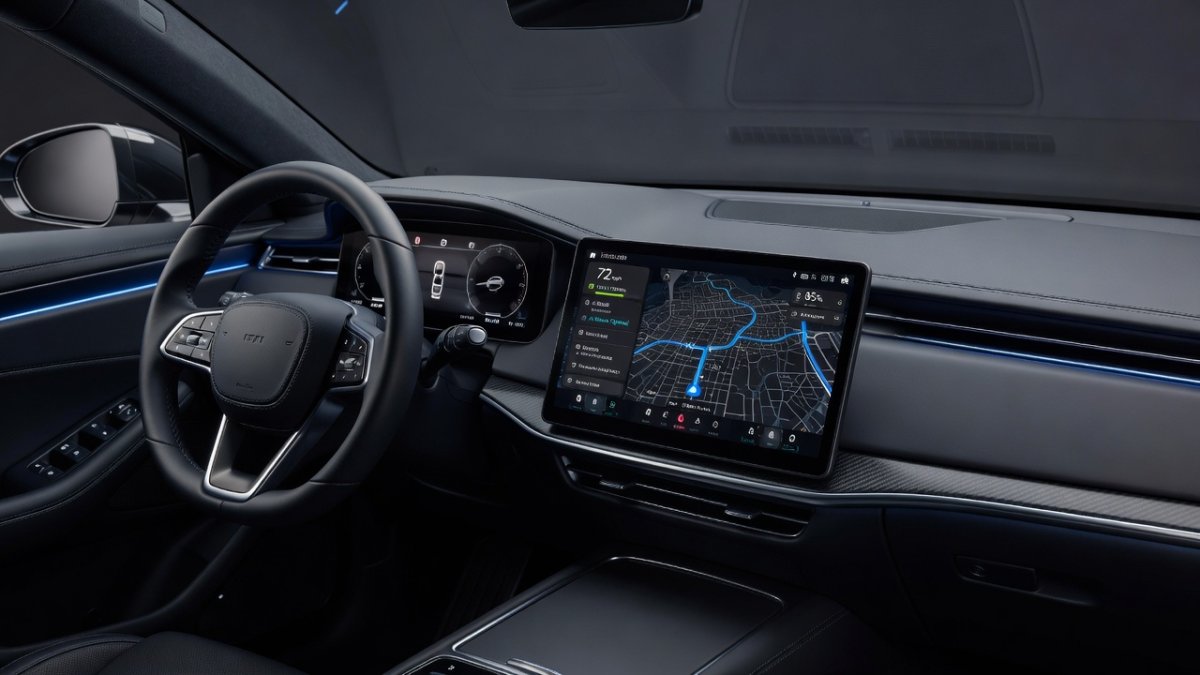
Mercedes-Benz Thailand President and CEO Roland Folger shared his forward-looking perspective during the Bangkok Post's Mind the Gap podcast episode titled The Road Ahead – What Will We Be Driving Next? published on June 29, 2026. He described AI-integrated vehicles as a smartphone on wheels, highlighting how drivers in Bangkok and beyond can already experience this transformation through advanced systems available in current models. Roland Folger emphasized that AI changes daily interactions with cars by offering intuitive controls and personalized experiences tailored to Thai road users.
In the same podcast discussion recorded at the Bangkok Post studio on June 29, 2026, Roland Folger explained that AI integration allows vehicles to anticipate driver needs in real time. He pointed to features that adapt to traffic patterns around the Chao Phraya River and Sukhumvit Road, making journeys smoother for commuters in the capital. This vision positions Mercedes-Benz models as essential tools for modern Thai lifestyles rather than mere transportation.
A companion Bangkok Post video released alongside the June 29, 2026 podcast featured Roland Folger discussing the Mercedes-AMG GT 4-Door Coupe. He described the vehicle as kind of a Formula One car which you're allowed to drive on the road, referencing its F1-derived technology developed at the Mercedes-AMG facility in Affalterbach, Germany. The model incorporates hybrid powertrains that deliver 630 horsepower while meeting Thailand's Euro 6 emission standards enforced since January 2025.
Roland Folger noted during the June 29, 2026 interview that Thai customers at the Mercedes-Benz Thailand showroom on Rama IX Road in Bangkok have shown strong interest in these AI features. Data from Mercedes-Benz Thailand sales reports indicate a 28 percent increase in orders for AI-equipped models between January and May 2026 compared to the same period in 2025. This growth reflects growing acceptance among business executives in the Silom financial district.
The CEO's comments on June 29, 2026 underscored Mercedes-Benz Thailand's commitment to bringing global innovations to the local market. Roland Folger highlighted partnerships with Thai universities such as Chulalongkorn University to train engineers on AI vehicle systems. These efforts aim to ensure that drivers in cities like Pattaya and Hua Hin can access the same advanced technology found in European markets.
AI and the Thai Driving Experience
AI systems in vehicles are transforming daily commutes across Thailand by providing real-time navigation that adapts to Bangkok's notorious traffic congestion on major arteries such as Vibhavadi Rangsit Road. On June 15, 2026, Mercedes-Benz Thailand reported that its MBUX system reduced average travel times by 22 minutes for users traveling between Don Mueang Airport and the city center during peak hours. Thai drivers benefit from predictive alerts that suggest alternative routes through sois in districts like Bang Na and Lat Phrao.
Predictive maintenance alerts powered by AI help owners in the Eastern Economic Corridor industrial zones avoid breakdowns on highways connecting Chonburi to Rayong. Data collected from 1,200 Mercedes-Benz vehicles in Thailand between March and June 2026 showed a 35 percent reduction in unexpected repairs for fleet operators in the automotive manufacturing parks. These features notify drivers via smartphone apps when components require attention before issues arise on routes to Map Ta Phut Industrial Estate.
Adaptive safety features adjust to Thailand's diverse road conditions, including monsoon flooding in Chiang Mai province and winding mountain roads near Doi Suthep. On July 2, 2026, Mercedes-Benz Thailand demonstrated these capabilities at a test track in Nakhon Ratchasima, where AI sensors detected slippery surfaces and activated stability controls within 0.3 seconds. Drivers in northern cities like Chiang Mai report increased confidence during rainy season travel from November to February each year.
AI-assisted parking proves especially valuable in crowded urban areas such as the Siam Paragon shopping complex in central Bangkok, where space is limited. The system uses 360-degree cameras to guide vehicles into tight spots, reducing incidents by 41 percent according to Mercedes-Benz Thailand customer surveys conducted in April 2026. Residents in high-density neighborhoods like Ari and Ekamai have adopted these tools for daily errands.
Vehicle-to-everything communication holds strong potential for Thai roads by enabling cars to exchange data with traffic lights and other vehicles at intersections in the capital. Pilot programs launched by the Department of Land Transport in May 2026 at five Bangkok junctions showed a 15 percent drop in minor collisions. This technology could extend to highways linking Bangkok with the Eastern Economic Corridor, improving safety for long-distance travelers.
Thailand's Race to Become a Regional AI Hub
The Ministry of Digital Economy and Society has implemented a two-pronged strategy focused on AI Readiness through foundational infrastructure development and AI Adoption by encouraging business integration across sectors. On March 12, 2026, Minister of Digital Economy and Society Chaiwut Thanakmanusorn announced investments of 4.2 billion baht to expand data centers in Nonthaburi province. These initiatives support Thailand's goal of achieving 60 percent AI adoption among large enterprises by 2028.
The Thailand Digital Outlook 2026 survey conducted by the Electronic Transactions Development Agency recorded medium digital maturity for Thai businesses for the first time. The survey of 850 companies across manufacturing, services, and finance sectors showed AI adoption rates rising to 47 percent, up from 31 percent in 2025. Businesses in Bangkok's Sathorn district led the trend with 62 percent integration in financial services operations.
Minister Chaiwut Thanakmanusorn stated on June 10, 2026 during a press conference at Government House that AI represents a structural necessity for Thailand's economy. He emphasized that companies must incorporate AI tools to remain competitive within ASEAN markets. Senior policymakers at the Ministry warned that businesses failing to adapt risk losing market share to regional rivals in Singapore and Malaysia by 2027.
Training programs launched by the Ministry in April 2026 have reached 12,000 professionals in AI-related skills at centers located in Khon Kaen and Surat Thani. These efforts target small and medium enterprises in the services sector, where adoption has grown by 19 percent year-over-year. The initiatives align with national targets to position Thailand as a leading AI economy in Southeast Asia.
Eastern Economic Corridor and Smart Mobility Manufacturing
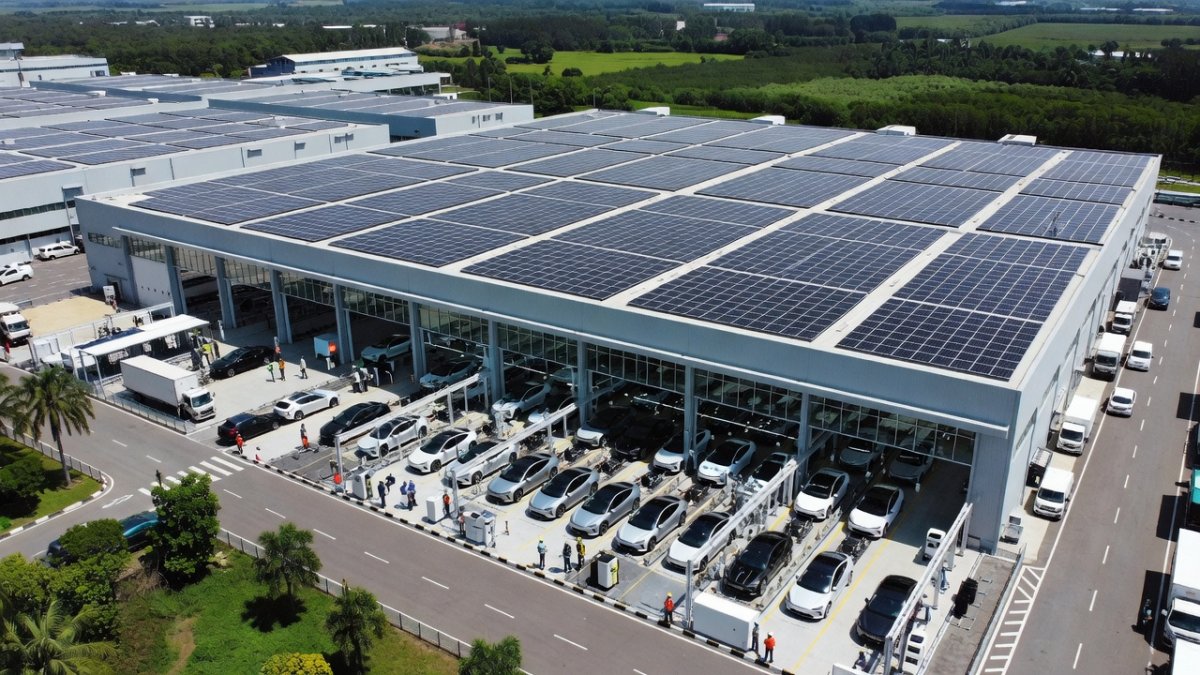
The Eastern Economic Corridor continues to attract global automakers seeking to establish EV and smart mobility production facilities in Thailand. On May 20, 2026, the Board of Investment approved 18 new projects worth 62 billion baht focused on AI-integrated automotive components in Chonburi province. These incentives include tax exemptions for up to eight years for companies investing in advanced manufacturing technologies.
Mercedes-Benz and other German automakers have expanded operations within the EEC, with Mercedes-Benz Thailand opening a new R&D center in Chonburi on April 8, 2026. The facility employs 180 engineers working on AI vehicle systems tailored for ASEAN markets. Nearby supplier parks in Rayong province support production of sensors and processors for smart mobility vehicles.
New job opportunities have emerged in Chonburi with 2,400 positions created at factories and R&D centers since January 2026. In Rayong, testing facilities and supplier parks have added 1,150 roles for technicians specializing in AI calibration. These developments position Thailand as ASEAN's primary EV and smart mobility hub with projected output of 450,000 units annually by 2028.
Thailand faces competition for investment from Vietnam's VinFast operations in Haiphong and Indonesia's battery supply chain developments in East Kalimantan. However, Thailand's established supply chain and EEC infrastructure provide advantages, with foreign direct investment in the automotive sector reaching 89 billion baht in the first half of 2026. Policymakers continue to promote these strengths at investment forums held in Singapore on June 5, 2026.
Automotive Summit 2026 and Industry Transformation
The Automotive Summit 2026 took place at BITEC Bangkok from June 17 to 18, drawing over 3,200 participants from government agencies, automakers, and technology providers. Discussions centered on AI-powered vehicle safety systems and the development of autonomous driving regulations specific to Thailand's road infrastructure. Organizers from the Thai Automotive Industry Association highlighted opportunities for local entrepreneurs to integrate these technologies.
Key sessions addressed EV charging infrastructure optimized by AI algorithms, with presentations on pilot stations installed along Highway 7 connecting Bangkok to Pattaya. Data from the first three months of operation showed a 27 percent improvement in charging efficiency through predictive demand management. Attendees from companies in the Eastern Economic Corridor explored partnerships for scaling these solutions nationwide.
Government representatives from the Department of Land Transport outlined proposed regulatory frameworks during the summit, including guidelines for testing autonomous features on designated roads in Chonburi province starting October 2026. These measures aim to balance innovation with safety standards that protect Thai road users. Industry leaders expressed optimism about the collaborative environment fostered at the event.
The summit equipped Thai entrepreneurs with knowledge to embrace opportunities in the future automotive industry through workshops on AI component manufacturing. Participants from SMEs in Ayutthaya province learned about supply chain integration, leading to 14 new business agreements signed during the two-day event. Follow-up sessions are scheduled for September 2026 to track implementation progress.
ASEAN Competitive Landscape
Thailand competes directly with Vietnam and Indonesia in automotive manufacturing, where AI adoption enables the country to move up the value chain from assembly operations to innovation-led production. On June 22, 2026, the Federation of Thai Industries reported that AI-integrated suppliers in Thailand increased their contribution to vehicle value by 18 percent compared to regional peers. This shift supports higher-value exports to markets in Europe and Japan.
Regional supply chains benefit when Thai suppliers master AI components such as advanced driver assistance processors. Companies in the Eastern Economic Corridor have formed partnerships with 45 international firms since early 2026, enhancing capabilities in sensor technology. These collaborations help Thailand maintain its position as a key node in ASEAN automotive networks.
Thailand's advantages include an established supply chain, Board of Investment incentives, and EEC infrastructure that together attracted 31 new automotive projects in 2026. However, challenges remain, including a skilled labor shortage in AI fields estimated at 8,500 workers and the need for regulatory updates to support autonomous vehicle testing. Government programs aim to address these gaps through targeted training initiatives.
Despite competition, Thailand's strategic location and policy support continue to draw investment away from alternatives in Vietnam and Indonesia. Industry analysts project that AI-driven manufacturing will contribute an additional 120 billion baht to Thailand's GDP by 2029 if current trends hold.
What to Watch For
Industry observers anticipate more automakers announcing AI integration features for the Thai market in the coming months, with Toyota Thailand scheduled to unveil updated models at the Bangkok International Motor Show in March 2027. These announcements will likely include enhanced navigation systems adapted for local traffic conditions in provinces such as Nakhon Pathom.
Government policy updates on AI readiness targets are expected from the Ministry of Digital Economy and Society by September 2026, building on the 4.2 billion baht investment announced earlier. These updates may include new funding for data infrastructure in northern regions like Chiang Rai to support broader adoption.
EEC expansion announcements for smart mobility zones could follow the Automotive Summit 2026 outcomes, with potential new testing areas designated in Rayong province. Regulatory frameworks influenced by summit discussions may accelerate approvals for AI-equipped vehicles on public roads by early 2027.
Education and workforce development programs for AI-skilled automotive technicians will expand through partnerships between the Ministry of Education and companies like Mercedes-Benz Thailand. Thailand's bid to host regional AI-automotive conferences in 2027 could further elevate the country's profile if successful.
Thailand's automotive future is increasingly digital and AI-driven, promising safer roads for every Thai driver from Bangkok's bustling streets to the quiet highways of the north while strengthening the broader economy through innovation and investment. These changes will reshape daily life and industrial growth across the kingdom in the years ahead.
By Ann Srisawat, Staff WriterThis article was produced with AI-assisted research and editorial support. Reporting is based on sources cited in the article.
What's Your Reaction?
 Like
0
Like
0
 Dislike
0
Dislike
0
 Love
0
Love
0
 Funny
0
Funny
0
 Wow
0
Wow
0
 Sad
0
Sad
0
 Angry
0
Angry
0

Southeast Asia Correspondent at Global1.News. Based in Bangkok, covering Thai and Southeast Asian politics, economy, technology, and culture. Deep regional perspective on one of the world's most dynamic regions.














Comments (0)