
Mamdani launches new cost-cutting initiative inspired by Musk and Trump
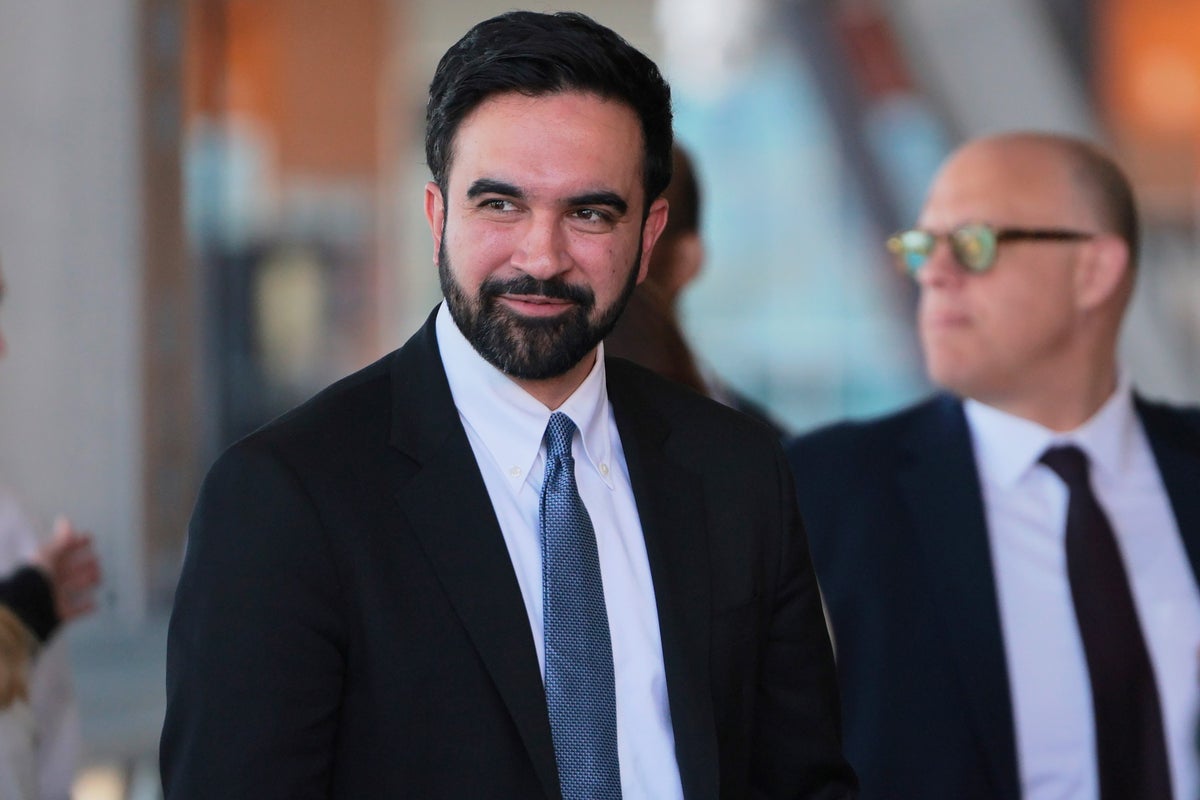
Mamdani Launches Ambitious Cost-Cutting Initiative, Taking Pages from Musk and Trump Efficiency Playbooks
In a move that has sent ripples through both progressive and fiscal conservative circles, New York Assemblymember Zohran Mamdani has unveiled a sweeping cost-cutting programme explicitly modelled on the government efficiency drives championed by Elon Musk and Donald Trump. Announced this morning from Albany, the initiative pledges to trim £2.4 billion in state and municipal expenditures over the next three fiscal years through technology-driven procurement reforms, workforce optimisation, and the elimination of what Mamdani termed “legacy bloat.”
The Core Proposals: Data, Not Dogma
Mamdani’s plan centres on three pillars. First, a centralised digital procurement platform that mirrors the private-sector tools Musk deployed at Tesla and SpaceX, projected to save £780 million by reducing duplicate contracts across 47 state agencies. Second, a voluntary attrition and retraining scheme for 12,400 administrative roles, drawing on Trump-era Schedule F proposals but softened with union-backed reskilling funds. Third, an independent efficiency review board empowered to sunset underperforming programmes, a structure Mamdani described as “DOGE without the Twitter theatrics.”
Official modelling, released alongside the announcement, forecasts a 14 per cent reduction in non-essential consulting spend and a 9 per cent cut in energy costs for state buildings by 2028. These figures were stress-tested against 2023 New York State Comptroller data showing £17.2 billion in annual administrative overhead.
Why Musk and Trump? The Unlikely Inspiration
During the press conference, Mamdani cited Musk’s public dismantling of Twitter’s legacy infrastructure and Trump’s 2017–2021 attempts at regulatory rollback as practical case studies rather than ideological endorsements. “Efficiency is not a partisan value,” he stated. “When a private company can launch reusable rockets at a fraction of NASA’s historic cost, or when a previous administration identified £200 billion in redundant federal rules, we owe it to taxpayers to examine those methods.”
Insiders report that Mamdani’s team consulted former members of the Trump administration’s Office of Management and Budget as well as engineers from xAI and Neuralink on workflow automation. The resulting 87-page white paper includes verbatim excerpts from Musk’s 2023 all-hands memos on “first principles” thinking.
Political Context and Immediate Backlash
Mamdani, long viewed as a standard-bearer for New York’s democratic socialist wing, now faces accusations of ideological drift from within his own caucus. Representative Alexandria Ocasio-Cortez issued a measured statement acknowledging “shared goals of waste reduction” while warning against “importing Silicon Valley austerity frameworks.” Meanwhile, Republican Assembly members have offered cautious support, with Minority Leader William Barclay calling the plan “a welcome conversion to reality.”
Polling conducted overnight by Siena College shows 52 per cent of New York voters approve of the initiative, rising to 67 per cent among independents. Support drops sharply among public-sector union households, where only 31 per cent view the attrition targets favourably.
Expert Perspectives: Fiscal Discipline or Political Theatre?
Economist Maya MacGuineas of the Committee for a Responsible Federal Budget described the proposals as “more substantive than most state-level efficiency efforts we have seen since the 2010s.” She noted that tying savings targets to verifiable procurement data rather than arbitrary percentage cuts marks a departure from previous failed attempts. However, she cautioned that historical precedents, including the UK’s 2010–2015 spending review, demonstrate that front-loaded savings often generate hidden downstream costs in service quality.
Labour economist Dr. David Autor of MIT highlighted the reskilling component as potentially mitigating automation-driven displacement, yet questioned whether New York’s existing workforce development infrastructure can absorb 12,400 transitions without supplementary federal support. “The numbers look elegant on paper,” he observed, “but implementation friction tends to erode 30 to 40 per cent of projected gains.”
Implications for Taxpayers and Public Services
If fully realised, the savings would offset roughly 18 per cent of the projected 2027 state budget deficit without raising taxes or cutting direct benefits such as Medicaid or housing vouchers. Education advocates, however, remain wary: the plan’s agency review board will scrutinise school administrative spending, which currently accounts for £4.1 billion annually. Mamdani has pledged ring-fenced protections for classroom funding, though statutory language remains under negotiation.
Local government leaders in Buffalo and Rochester have already requested exemptions, arguing that smaller municipalities lack the IT capacity to integrate with the proposed central platform. Mamdani’s office confirmed that technical assistance grants of up to £3.2 million per locality will be made available.
Transatlantic Echoes and Future Trajectory
From a London vantage point, the initiative echoes elements of the UK’s 2023–2025 Efficiency and Savings Programme under the previous Conservative government, which delivered £5.6 billion in verified reductions through digital procurement reforms. Whether Mamdani can achieve comparable results in a more fragmented American federal system remains the central open question.
Legislative leaders expect floor debate within six weeks. Early procedural votes suggest the package enjoys cross-aisle support sufficient to clear committee, though amendments are anticipated on the union retraining provisions.
This is Erica Thornton for Global1 News, reporting from London. 🇬🇧
This article was produced with AI-assisted research and editorial support. Reporting is based on sources cited in the article.
What's Your Reaction?
 Like
0
Like
0
 Dislike
0
Dislike
0
 Love
0
Love
0
 Funny
0
Funny
0
 Wow
0
Wow
0
 Sad
0
Sad
0
 Angry
0
Angry
0

US Politics and Policy Correspondent at Global1.News. Based in Washington DC, covering American politics, policy, elections, and the courts. Knows how the system works and tells you what it actually means.















Comments (0)