
Latin America Battles Dual Epidemics: Dengue and Chikungunya Surge Amid Climate Shifts
In the humid barrios of Havana, a mother named Elena cradles her feverish child, praying the twin mosquito plagues will spare her family as hospitals overflow and supplies vanish. Latin America Battles Dual Epidemics: Record Dengue Cases and Chikungunya Surge Amid Climate Shifts **Havana, Cuba – June 2026.** Across Latin America, families confront an unprecedented convergence o
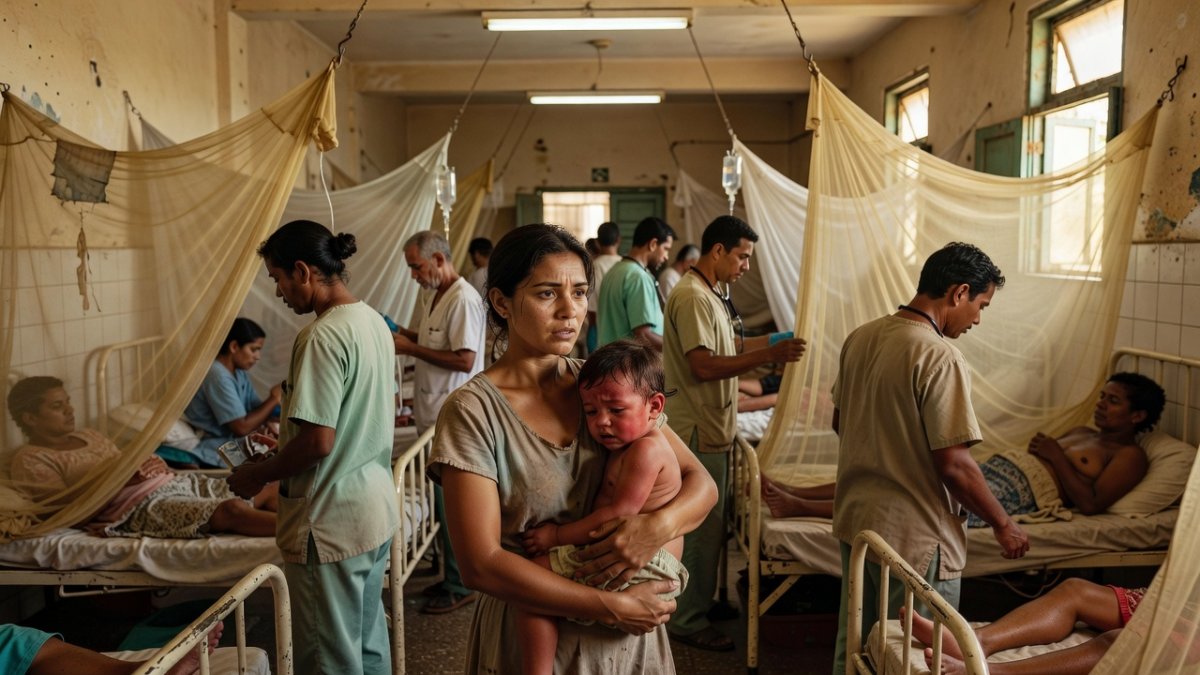
In the humid barrios of Havana, a mother named Elena cradles her feverish child, praying the twin mosquito plagues will spare her family as hospitals overflow and supplies vanish.
**Havana, Cuba – June 2026.** Across Latin America, families confront an unprecedented convergence of dengue and chikungunya epidemics that have shattered health systems and claimed thousands of lives. The Americas logged a staggering 13 million dengue cases in 2024, marking the largest outbreak ever recorded, while chikungunya reemerged with ferocious intensity in Cuba and beyond. Brazil bore the brunt with 6-7 million cases and approximately 6,000 deaths in 2024 alone, a toll that exceeded the nation's COVID-19 fatalities that same year. By 2025 the region still reported 4.4 million dengue cases, including 1.6-1.7 million in Brazil with roughly 1,700 deaths. Early 2026 brought partial relief as Brazil's cases plummeted 75 percent to 227,000 between January and April compared with 916,000 in the same period of 2025. Yet the simultaneous chikungunya wave in Cuba exposed deeper vulnerabilities, with hospitals described as colapsados amid medication shortages, diagnostic gaps, and 18-20 hour blackouts that crippled fumigation efforts. PAHO/WHO issued a February 2026 epidemiological update urging strengthened surveillance, while the CDC released a Level 2 travel warning for Cuba. Climate change and an impending El Niño event with an 80 percent chance by August 2026 threaten to expand Aedes aegypti habitats further, turning this dual crisis into a prolonged regional emergency.
Latin America Battles Dual Epidemics: Record Dengue Cases and Chikungunya Surge Amid Climate Shifts
The Dual Threat: Dengue and Chikungunya Converge
The simultaneous circulation of dengue and chikungunya has created a perfect storm across Latin America, overwhelming surveillance networks and exhausting already fragile health infrastructures. In 2024 the Americas recorded 13 million dengue cases, the largest outbreak in history, with Brazil suffering 6-7 million infections and approximately 6,000 deaths—more than its COVID-19 toll that year. The following year brought 4.4 million regional dengue cases, Brazil accounting for 1.6-1.7 million and about 1,700 deaths. Early 2026 data showed Brazil's cases falling sharply to 227,000 from January to April, a 75 percent drop from 916,000 the prior year, yet chikungunya filled the vacuum in neighboring nations. Cuba faced a major multi-arboviral crisis extending from 2025 into 2026, with official figures listing 43,911 combined suspected dengue and chikungunya cases—numbers authorities themselves admitted "do not reflect reality." PAHO aggregated 81,909 dengue and chikungunya cases for Cuba in 2025, while chikungunya spread to all 15 provinces after mid-2025 reemergence. Estimated 700 new chikungunya infections occurred daily in parts of Havana and Matanzas at peak, alongside 65 deaths linked to both viruses, over half in children. Oropouche virus circulated simultaneously, compounding diagnostic confusion. Argentina reported a downward dengue trend by June 2026 per its national epidemiological bulletin, but Chile confirmed Aedes aegypti in Santiago in early 2026, raising alarms about potential local transmission. These overlapping epidemics strain every level of care from primary clinics to national laboratories such as ANLIS-Malbrán.Cuba's Collapse: When Multiple Epidemics Overwhelm a Health System
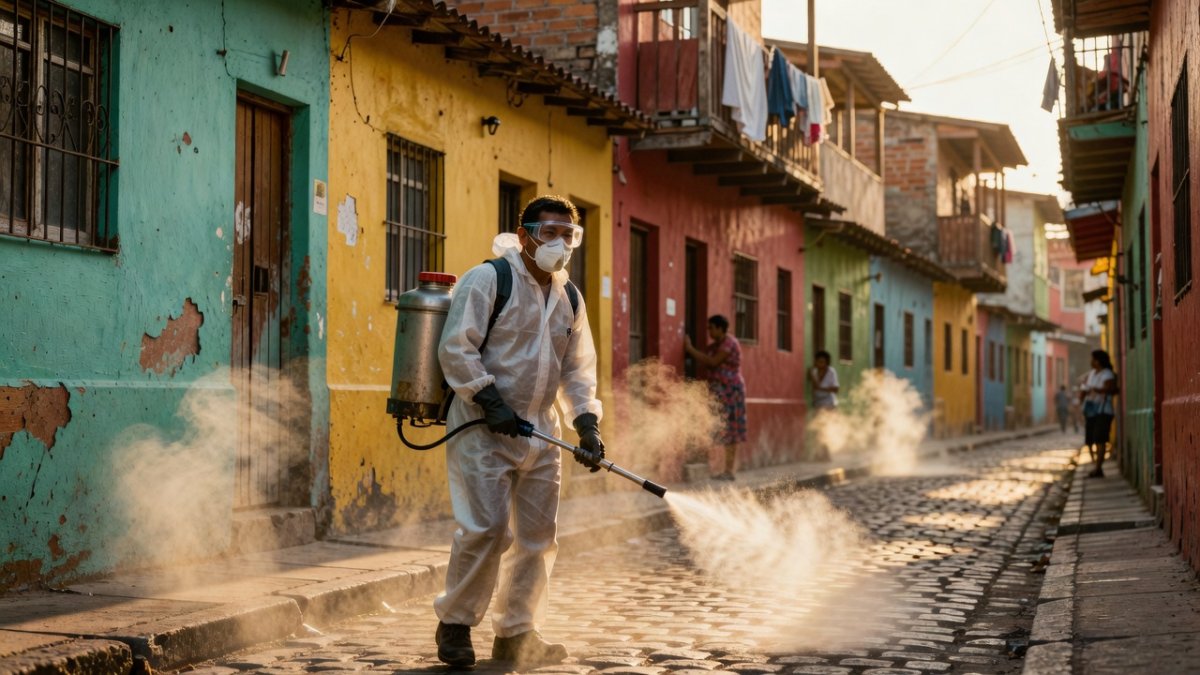
Cuba's health system has buckled under the weight of concurrent dengue, chikungunya, and Oropouche outbreaks, revealing how political isolation and infrastructure decay amplify mosquito-borne disasters. Official data recorded 43,911 combined suspected cases in 2025-2026, though authorities conceded the figures "do not reflect reality," while PAHO tallied 81,909 dengue and chikungunya cases for the island that year. Chikungunya reached all 15 provinces after reemerging mid-2025, with up to 700 new daily infections in Havana and Matanzas at the height of transmission. PAHO documented 65 deaths linked to the two viruses, more than half among children. Hospitals remain colapsados, lacking medications, diagnostic supplies, and IV fluids. Contributing factors include poor sanitation, garbage accumulation, 18-20 hour blackouts that halt refrigeration and vector control, and fuel scarcity preventing fumigation teams from reaching affected neighborhoods. Cuban officials cite the U.S. embargo as the primary driver of medicine and supply shortages, yet the crisis also stems from years of underinvestment in water systems and waste management. The CDC issued a Level 2 travel warning, advising heightened precautions for visitors. PAHO/WHO's February 2026 update called for immediate surveillance reinforcement, but daily realities on the ground show families navigating darkened wards with little more than paracetamol and hope. This multi-arboviral nightmare underscores how climate and governance failures intersect to devastate the most vulnerable populations.
Brazil's Vaccine Gamble: Progress and Setback
Brazil has pursued an ambitious yet turbulent vaccination strategy against dengue while chikungunya gains ground elsewhere, illustrating both innovation and the perils of rapid rollout. The Ministry of Health expanded access to Takeda's Qdenga vaccine for ages 10-14 through the SUS public system, aiming to blunt future surges after the 6-7 million cases and 6,000 deaths of 2024. In February 2026 the Butantan Institute began distributing its single-dose vaccine to health workers, offering hope for frontline protection. Yet by June 2026 authorities paused the Butantan campaign following serious adverse events: two deaths and dozens of severe reactions among roughly 500,000 doses, equating to a 0.008 percent serious reaction rate. These setbacks arrived even as national cases dropped 75 percent to 227,000 in the first four months of 2026 versus 916,000 the previous year. The Ministry continues monitoring while emphasizing that 2025's 1.6-1.7 million cases and 1,700 deaths still demand vigilance. Argentina's ANLIS-Malbrán laboratory has supported regional diagnostics, yet Brazil's experience reveals the delicate balance between speed and safety in vaccine deployment. Public trust hinges on transparent communication about risks and benefits, especially as chikungunya threatens to migrate northward from Caribbean hotspots. The dual-epidemic landscape forces Brazilian policymakers to refine strategies that protect millions without repeating adverse outcomes.Climate Change Expands the Mosquito's Reach
Warming temperatures and shifting weather patterns are pushing Aedes aegypti into new territories, transforming dengue and chikungunya from seasonal nuisances into year-round threats across Latin America. The mosquito now thrives in previously temperate zones, with Chile confirming its presence in Santiago by early 2026 and sparking urgent alerts about possible local transmission. An El Niño event carries an 80 percent probability by August 2026 and 90 percent likelihood into late 2026, promising intensified rainfall, flooding, and heat that favor vector proliferation. Peter Hotez warned in 2026 that accelerating spread of dengue, chikungunya, Zika, and Oropouche from Brazil into densely populated areas could overwhelm unprepared cities. Brazil's 13 million regional dengue cases in 2024 already demonstrated how climate-amplified breeding sites multiply transmission. Cuba's garbage-strewn streets and erratic electricity supply further illustrate how environmental stressors compound biological risks. PAHO/WHO's February 2026 update stressed integrated surveillance precisely because climate change erodes the predictability of outbreak seasons. Without aggressive adaptation—improved drainage, resilient power grids, and cross-border coordination—these epidemics will recur with greater force, displacing the hard-won gains seen in Brazil's 2026 case reductions.What This Means for Latin America
The converging epidemics signal a broader regional emergency that demands coordinated political will, sustained funding, and community-level action beyond national borders. Brazil's partial success in lowering cases to 227,000 early in 2026 proves vaccines can bend curves when deployed safely, yet Cuba's overwhelmed hospitals and 65 child-heavy deaths reveal how sanctions, blackouts, and sanitation failures nullify medical advances. Chile's new Aedes aegypti foothold and Argentina's downward trend tracked by ANLIS-Malbrán show the virus moving unpredictably with climate currents. The 13 million 2024 cases and Brazil's 6,000 deaths exceeding COVID-19 mortality underscore that mosquito-borne diseases now rival major respiratory threats. PAHO/WHO and CDC warnings highlight the need for real-time data sharing, while the U.S. embargo's impact on Cuban supplies illustrates how geopolitics hinders containment. Latin American governments must invest in resilient infrastructure, expand proven vaccines like Qdenga and Butantan's candidate, and address root drivers such as El Niño-amplified extremes. Failure to act risks repeating 2024's record carnage across new frontiers.The Bottom Line — A Region on Alert
Latin America stands at a crossroads where two mosquito-borne epidemics expose the limits of fragmented health systems and the accelerating dangers of climate change. Record dengue numbers, Cuba's multi-virus collapse, Brazil's vaccine triumphs and pauses, and the mosquito's march into Santiago together paint a continent under siege. Sustained surveillance urged by PAHO/WHO, honest reckoning with adverse events, and cross-border solidarity remain essential if the region hopes to prevent future waves from eclipsing even 2024's grim totals. Families like those in Havana deserve more than temporary lulls; they need permanent protection rooted in science, equity, and environmental stewardship. By Elena Vasquez, Staff WriterThis article was produced with AI-assisted research and editorial support. Reporting is based on sources cited in the article.
What's Your Reaction?
 Like
0
Like
0
 Dislike
0
Dislike
0
 Love
0
Love
0
 Funny
0
Funny
0
 Wow
0
Wow
0
 Sad
0
Sad
0
 Angry
0
Angry
0

Elena Vasquez
Latin America Correspondent at Global1.News. Based in Mexico City, covering politics, economics, energy, and culture across the region. Brings an on-the-ground perspective to stories spanning from the Rio Grande to Patagonia.












Comments (0)