
KHI-Airbus MOU for Japanese Eurodrone Anti-Submarine Variant
KHI-Airbus MOU Explores Japanese Eurodrone Anti-Submarine Variant Kawasaki Heavy Industries and Airbus signed an MOU on June 26 to study a Japanese anti-submarine variant of the U950 Eurodrone, building on Japan's observer status since 2023. Keywords: KHI, Airbus, Eurodrone, U950, Kawasaki Heavy Industries, anti-submarine warfare, Japan defense, MOU, long-endurance drone, remot
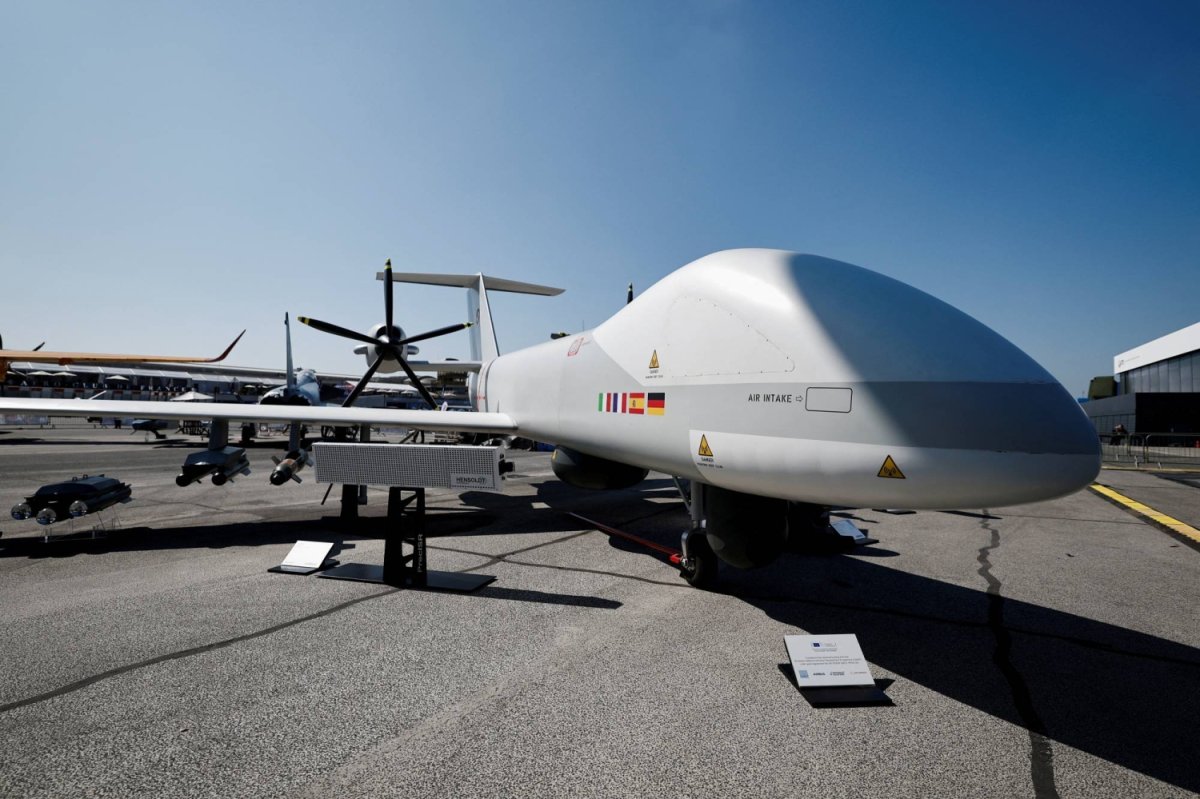
KHI Airbus Partnership Advances Japan Eurodrone Ambitions
Kawasaki Heavy Industries signed a memorandum of understanding with Airbus on June 26 2026 to study a Japanese anti-submarine variant of the U950 Eurodrone. The agreement was announced in an Airbus statement late Friday and reported the next day by Jesse Johnson in the Japan Times. This development directly connects to Japan's observer role in the Eurodrone program that began in 2023. Source: Japan Times
Tags: KHI, Airbus, Eurodrone, U950, anti-submarine, Japan defense, MOU
The KHI-Airbus Memorandum of Understanding
The memorandum of understanding between Kawasaki Heavy Industries and Airbus directs both companies to analyze opportunities for developing a Japanese variant of the U950 Eurodrone focused on anti-submarine warfare. Signed in late June 2026 the document establishes a framework for joint study without committing to immediate production. Jesse Johnson reported the details from the Airbus statement issued on June 26 2026 in the Japan Times article published the following day.
This agreement reflects careful industrial planning by Japanese and European partners. Kawasaki Heavy Industries brings extensive experience in maritime patrol systems while Airbus contributes its leadership in the Eurodrone program. The MOU avoids premature commitments and instead emphasizes analytical work to identify feasible modifications for Japanese operational needs.
Industry observers note that such memoranda often precede deeper collaboration once technical requirements are clarified. The June 2026 timing aligns with Japan's ongoing review of long-endurance unmanned systems. Both companies will now conduct internal assessments before any further steps are considered.
Understanding the U950 Eurodrone
The U950 Eurodrone represents Europe's first large long-endurance remotely piloted aircraft system designed for multiple military roles. Developed under a multinational European program the platform offers extended flight times and substantial payload capacity suitable for maritime surveillance missions. Its baseline configuration provides a foundation that could accommodate specialized sensors for anti-submarine operations.
Technical specifications emphasize reliability and interoperability among European forces. The aircraft's design supports long-range patrols over ocean areas where submarine threats require persistent monitoring. Adaptation for Japanese requirements would likely involve integration of domestic sonar buoys and data links compatible with Japan Self-Defense Forces networks.
Airbus has positioned the U950 as a strategic asset for future European defense cooperation. The platform's modular architecture allows potential variants without redesigning core airframe elements. This flexibility supports the current study with Kawasaki Heavy Industries announced in June 2026.
Japan's Observer Role Since 2023
Japan has maintained observer status in the Eurodrone program since 2023 allowing access to program information without full membership obligations. This position enables Japanese officials to monitor development progress and assess compatibility with national defense priorities. The observer role has facilitated informal exchanges that preceded the June 2026 memorandum of understanding.
Observer participation reflects Japan's broader interest in European defense technologies amid evolving regional security dynamics. Since 2023 Japanese representatives have attended selected meetings and received technical briefings on the U950 platform. Such engagement supports informed decision-making regarding potential future involvement.
The 2023 observer arrangement provided a low-risk entry point for Japan. It allowed evaluation of the Eurodrone's performance parameters before committing resources to variant studies. The current KHI-Airbus agreement builds directly on this foundation established three years earlier.
Anti-Submarine Warfare Requirements
Japan faces specific anti-submarine warfare needs driven by its extensive maritime boundaries and regional submarine activity. The study outlined in the June 2026 memorandum will examine how the U950 Eurodrone could carry specialized detection equipment suited to these conditions. Integration of magnetic anomaly detectors and sonobuoy dispensers represents key areas under review.
Long-endurance unmanned platforms offer advantages for continuous ocean surveillance compared to manned aircraft. The U950's design endurance supports extended missions over remote sea lanes where submarine contacts must be tracked over time. Japanese requirements emphasize seamless data sharing with surface ships and patrol aircraft already in service.
The analytical phase will determine necessary modifications to the baseline Eurodrone configuration. Kawasaki Heavy Industries will contribute expertise on Japanese sensor systems while Airbus evaluates airframe and flight control adaptations. Outcomes of this work will guide any subsequent development decisions.
Industrial Cooperation and Technology Transfer
The memorandum between Kawasaki Heavy Industries and Airbus opens channels for potential technology cooperation on unmanned aircraft systems. Both companies will assess opportunities for sharing manufacturing processes and integration techniques during the study phase. Such collaboration could strengthen Japan's domestic capabilities in long-endurance drone production.
Technology transfer considerations remain central to the ongoing analysis. Japanese regulations governing defense-related exports and imports will shape the scope of any future agreements. The June 2026 MOU provides a structured setting to explore these issues without immediate commitments.
Industrial partnerships of this nature often evolve gradually through successive agreements. The current focus on analytical work allows both sides to identify mutually beneficial areas before advancing to prototype development. Kawasaki Heavy Industries experience with maritime systems complements Airbus expertise in European drone programs.
Strategic Context: Japan's Defense Buildup
Japan continues to expand its defense capabilities in response to regional security developments. The June 2026 agreement with Airbus fits within this broader effort to acquire advanced unmanned systems for maritime patrol. Long-endurance drones offer persistent surveillance that complements existing manned aircraft fleets.
Procurement decisions increasingly emphasize interoperability with allied forces. The Eurodrone platform's European origins provide potential for coordination with partner nations operating similar systems. Japan's observer status since 2023 has supported evaluation of these strategic alignment opportunities.
Defense planners view unmanned platforms as force multipliers for anti-submarine missions. The study initiated by Kawasaki Heavy Industries and Airbus will clarify whether the U950 can meet Japanese performance thresholds. Results will inform future budget and acquisition planning cycles.
Global MALE Drone Market Competition
The medium-altitude long-endurance drone sector features established platforms from multiple international suppliers. The Eurodrone program positions European industry to compete in this segment with a domestically developed alternative. Japan's interest adds a significant potential customer for a variant configuration.
Market dynamics encourage manufacturers to pursue customization for specific national requirements. The June 2026 memorandum represents one such effort to adapt the U950 for Japanese anti-submarine roles. Success would expand the platform's addressable market beyond its original European partners.
Competition in this sector drives continuous improvement in endurance sensor integration and cost efficiency. The analytical work between Kawasaki Heavy Industries and Airbus will test the U950's adaptability against these benchmarks. Outcomes may influence future competitive positioning for all participants.
Outlook and Next Steps
The June 2026 memorandum initiates a defined study period during which both companies will evaluate technical and operational feasibility. Results of this analysis will determine whether further collaboration proceeds toward prototype development or production planning. Timelines remain subject to internal reviews by Kawasaki Heavy Industries and Airbus.
Japanese defense officials will monitor progress closely given the platform's potential contribution to maritime security. Continued engagement through the observer role established in 2023 supports informed oversight of the study outcomes. Any future decisions will balance capability requirements with industrial and budgetary considerations.
Industry sources expect the analytical phase to last several months before recommendations emerge. The Japan Times reporting by Jesse Johnson indicates that both companies view the memorandum as a constructive first step. Subsequent announcements will clarify the trajectory of this bilateral effort.
By Kenji Tanaka, Staff Writer
This article was produced with AI-assisted research and editorial support. Reporting is based on sources cited in the article.
What's Your Reaction?
 Like
0
Like
0
 Dislike
0
Dislike
0
 Love
0
Love
0
 Funny
0
Funny
0
 Wow
0
Wow
0
 Sad
0
Sad
0
 Angry
0
Angry
0

Japan Correspondent at Global1.News. Tokyo-based voice covering Japanese politics, technology, economy, and culture. Tracks the intersection of tradition and innovation in one of the world's most dynamic societies.














Comments (0)