
K-Pop at 2026 World Cup: Korea Cultural Diplomacy Push
**Meta Description:** K-Pop artists including BTS and BLACKPINK headline the 2026 FIFA World Cup, advancing South Korea's cultural diplomacy and global influence through Hallyu on the largest international stage. **Keywords:** k-pop 2026 world cup, korea soft power, hallyu diplomacy, bts world cup final, cultural diplomacy korea, lisa blackpink fifa, korean wave international r
The 2026 FIFA World Cup, jointly hosted by the United States, Canada, and Mexico, opened on June 11, 2026, with K-pop artists occupying a central position in the tournament's entertainment program. This development represents more than a commercial entertainment choice; it constitutes a measurable exercise in South Korean cultural diplomacy that aligns state interests with global popular culture.
K-Pop Presence as Cultural Diplomacy Phenomenon
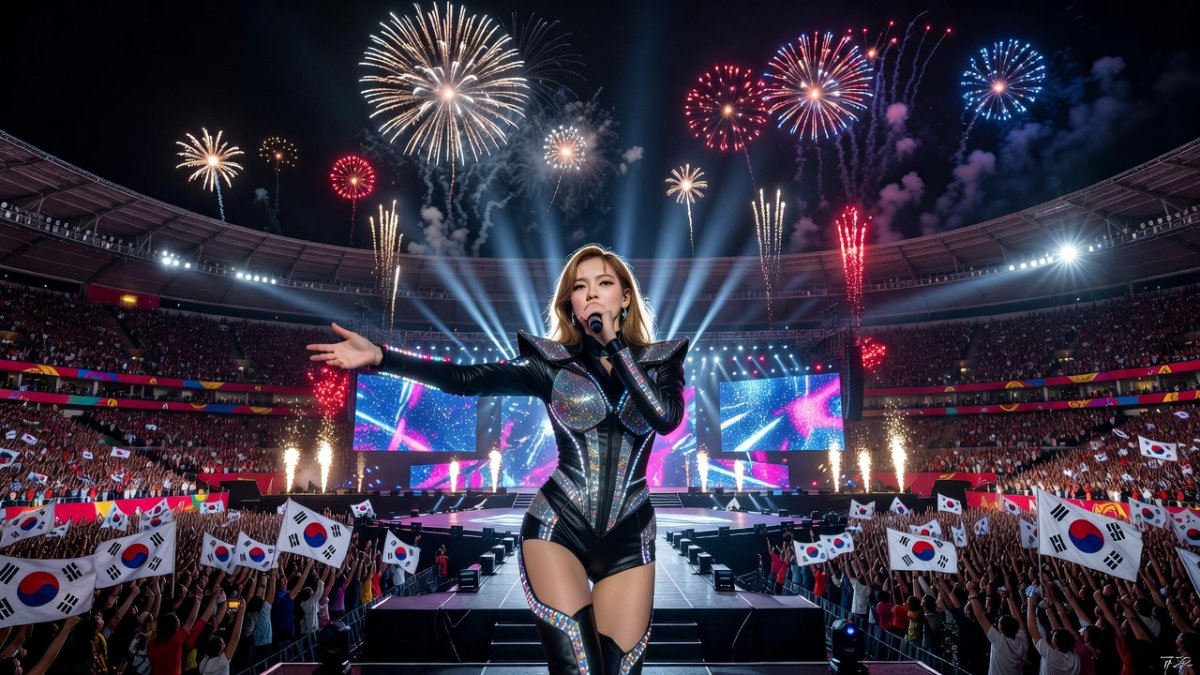
LISA of BLACKPINK performed "Goals" alongside Anitta and Rema at the United States opening ceremony, while Katy Perry and Future also appeared on the same bill. These selections placed Korean performers alongside established international acts, ensuring visibility across broadcast markets in North America and beyond.
The placement of Korean artists at multiple match ceremonies extends the reach of Hallyu into audiences that may not regularly consume Korean media. This integration into a quadrennial global sporting event amplifies exposure without requiring additional state expenditure on traditional public diplomacy campaigns.
Strategic Deployment of Hallyu for Diplomatic Objectives
South Korea has long treated cultural exports as instruments of foreign policy. The current World Cup performances continue this pattern by embedding Korean performers within an event that draws sustained international media attention over several weeks. Government agencies responsible for cultural promotion have historically coordinated with entertainment companies to maximize such opportunities, though operational details of coordination for 2026 remain limited in public records.
The strategy yields returns in public perception metrics. Fan polling conducted by Billboard showed BTS receiving 54 percent of more than 8 million votes and LISA receiving 43 percent of more than 6.5 million votes for preferred performers, indicating measurable audience engagement that extends beyond commercial music charts into broader cultural affinity.
Economic and Diplomatic Implications for Global Standing
Commercial spillovers have already appeared in merchandise channels. South Korea's national team jerseys sold out in Mexico, demonstrating demand that crosses both sporting and cultural interest. Such sales contribute to brand recognition for Korean manufacturers and reinforce associations between Korea and contemporary popular culture.
Diplomatically, these moments create low-friction contact points with publics in host countries. Unlike formal state visits or trade negotiations, cultural performances operate through entertainment media that reach demographics less attentive to conventional diplomacy. The cumulative effect supports Korea's positioning as a middle power capable of shaping global cultural narratives.
Comparison with Earlier K-Pop and Sports Diplomacy Efforts
Previous instances of Korean cultural projection through sport include performances tied to the 2002 FIFA World Cup co-hosted with Japan and selected appearances at Olympic ceremonies. Those earlier efforts operated at smaller scale and lacked the centralized halftime format now planned for the 2026 final. The 2026 program therefore marks an escalation in both duration of exposure and integration into the tournament's flagship match.
The decision to feature BTS at the final represents a further departure from prior practice. Earlier Korean performances typically occurred at opening or group-stage events; placement at the decisive match concentrates attention at the tournament's peak viewership moment.
Alignment with President Lee Jae-myung's Cultural Agenda
President Lee Jae-myung has emphasized cultural diplomacy as a component of foreign policy since taking office. The World Cup engagements provide concrete illustrations of this priority, linking entertainment exports to broader objectives of enhancing Korea's international profile. While specific presidential directives concerning the 2026 lineup have not been publicly detailed, the timing coincides with ongoing government support for Hallyu expansion into new geographic and institutional settings.
BTS at the World Cup Final Halftime Show
BTS is scheduled to perform at the FIFA World Cup Final halftime show on July 19, 2026, at MetLife Stadium in East Rutherford, New Jersey. This appearance constitutes the first Super Bowl-style halftime production in World Cup history. BTS will share the stage with Madonna and Shakira, with Coldplay's Chris Martin serving as curator of the lineup.
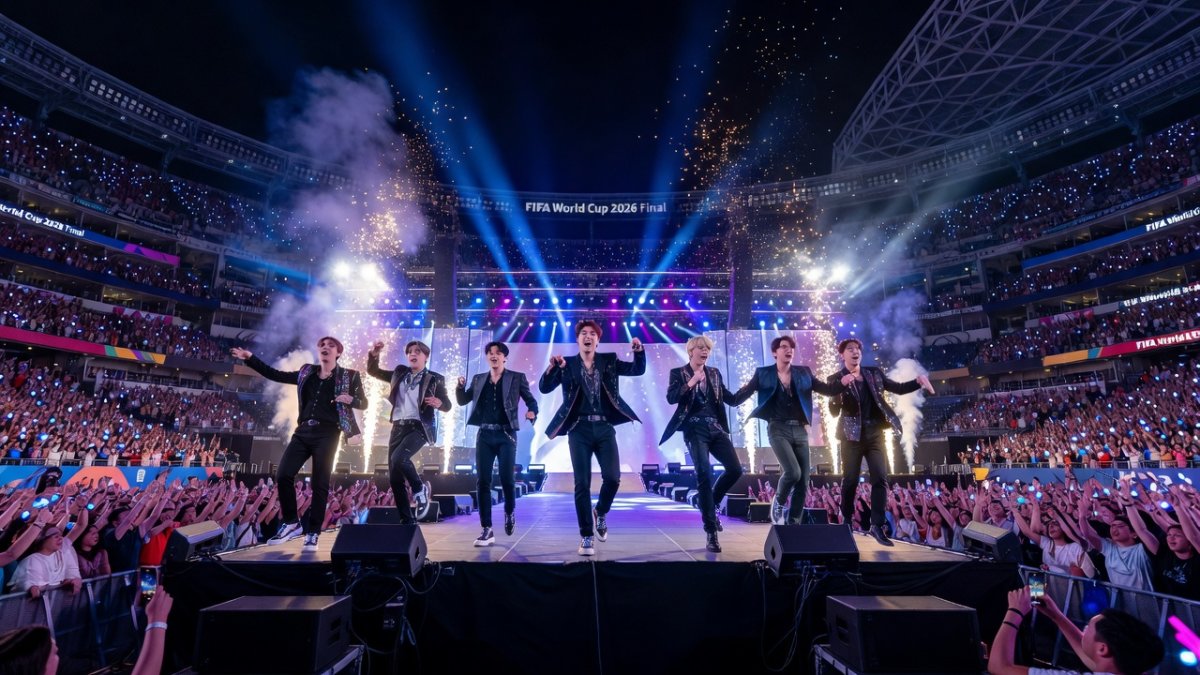
The final match commands the largest single audience of the tournament. BTS's participation therefore places Korean performers before viewers who may have limited prior exposure to Korean music, extending the reach of Hallyu into segments of the global public that primarily follow international sports rather than popular music charts.
Expert Analysis on International Relations Impact
From an international relations perspective, the 2026 World Cup engagements illustrate how middle powers can leverage cultural assets to accumulate soft power resources. Korea's approach combines private-sector entertainment production with state-level diplomatic framing, creating synergies that formal alliances alone cannot replicate. The performances do not alter material power balances, yet they incrementally shift perceptions of Korea from a security-focused actor to a cultural trendsetter.

Over time, sustained visibility of this kind may facilitate diplomatic initiatives by reducing cultural distance between Korea and foreign publics. The 2026 case provides a benchmark for assessing whether similar cultural placements at future mega-events produce measurable effects on public opinion surveys or tourism flows. Continued monitoring of audience data and commercial indicators will clarify the durability of these gains.
By Prof. David Park, Staff Writer
This article was produced with AI-assisted research and editorial support. Reporting is based on sources cited in the article.
What's Your Reaction?
 Like
0
Like
0
 Dislike
0
Dislike
0
 Love
0
Love
0
 Funny
0
Funny
0
 Wow
0
Wow
0
 Sad
0
Sad
0
 Angry
0
Angry
0

East Asia/Technology Correspondent at Global1.News. Seoul-based voice covering Korean politics, technology, business, and culture. Analyzes how technology and geopolitics intersect across East Asia.












Comments (0)