
Japan's Proposed Defense Export Framework and Its Ripple Effects on South Korean Industry
Defense Minister Koizumi Shinjiro has confirmed the government is examining a Japanese-style FMS framework. (Global 1 News) Japan's Proposed Defense Export Framework and Its Ripple Effects on South Korean Industry Japan is examining the establishment of a government-to-government defense sales mechanism modeled on the United States Foreign Military Sales system. Defense Ministe
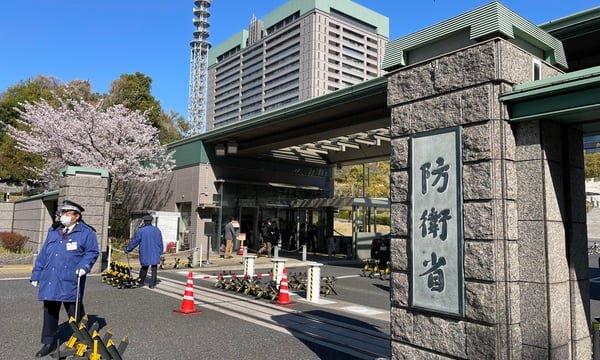
Defense Minister Koizumi Shinjiro has confirmed the government is examining a Japanese-style FMS framework. (Global 1 News)
Japan's Proposed Defense Export Framework and Its Ripple Effects on South Korean Industry
Japan is examining the establishment of a government-to-government defense sales mechanism modeled on the United States Foreign Military Sales system. Defense Minister Koizumi Shinjiro has stated that relevant ministries are conducting continuous deliberations on institutional arrangements, including a possible independent administrative agency to manage exports and industrial development. This step would represent a significant evolution from the post-2014 framework, under which Japanese firms have handled overseas sales largely on their own.
The proposed organization would centralize contracting, training, logistics, and long-term support functions that private companies have found difficult to sustain. Japanese officials have framed the initiative around the concept that production capacity itself constitutes deterrence, drawing directly from observations of prolonged conflict in Ukraine. Such measures are expected to appear in revisions to Japan's three key national security documents later this year, with implementing legislation possibly following in 2027.
South Korea's DAPA System as a Comparative Benchmark
South Korea has operated a more integrated government-supported export structure for years through the Defense Acquisition Program Administration, or DAPA, working alongside the Korea Trade-Investment Promotion Agency, known as KOTRA. DAPA coordinates acquisition, offsets, financing packages, and sustainment agreements, allowing Korean firms to offer comprehensive packages that include decades-long maintenance commitments. This institutional arrangement has contributed to the steady expansion of Korean defense sales in Southeast Asia, the Middle East, and Eastern Europe.
Japanese planners have explicitly referenced the existence of such specialized bodies in other countries, including DAPA, as evidence that dedicated government frameworks can improve competitiveness. Should Tokyo establish a comparable agency, South Korean exporters may encounter more structured competition in markets where government-to-government assurances carry decisive weight. Seoul's existing mechanisms, however, benefit from longer operational experience and established relationships with end users.
Competition Between Korean and Japanese Defense Industries
The emergence of a Japanese-style FMS system would intensify rivalry between the two countries' defense sectors in third-country markets. Korean manufacturers have secured notable contracts for armored vehicles, artillery systems, and trainer aircraft by leveraging competitive pricing and rapid delivery timelines. Japanese firms, historically constrained by export policy and limited production volumes, have struggled to match these offerings despite technological strengths in sensors, propulsion, and naval systems.
A centralized Japanese export organization could alter this balance by providing foreign buyers with sovereign-level guarantees on supply continuity and technology support. This shift would place additional pressure on Seoul to refine DAPA procedures, expand financing instruments, and accelerate certification processes. Both governments are likely to emphasize interoperability with U.S. platforms, creating parallel but distinct pathways for allied procurement in the Indo-Pacific region.
Regional Security Dynamics in Northeast Asia
Enhanced Japanese defense export capacity carries implications for the broader Northeast Asian security environment. Equipment transfers to partners such as Australia, the Philippines, and Vietnam could strengthen collective deterrence against maritime coercion, yet they also risk accelerating arms competition with China and complicating inter-Korean dynamics. Seoul must weigh how closer Japanese engagement with regional militaries affects its own strategic autonomy and its role in multilateral exercises.
Historical sensitivities surrounding Japanese military exports remain salient in Korean public discourse and among some ASEAN partners. At the same time, shared concerns over North Korean missile development and Chinese naval expansion have already prompted deeper trilateral coordination among Seoul, Tokyo, and Washington. A more active Japanese defense industry could therefore serve as both a complementary and competitive element within this evolving architecture.
Industrial Base Resilience and Sustained Combat Capability
The concept of sustained combat capability, now prominent in Japanese strategic discussions, resonates with South Korean defense planners who maintain large standing forces and extensive ammunition stockpiles. Korea's defense industry has benefited from continuous domestic procurement that supports production lines for K2 tanks, K9 howitzers, and KF-21 fighters. Japanese efforts to enlarge its own production base through export demand could indirectly influence global supply chains for critical components and dual-use technologies such as drones and autonomous systems.
Both countries face the challenge of maintaining skilled workforces and technological edges while managing reputational and regulatory constraints. Government-backed export mechanisms may help amortize research costs and stabilize order books, yet they also require careful alignment with alliance commitments and export control regimes. Seoul's experience with DAPA offers a practical reference point for Tokyo as it designs its institutional response.
Strategic Outlook for Korean Policy and Alliance Coordination
South Korean policymakers are likely to monitor Japan's deliberations closely as they update their own defense industrial strategies. Strengthening DAPA's international liaison functions, expanding offset negotiation frameworks, and deepening cooperation with U.S. Foreign Military Sales channels represent possible avenues for maintaining competitive advantage. At the same time, opportunities may arise for selective Korea-Japan industrial collaboration on dual-use technologies where mutual interests align.
The broader trajectory points toward a more pluralized defense export landscape in Northeast Asia, in which government institutions play larger roles in shaping both commercial outcomes and security partnerships. How Seoul positions its acquisition and export apparatus in response will influence not only market shares but also the distribution of influence across the Indo-Pacific's emerging security networks.
By Prof. David Park, Staff WriterThis article was produced with AI-assisted research and editorial support. Reporting is based on sources cited in the article.
What's Your Reaction?
 Like
0
Like
0
 Dislike
0
Dislike
0
 Love
0
Love
0
 Funny
0
Funny
0
 Wow
0
Wow
0
 Sad
0
Sad
0
 Angry
0
Angry
0

East Asia/Technology Correspondent at Global1.News. Seoul-based voice covering Korean politics, technology, business, and culture. Analyzes how technology and geopolitics intersect across East Asia.













Comments (0)