
Japan's Hospitals Deploy AI in Diagnostics and Emergency Care
Japan's AI Healthcare Deployment: NHK WORLD-JAPAN Analysis **Meta Description:** NHK WORLD-JAPAN reports on Japanese hospitals integrating AI for diagnostic imaging and emergency triage under MHLW trials, addressing workforce needs under Society 5.0. **Keywords:** NHK WORLD-JAPAN, AI healthcare Japan, MHLW AI regulation, diagnostic imaging AI, emergency department triage, Socie
Introduction
NHK WORLD-JAPAN released its report on June 13 2026 titled Deploying AI on the frontline of healthcare. The broadcast examined how selected Japanese hospitals are incorporating artificial intelligence into diagnostic imaging workflows and emergency department operations. The coverage focused on pilot programs rather than nationwide rollout, noting measured progress in specific facilities.
Japanese medical institutions have begun testing AI tools that assist with image analysis and initial patient assessment. These efforts align with broader government priorities under the Society 5.0 vision, which positions technology as a means to address demographic pressures. The NHK report avoided claims of immediate transformation and instead documented ongoing trials at university hospitals and regional centers.
International comparisons appeared briefly in the broadcast, including references to efficiency gains observed elsewhere. Within Japan, the emphasis remained on integration with existing clinical protocols and compliance with Ministry of Health Labour and Welfare guidelines. The report underscored that adoption remains incremental and subject to continued regulatory review.
AI Diagnostic Imaging
The Ministry of Health Labour and Welfare has supported controlled trials of AI-assisted X-ray screening for early cancer detection. These trials involve collaboration with technology providers including NTT, Fujitsu, and NEC. The NHK report highlighted that such systems are designed to flag potential abnormalities for radiologist review rather than replace human interpretation.
Keio University Hospital has participated in testing endoscopic AI applications. Training datasets for these tools have exceeded 200,000 images, allowing models to recognize patterns associated with gastrointestinal conditions. The report noted that performance metrics are still being evaluated against standard diagnostic benchmarks.
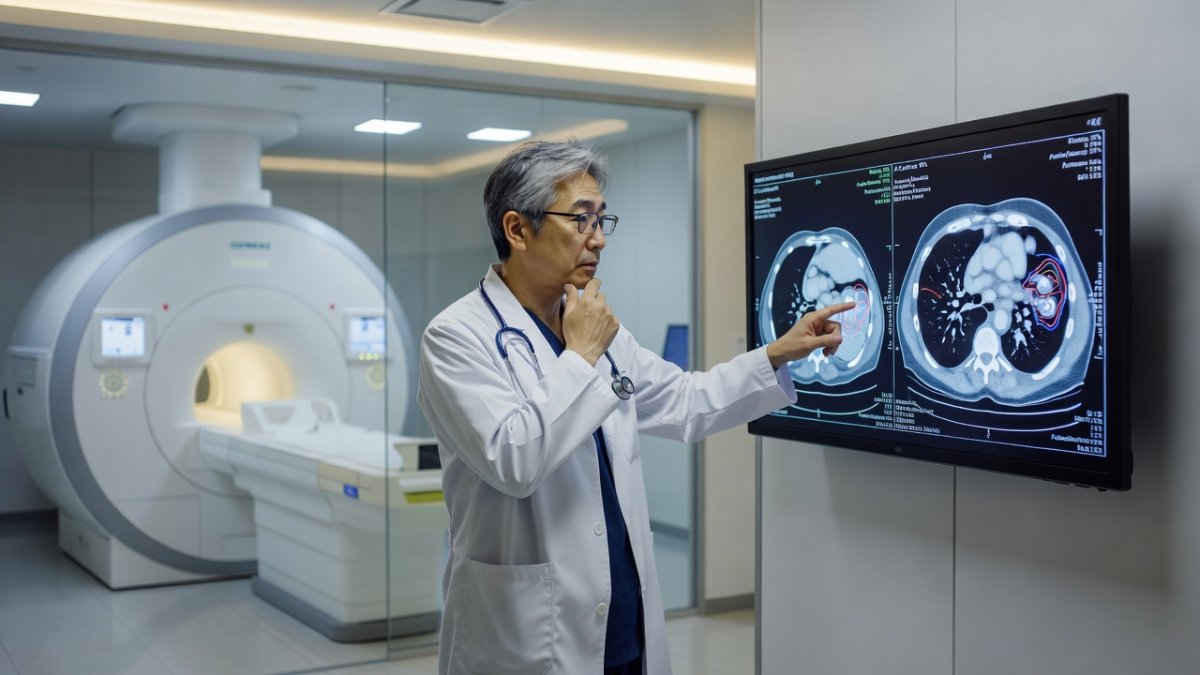
Japan maintains a leading position among OECD countries in the deployment of advanced imaging equipment. This infrastructure provides a foundation for AI integration, yet the NHK coverage stressed that clinical validation and data governance remain essential prerequisites. Hospitals continue to collect outcome data to assess whether AI assistance reduces diagnostic turnaround times without increasing false positives.
Further expansion of these imaging tools depends on additional approvals and integration with hospital information systems. The report observed that current implementations focus on high-volume procedures where incremental improvements could yield measurable benefits for patient throughput.
Emergency Department AI
AI triage systems are under evaluation in several Japanese emergency departments. These tools analyze patient symptoms and vital signs to suggest priority levels for physician attention. The NHK report presented examples where such systems operate alongside existing triage protocols rather than independently.
Clinical decision support functions have also been introduced in limited settings. These applications provide physicians with summarized relevant medical literature or similar case histories during initial assessment. The broadcast noted that adoption remains confined to pilot sites with dedicated oversight committees.
Reference was made to Singapore's reported 40 percent reduction in average wait times following AI triage implementation. Japanese observers cited in the report viewed this figure as context rather than a direct target, given differences in patient volume and regulatory environments. Continued monitoring of both efficiency and safety indicators is required before broader application.
Regulatory Framework
The Ministry of Health Labour and Welfare continues to develop specific guidelines for AI-based medical devices. Software as a Medical Device frameworks are being refined to address performance monitoring after market entry. The NHK report indicated that these efforts aim to balance innovation with patient safety requirements.
Society 5.0 identifies healthcare as a core pillar for technology application. Regulatory discussions therefore incorporate considerations of data privacy, algorithmic transparency, and liability assignment. The broadcast emphasized that approval pathways for AI tools remain distinct from those for conventional pharmaceuticals or hardware devices.
Stakeholders interviewed stressed the need for standardized evaluation criteria across institutions. Current proposals include post-market surveillance requirements that would track real-world performance of approved AI systems. These measures are intended to support iterative improvements while maintaining accountability.
Addressing Workforce Shortage
Japan's population aged 65 and older constitutes approximately 29 percent of the total, creating sustained demand for medical services. Rural regions face particular challenges in recruiting and retaining physicians. The NHK report presented AI deployment as one response to these structural constraints rather than a complete solution.
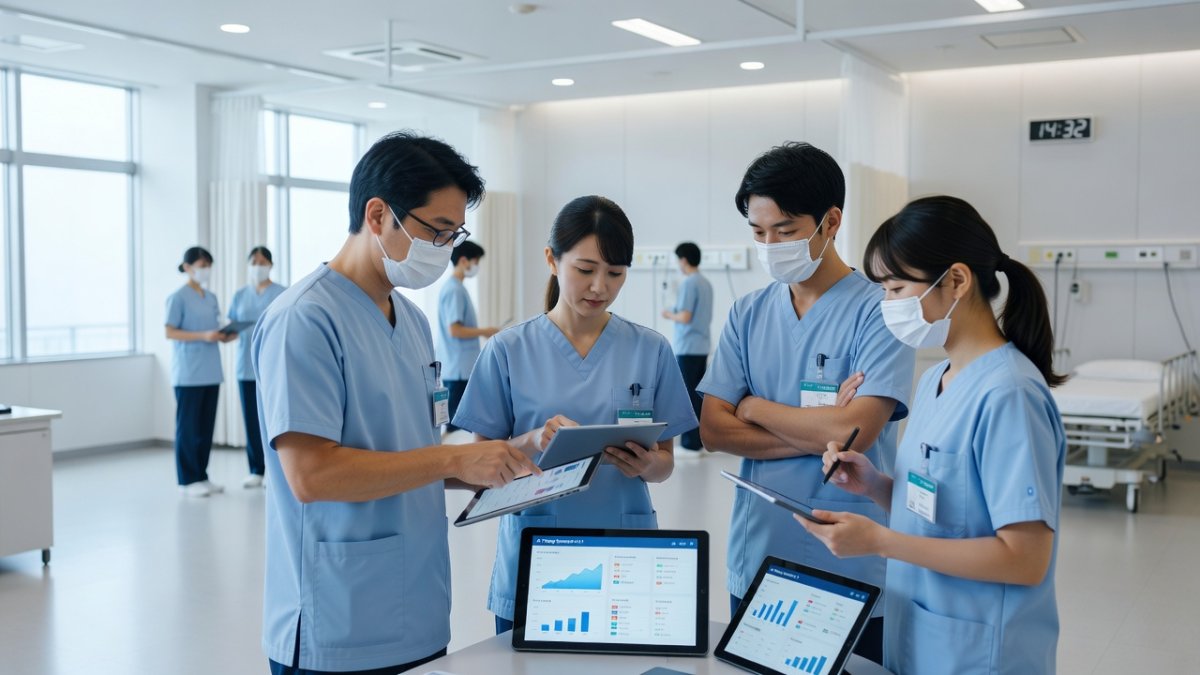
Hospitals in less densely populated areas have expressed interest in AI tools that could extend the reach of limited specialist staff. Diagnostic imaging assistance and triage support are viewed as mechanisms to prioritize cases requiring immediate human expertise. The coverage avoided projections of staff reduction and instead focused on workload redistribution.
Policy documents linked to Society 5.0 describe AI as a necessary complement to human resources in healthcare. The report noted that successful implementation will require training programs for medical personnel to interpret AI outputs effectively. Without such preparation, potential efficiency gains may not materialize.
Corporate Japan's Role
NTT Data, Fujitsu through its Uvance platform, and NEC have developed healthcare-focused AI offerings. These companies participate in government-supported trials and supply technical infrastructure for hospital pilots. The NHK report documented their involvement without detailing proprietary algorithms or performance claims.
Japan's startup ecosystem contributes additional solutions, often in partnership with larger firms or academic institutions. Prime Minister's New Capitalism agenda designates AI advancement as a strategic priority, directing public resources toward domestic technology development. The broadcast observed that this policy environment encourages collaboration between established corporations and newer entrants.
Commercial activity remains oriented toward compliance with emerging SaMD standards. Companies are investing in documentation and validation processes to meet Ministry expectations. The report suggested that sustained public-private coordination will influence the pace at which AI tools reach clinical settings.
Asia Pacific Implications
Japan positions itself as a regional reference point for regulated AI adoption in healthcare. Neighboring countries including China and South Korea pursue parallel initiatives with differing regulatory approaches. The NHK report noted that Japan's emphasis on data governance and post-market oversight may serve as a model for other systems seeking balanced implementation.
The Digital Agency supports health data infrastructure projects intended to facilitate secure information exchange. These efforts could enable larger-scale validation studies across multiple institutions. The broadcast indicated that standardized data formats would be necessary for meaningful cross-border comparisons of AI performance.
Regional leadership will depend on demonstrated clinical outcomes and transparent reporting. Japanese institutions continue to publish trial results in peer-reviewed channels, contributing to the evidence base available to policymakers throughout the Asia Pacific.
What to Watch For
Upcoming regulatory decisions on additional AI medical devices will determine the scope of future deployments. Expansion of existing pilots at sites such as Keio University Hospital may provide further data on diagnostic turnaround metrics. Observers will monitor whether efficiency improvements observed in controlled settings translate to routine practice.
Continued reporting from NHK WORLD-JAPAN and other outlets will track alignment between corporate development timelines and Ministry approval processes. Metrics on false-positive rates and physician acceptance will remain central to assessments of long-term viability.
By Kenji Tanaka, Staff Writer
This article was produced with AI-assisted research and editorial support. Reporting is based on sources cited in the article.
What's Your Reaction?
 Like
0
Like
0
 Dislike
0
Dislike
0
 Love
0
Love
0
 Funny
0
Funny
0
 Wow
0
Wow
0
 Sad
0
Sad
0
 Angry
0
Angry
0

Japan Correspondent at Global1.News. Tokyo-based voice covering Japanese politics, technology, economy, and culture. Tracks the intersection of tradition and innovation in one of the world's most dynamic societies.














Comments (0)