
Japan's Proposed Japanese-Style Foreign Military Sales Framework and Northeast Asian Security Implications
Japan's Proposed Japanese-Style Foreign Military Sales Framework and Northeast Asian Security Implications Japan's Deliberate Policy Shift Defense Minister Koizumi Shinjiro recently confirmed that Japanese ministries are examining a series of measures that could establish a Japanese-style Foreign Military Sales system. This framework would position the government as the primary
Japan's Deliberate Policy Shift
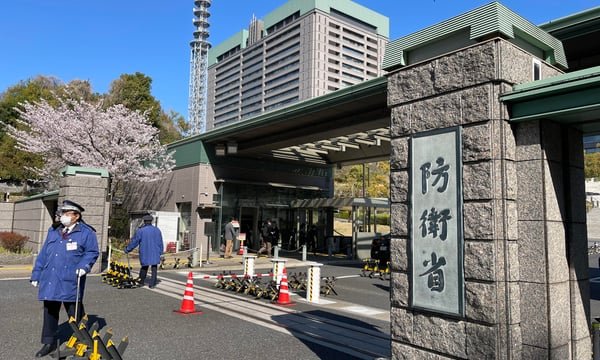
Defense Minister Koizumi Shinjiro recently confirmed that Japanese ministries are examining a series of measures that could establish a Japanese-style Foreign Military Sales system. This framework would position the government as the primary contracting party for overseas defense transactions rather than leaving negotiations primarily to individual firms. Koizumi described the ongoing work as continuous deliberations without indicating that final decisions have been reached. Such an approach represents a clear departure from the post-2014 model in which Japanese companies managed export processes with limited state intermediation.
The proposed system would introduce a dedicated institutional mechanism, potentially structured as an independent administrative agency, to coordinate sales, sustainment, and technology cooperation. Officials are evaluating how this entity could also advance dual-use capabilities in areas such as artificial intelligence and autonomous systems. The initiative may be incorporated into revisions of Japan's core national security documents scheduled for later this year. Implementing legislation, if pursued, is expected to follow potentially in 2027 rather than taking immediate effect.
Koizumi has situated the reform within a broader strategic rationale that links equipment transfers to enhanced deterrence for partner nations. He has characterized Japan's defense industrial base as a defense capability in its own right. This perspective underscores the view that reliable production capacity contributes directly to national security posture. The deliberations therefore extend beyond commercial considerations to encompass long-term alliance management and industrial resilience.
South Korea's Established Institutional Model
South Korea's Defense Acquisition Program Administration oversees government-to-government defense transactions through structured procedures that provide foreign buyers with standardized contracting and sustainment pathways. DAPA coordinates technical specifications, offset arrangements, and long-term logistics support that extend well beyond initial equipment delivery. This centralized approach has enabled consistent management of complex programs involving multiple Korean suppliers. The model demonstrates how state involvement can reduce buyer uncertainty regarding future support commitments.
The Korea Trade-Investment Promotion Agency complements DAPA by conducting market development activities and facilitating initial contacts with potential customers in priority regions. KOTRA's overseas networks help identify opportunities and support promotional efforts that individual firms might otherwise struggle to sustain. Together these organizations create an integrated export architecture that aligns commercial outreach with acquisition policy. Japanese planners are examining comparable institutional features as they assess options for their own framework.
Korean companies including Hanwha Aerospace, Hyundai Rotem, Korea Aerospace Industries, and LIG Nex1 have utilized this government-backed structure to secure and execute major international contracts. The presence of dedicated state agencies has allowed these firms to focus on manufacturing while relying on official channels for financing assurances and political commitments. A Japanese-style FMS system could introduce similar efficiencies, though Tokyo would need to adapt the model to its distinct industrial and regulatory environment. Observers note that such parallels are informing Japanese deliberations without implying direct replication.
Lessons from the Ukraine War and Industrial Deterrence
Defense Minister Koizumi has articulated the principle that production capacity itself constitutes deterrence, drawing explicit connections to observed shortfalls during Russia's invasion of Ukraine. The conflict has illustrated that advanced platforms alone cannot guarantee sustained operational effectiveness without corresponding industrial depth for replenishment and maintenance. Japanese policymakers are therefore considering how a more structured export system might simultaneously strengthen domestic production lines and support allied sustainment needs. This framing elevates defense-industrial policy from a secondary concern to a core element of national strategy.
Prolonged high-intensity operations have highlighted requirements for rapid ammunition resupply, spare-parts availability, and scalable manufacturing that many nations previously underemphasized. Japan's historically limited production volumes have left its defense sector vulnerable to similar constraints in a contingency. Establishing a government-mediated sales mechanism may help expand order books and thereby justify greater investment in capacity. Such measures are being examined as part of broader efforts to align industrial output with strategic deterrence objectives.
South Korea's defense sector has applied comparable lessons by expanding ammunition production facilities and securing large-scale export agreements that stabilize long-term manufacturing commitments. These steps have reinforced the perception that steady international demand can underpin domestic industrial resilience. Japanese discussions of a Japanese-style FMS reflect awareness of these dynamics without assuming identical policy responses. The emphasis remains on gradual institutional development rather than abrupt structural overhaul.
Chaebol Dynamics and Competitive Pressures
South Korea's defense industry operates within a chaebol-dominated structure in which large conglomerates maintain dedicated defense divisions alongside extensive commercial operations. This arrangement provides financial buffers and engineering resources that smaller specialized firms often lack. Japanese keiretsu groupings exhibit certain structural similarities yet have historically maintained more limited defense exposure due to earlier export constraints. The resulting differences in scale and risk tolerance influence how each country's firms approach international competition.
Hanwha Aerospace and Hyundai Rotem have pursued opportunities in Southeast Asia and the Middle East where Japanese manufacturers also hold established relationships in adjacent civilian sectors. A Japanese FMS mechanism could alter competitive dynamics by offering government-backed assurances on sustainment and technology transfer that appeal to risk-averse buyers. Korean firms may therefore face intensified pressure in markets where political reliability constitutes a decisive factor. Both sides continue to refine their respective institutional tools in anticipation of these shifts.
Policy analysts in Seoul are monitoring Japanese deliberations closely because expanded Tokyo export capacity could affect future contract flows in regions where Korean platforms have recently gained traction. The presence of parallel state-supported frameworks would intensify bidding processes without necessarily displacing existing suppliers. Korean conglomerates retain advantages in delivery timelines and pricing flexibility developed through recent high-volume programs. Sustained competitiveness will depend on continued alignment between industry capabilities and government export support mechanisms.
Inter-Korean Security and Deterrence Calculations
Enhanced Japanese defense production capacity could indirectly influence the military balance on the Korean Peninsula by strengthening the broader allied industrial base available to support extended deterrence commitments. Reliable access to Japanese-origin components or platforms might supplement U.S. supply chains during contingencies, thereby complicating North Korean planning assumptions. At the same time, any deepening of Japan-ROK defense-industrial linkages remains constrained by persistent historical sensitivities that limit the scope of bilateral cooperation. Seoul continues to calibrate its engagement with Tokyo accordingly.
North Korea has historically responded to perceived enhancements in allied capabilities with accelerated missile and nuclear development programs. Japanese institutional reforms that facilitate greater equipment outflows to partners could be interpreted in Pyongyang as further evidence of tightening containment. Such perceptions may prompt corresponding adjustments in North Korean force posture or diplomatic signaling. Regional stability therefore hinges on careful management of both capabilities and messaging surrounding the proposed Japanese framework.
While U.S.-ROK alliance mechanisms provide the primary extended deterrence guarantee, Japanese production resilience could offer supplementary depth in munitions and sustainment categories. This potential contribution is being weighed against the political complexities that continue to shape trilateral coordination. South Korean policymakers emphasize the importance of maintaining autonomous acquisition pathways even as they acknowledge the value of diversified allied supply options. The overall effect on Peninsula deterrence will depend on how implementation proceeds in the coming years.
Broader Northeast Asian Defense-Industrial Competition
The regional landscape already features multiple state-backed export organizations that facilitate government-to-government transactions for major suppliers. China's ongoing consolidation of its defense-industrial enterprises has produced vertically integrated entities capable of offering comprehensive packages to overseas clients. Japan's prospective entry with a dedicated FMS-style mechanism would add another structured competitor to an already crowded field. This development carries implications for pricing, technology transfer norms, and alliance alignment across Southeast Asia and beyond.
Existing players such as South Korea's DAPA-KOTRA combination have demonstrated the advantages of coordinated state support in securing and executing complex programs. A comparable Japanese institution could accelerate Tokyo's ability to translate technological strengths into sustained export success. The resulting competition may encourage all participants to refine financing instruments, training offerings, and long-term support arrangements. Such dynamics are likely to shape procurement decisions by middle powers seeking reliable partners.
Strategic recommendations for Seoul center on reinforcing the effectiveness of current institutional arrangements while exploring selective areas of cooperation with Tokyo where mutual interests align. Maintaining technological differentiation and delivery reliability will remain essential for Korean firms facing expanded Japanese offerings. Policymakers are also advised to monitor legislative developments in Japan through 2027 to anticipate shifts in market conditions. Coordinated responses that leverage both national capabilities and alliance frameworks could help preserve South Korea's position within the evolving regional defense-industrial order.
By Prof. David Park, Staff WriterThis article was produced with AI-assisted research and editorial support. Reporting is based on sources cited in the article.
What's Your Reaction?
 Like
0
Like
0
 Dislike
0
Dislike
0
 Love
0
Love
0
 Funny
0
Funny
0
 Wow
0
Wow
0
 Sad
0
Sad
0
 Angry
0
Angry
0

East Asia/Technology Correspondent at Global1.News. Seoul-based voice covering Korean politics, technology, business, and culture. Analyzes how technology and geopolitics intersect across East Asia.













Comments (0)