
Japan Faces Energy Risks as US-Iran Hormuz Talks Resume
**Keywords:** Japan energy security, Strait of Hormuz, US Iran talks 2026, Geneva negotiations, Mohammad-Bagher Ghalibaf, JD Vance, Sakhalin-2 imports, oil prices 2026, Hormuz closure GENEVA — A new round of negotiations between the United States and Iran opened in Geneva on Sunday, June 21, 2026, with Iranian negotiators led by Mohammad-Bagher Ghalibaf arriving hours ahead of
GENEVA — A new round of negotiations between the United States and Iran opened in Geneva on Sunday, June 21, 2026, with Iranian negotiators led by Mohammad-Bagher Ghalibaf arriving hours ahead of US Vice President JD Vance, even as Tehran announced it had re-closed the Strait of Hormuz over Israeli military strikes in southern Lebanon. The talks represent the first structured follow-up since President Donald Trump and Iranian President Masoud Pezeshkian signed a preliminary memorandum of understanding on June 17 at the Palace of Versailles, ending the active phase of a war that began on February 28, 2026. However, the negotiations opened under a cloud of renewed crisis: on June 20, Iran's military command announced it had re-closed the Strait of Hormuz, citing Israeli attacks on southern Lebanon that killed at least 29 people. For Japan, which relies on the Strait of Hormuz for approximately 95 percent of its crude oil imports, the outcome of these negotiations carries implications for energy security that extend well beyond the Middle East and directly affect households, businesses, and the nation's long-term energy strategy.
US and Iran Return to the Table in Geneva
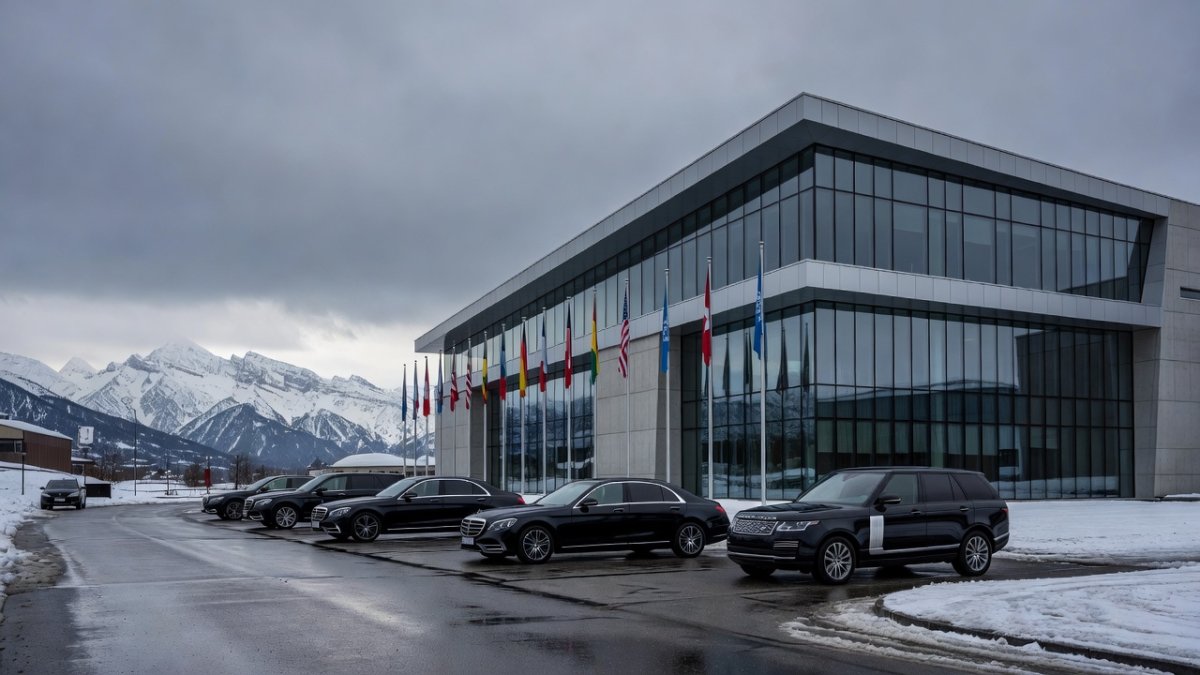
The Geneva meeting on June 21 brought together a senior Iranian delegation led by Mohammad-Bagher Ghalibaf, Iran's chief negotiator and parliamentary speaker, and US Vice President JD Vance, who traveled to Switzerland from Washington specifically for the session. Vance stated the US objectives with unusual directness before boarding his flight: "make progress on the nuclear issue, make progress on the Lebanon ceasefire issue." The meeting had originally been scheduled for Friday June 19 but was postponed at the last minute after Israel launched a wave of deadly strikes in southern Lebanon following the deaths of four Israeli soldiers in combat the previous day.
Washington announced a renewed ceasefire in Lebanon later on Friday as a condition of the preliminary MOU with Iran, but Israeli forces and Hezbollah fighters clashed again on Saturday, with each side accusing the other of violating the truce. By the time negotiators assembled in Geneva, the situation on the ground in southern Lebanon had already outpaced the diplomatic calendar. Japanese diplomats stationed in Geneva have maintained contact with both delegations through embassy channels, though Tokyo is not a direct participant in the talks. For Japanese policymakers, the concern is twofold: any nuclear understanding reached in Geneva, or failure to reach one, will shape global non-proliferation norms, and any instability in Hormuz transit directly affects Japan's energy supply chain.
The Geneva session is the first formal test of the June 17 memorandum, which suspended active hostilities between the United States and Iran. Under that agreement, Iran was to reopen the strait in exchange for the United States lifting its naval blockade of Iranian ports, which had been in effect from April 13 to May 29, 2026. The full text of the nuclear provisions, including any enrichment caps or IAEA access protocols, has not been published. Technical discussions led by Vance are expected to address the more complex issues of sanctions relief, frozen asset unfreezing, and the timeline for Iran's compliance verification.
Strait of Hormuz Re-Closed: A Crisis Within the Crisis
On June 20, Iran's Khatam-al Anbiya Central Headquarters issued a terse statement carried by the Mehr state news agency: "It is hereby announced that the Strait of Hormuz will be closed to vessel traffic." The statement explicitly cited Israeli attacks on southern Lebanon and the US failure to enforce the ceasefire provisions of the June 17 MOU. "It is noted that this first step is a response to the enemy's breach of promise, and if the aggression continues, further steps will be planned and taken to force the enemy to comply with its obligations," the military command warned.
The Islamic Revolutionary Guard Corps separately warned commercial vessels not to approach the strait or risk their security being compromised. This marked the second closure of the strategic waterway in less than a week. The strait had been effectively closed since February 28, when US and Israeli air strikes on Iranian nuclear and military facilities triggered the war. It was briefly reopened after the June 17 MOU, and shipping traffic had begun to recover, with tankers resuming partial operations. The re-closure on June 20 has thrown that recovery into uncertainty.
US Central Command responded by stating that safe passage through the strait had "remained intact" and that US forces were "present and vigilant." The statement suggested that the US military was continuing operations to maintain freedom of navigation despite Iran's announcement. President Trump escalated the rhetoric further, writing on Truth Social that there would be no tolls in the strait for 60 days during the ceasefire period, "unless they are imposed by and for the United States of America" if the deal is not completed by then. The toll threat introduces a new dimension to the crisis: the US is now signaling that it may seek to assert control over and monetize passage rights through the strait, a position with no modern precedent in international maritime law and one that major shipping nations including Japan would likely contest.
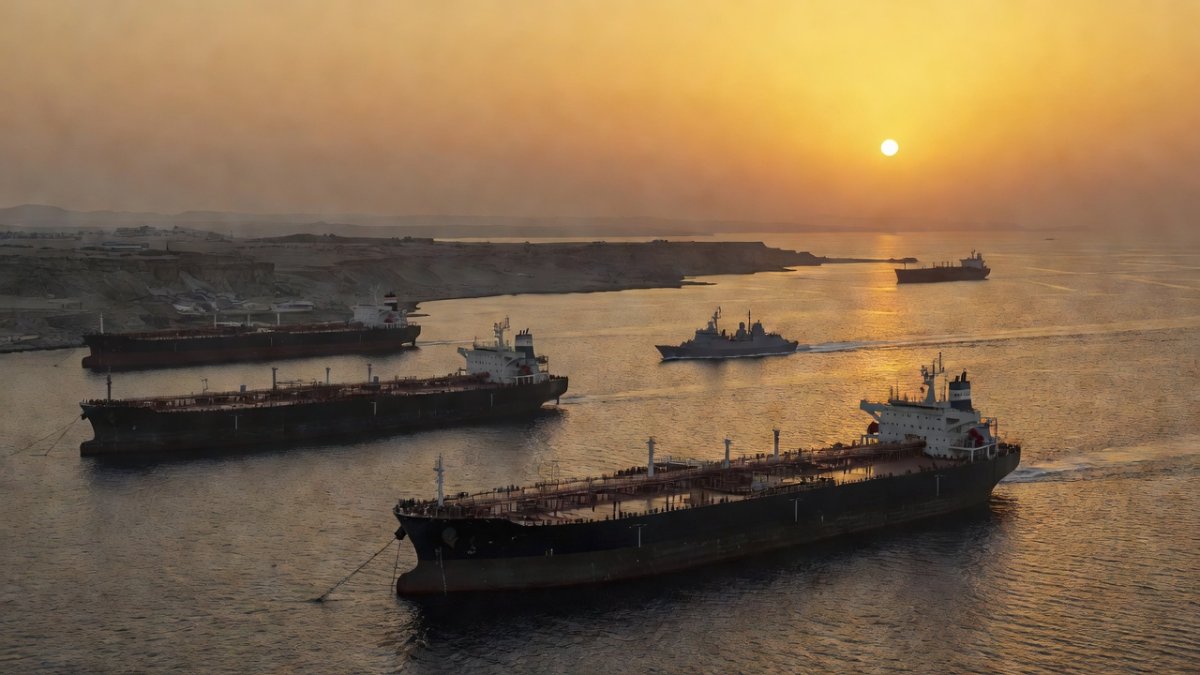
The Strait of Hormuz is 34 kilometers wide at its narrowest point, forming a seaway passage between Iran and Oman. Approximately 20 million barrels of oil pass through it daily, representing roughly one-fifth of global seaborne oil trade. An estimated 84 percent of crude and condensate shipments through the strait are destined for Asian markets. China receives about one-third of its oil imports via Hormuz. For Japan, the arithmetic is even more severe: nearly 95 percent of all crude imports transit this single chokepoint. During the initial closure from February to June, oil prices surged past $126 per barrel, the highest level in four years, and the March 2026 monthly increase was the largest in the history of the world oil market.
The Fragile MOU and Its Unraveling
The June 17 memorandum signed by Trump and Pezeshkian at the Palace of Versailles during the G7 summit was hailed by both sides as a breakthrough that could end one of the most consequential military conflicts of the decade. The MOU suspended active US-Iran hostilities, which had included US and Israeli air strikes on Iranian nuclear and military facilities beginning February 28, Iranian missile and drone attacks on Israel and US bases in the region, and the US naval blockade of Iranian ports from April 13 to May 29. Under the terms of the agreement, Iran committed to reopening the strait, while the US committed to lifting its blockade. The nuclear file — including enrichment caps, centrifuge limits, and IAEA inspection protocols — was left for follow-up negotiations, which were supposed to begin on June 19 in Geneva.
The unraveling began almost immediately. On June 19, Israeli forces launched strikes in southern Lebanon that killed at least 29 people, according to Lebanon's National News Agency. The attacks hit Nabatieh, where 16 people were killed; the village of Barish near Tyre, where four members of the same family died; areas near Sidon, where seven people were killed and 13 wounded; and the towns of Shehour and Sohmor, where one person died in each location. A Lebanese army officer was also killed on the Kfar Rumman-Nabatieh road. The strikes came a day after Israel and Hezbollah had agreed to a ceasefire, raising serious questions about command-and-control arrangements and political oversight.
Iran interpreted the Israeli action as a direct US failure to enforce the June 17 MOU terms, which included a provision requiring Lebanon ceasefire compliance. The Khatam-al Anbiya statement cited "the clear violation and non-fulfillment by the United States of the first paragraph of the memorandum on ending the war, as well as in response to the constant violations of the ceasefire by the Zionist regime in southern Lebanon." Japanese foreign ministry officials have urged all parties to maintain the ceasefire framework established on June 17. Tokyo's diplomatic calculus is complicated: Japan maintains close alliance ties with Washington, relies on Gulf oil for its economic survival, and has historically pursued economic engagement with Tehran. The re-closure forces Japan into a position where it must hope for the success of negotiations it cannot directly influence.
Japan's Energy Security at the Crossroads
The numbers that define Japan's exposure to the Hormuz crisis are stark. Japan imports approximately 95 percent of its crude oil through the Strait of Hormuz, a dependency unmatched among major industrialized economies. When the strait first closed on February 28, Brent crude prices surged past $126 per barrel, the highest level since modern oil trading began. The monthly increase in March 2026 was the largest in the history of the world oil market, according to International Energy Agency data. For Japanese consumers, this translated into higher gasoline prices, increased electricity costs, and upward pressure on virtually every sector of the economy that depends on petroleum-based transportation and manufacturing.
Japanese refiners have been forced to adapt rapidly. As reported by UPI on May 8, 2026, Japan expanded imports of Russian Sakhalin-2 crude oil beyond a one-time emergency purchase, extending supply arrangements to multiple refiners and fuel networks around Tokyo Bay. This move carries significant diplomatic sensitivity given G7 sanctions on Russian energy exports following the Ukraine conflict, but Japan's energy security calculus shifted dramatically once the Hormuz closure became an indefinite reality. The Sakhalin-2 project, operated by a Russian-led consortium, provides crude that can be delivered directly to Japanese ports without transiting the Middle East, offering a partial hedge against Hormuz disruption.
Iran had offered safe passage to Japanese-flagged vessels in March 2026 through Foreign Minister Abbas Araghchi, an offer Tokyo declined to test while the US naval blockade remained in effect. The CSIS assessment published in March 2026 concluded that the Iran conflict produces "direct and indirect effects on Japan's economic, security, and energy outlook." Government estimates suggest that a sustained 30-day full closure would require drawing down Japan's strategic petroleum reserves at a rate of approximately 3.5 million barrels per day, accelerating depletion of emergency stockpiles that are designed to cover roughly 150 days of normal consumption.
METI officials have maintained daily contact with both US Central Command and Iranian representatives to secure advance notice of any reopening schedule or partial exemptions. Japanese shipping companies, including Mitsui O.S.K. Lines and Nippon Yusen, have already lengthened charter contracts for very large crude carriers rerouted via the Cape of Good Hope, adding an estimated $1.8 million per voyage in fuel and time costs on the longer Africa route. These expenses are beginning to appear in second-quarter earnings forecasts for major Japanese utilities such as JERA and refiners such as Idemitsu Kosan. Long-term, the crisis has accelerated internal METI discussions about raising the share of non-Hormuz crude — primarily Sakhalin-2, Kazakh pipeline oil delivered through China, and potential US shale imports — to at least 18 percent of total imports by 2028. Such diversification requires new pipeline and storage infrastructure in Hokkaido and northern Honshu, with an estimated completion timeline of three to four years. Until that infrastructure is operational, Japan remains structurally exposed to any renewed closure of the strait.
Nuclear Ambitions and the Diplomatic Stakes
Vice President Vance's emphasis on the nuclear issue in Geneva revives questions that have remained unresolved since the 2015 Joint Comprehensive Plan of Action, from which the United States withdrew in 2018. Iranian officials have not confirmed whether the June 17 MOU contains new enrichment caps, centrifuge limits, or IAEA access provisions. The full text of the agreement has not been published, and neither Washington nor Tehran has disclosed the specifics of what Iran agreed to in the nuclear domain.
Japanese non-proliferation experts at the Ministry of Foreign Affairs note that any verifiable rollback of Iranian enrichment capacity would require robust IAEA inspection protocols — a point Tokyo has consistently supported in UN Security Council statements and in its own diplomatic engagement with Tehran. If the Geneva talks produce even modest, verifiable limits on Iran's enriched uranium stockpile and centrifuge infrastructure, Japan could potentially cite the outcome as a precedent in its own diplomatic efforts regarding North Korea's nuclear program. Conversely, failure to constrain Iran's enrichment would strengthen arguments within Japan for maintaining the full scope of its own nuclear fuel cycle under IAEA safeguards, including the Rokkasho reprocessing plant, as a matter of strategic hedging.
The nuclear dimension also affects Japan's energy strategy in less direct ways. If Iran retains a threshold nuclear capability under any Geneva agreement, Gulf states including Saudi Arabia and the United Arab Emirates may accelerate their own civilian nuclear programs, potentially reshaping the global uranium market and enrichment services that Japan relies on for its nuclear power fleet. Japanese trading houses that have invested in uranium mining and conversion projects in Kazakhstan, Canada, and Australia are monitoring these developments closely, as shifts in Gulf nuclear policy could affect long-term uranium pricing and availability.
What to Watch For
Analysts in Tokyo are tracking three specific indicators in the coming days and weeks. First, whether Ghalibaf and Vance announce a concrete timeline for Hormuz reopening within the 60-day window before Trump's threatened toll regime would take effect. A clear reopening roadmap with specific milestones would provide Japanese planners with the certainty needed to begin destocking alternative supply arrangements and reducing the pace of Sakhalin-2 drawdowns. Second, whether Israeli operations in southern Lebanon remain below the threshold that would trigger further Iranian closure measures or escalation. The Lebanon front now functions as the primary trigger mechanism for Hormuz policy — any significant Israeli operation in Lebanon risks immediate Iranian retaliation at sea. Third, whether oil prices stabilize below $110 per barrel, a level that METI officials have identified as the threshold beyond which sustained pressure on Japan's import bill begins to affect industrial production and household consumption.
METI will release its next monthly oil supply report on July 10. Any increase in Sakhalin-2 volumes above the May 8 baseline will signal that contingency planning is moving from discussion to active implementation. For Japanese readers, the Geneva talks are not a distant diplomatic exercise conducted in a Swiss conference room — they are a direct determinant of fuel prices at the pump, electricity generation costs for the summer peak demand season, heating oil prices this winter, and the strategic direction of the nation's energy policy for the remainder of the decade. Japan watches Geneva not as a spectator, but as a stakeholder with 95 percent of its crude oil supply riding on the outcome of negotiations it cannot control but must live with.
By Kenji Tanaka, Staff Writer
This article was produced with AI-assisted research and editorial support. Reporting is based on sources cited in the article.
What's Your Reaction?
 Like
0
Like
0
 Dislike
0
Dislike
0
 Love
0
Love
0
 Funny
0
Funny
0
 Wow
0
Wow
0
 Sad
0
Sad
0
 Angry
0
Angry
0

Japan Correspondent at Global1.News. Tokyo-based voice covering Japanese politics, technology, economy, and culture. Tracks the intersection of tradition and innovation in one of the world's most dynamic societies.












Comments (0)