
Understanding China's Party-State Intelligence System: Implications for the Korean Peninsula and Northeast Asian Security
The Evolution of Scholarship on Chinese Intelligence Operations Over the past three decades, observers have become far better at documenting the Chinese Communist Party's global espionage and influence activities. Hundreds of prosecutions, intelligence assessments, cyber investigations, and indictments have revealed how Chinese intelligence officers and their collaborators recr
The Evolution of Scholarship on Chinese Intelligence Operations
Over the past three decades, observers have become far better at documenting the Chinese Communist Party's global espionage and influence activities. Hundreds of prosecutions, intelligence assessments, cyber investigations, and indictments have revealed how Chinese intelligence officers and their collaborators recruit agents, acquire technology, conduct cyber intrusions, and pursue influence operations around the world. The affidavits supporting these indictments are particularly detailed in the United States, prepared by experienced FBI and other federal investigators working alongside assistant U.S. attorneys.
This growing body of evidence has transformed our understanding of the scope and methods of Chinese intelligence operations. Researchers such as Nicholas Eftimiades have compiled an extensive literature documenting Chinese espionage cases, identifying who was recruited, what was targeted, where and when operations occurred, and what patterns emerged. The literature is evolving, reflecting a maturing understanding of the challenge itself. Earlier studies sought to establish that Chinese intelligence posed a significant and growing threat, while later scholarship assembled hundreds of individual cases into an empirical record from which recurring patterns could be identified.
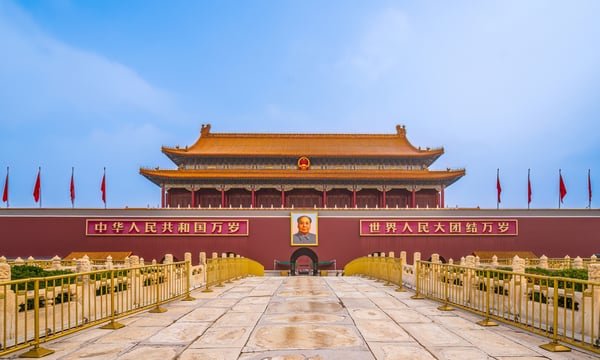
Chinese Communist Party headquarters in Beijing. (Global 1 News)
The Party-State System Behind Intelligence Activities
More recent work has shifted again, asking a different question: What kind of political and institutional system consistently produces these operations? Scholars such as Peter Mattis, Alex Joske, Samantha Hoffman, Adam Kozy, and Nigel Inkster have shifted attention from individual espionage operations to the CCP's objectives, institutions, and organizational mechanisms. Chinese espionage is best understood not as the activity of a handful of intelligence agencies but as the product of a CCP-led political system that treats intelligence as one instrument of governance.
The Ministry of State Security, the Ministry of Public Security, and the People's Liberation Army are indispensable components, but they operate within a much larger party-state system that integrates political authority, intelligence collection, influence operations, technology acquisition, and selected elements of Chinese society in pursuit of regime security and national power. The Ministry of State Security serves as China's primary civilian intelligence and counterintelligence service. The Ministry of Public Security and its subordinate provincial departments and local public security bureaus focus primarily on domestic security but increasingly support overseas intelligence collection and transnational repression, particularly where local jurisdictions maintain ties to overseas Chinese communities.
The Broader Ecosystem of Collection and Influence
The People's Liberation Army contributes military intelligence, technical collection, cyber capabilities, and support to military modernization. Yet these organizations constitute only the professional core of a much broader CCP-directed ecosystem. Around them operates a network of state-owned enterprises, private technology firms, universities, research institutes, United Front organizations, commercial contractors, and individual non-traditional collectors. Recent leaks involving the cyber contractor iSOON illustrated how ostensibly private companies can perform state security missions while providing varying degrees of deniability for government agencies.
Describing this as a whole-of-society effort risks overstating the case. The party does not mobilize Chinese society in its entirety. Rather, the CCP selectively mobilizes those sectors of society most useful to its objectives. It is therefore more accurate to describe this as a party-directed, whole-of-system approach than a genuinely whole-of-society one. This institutional architecture carries direct consequences for how Chinese intelligence interacts with neighboring states, including those on the Korean Peninsula.
North Korea-China Intelligence Cooperation in Context
The party-state model described above shapes Beijing's approach to intelligence sharing and coordination with Pyongyang. North Korean security services have long maintained institutional links with Chinese counterparts, particularly through the Ministry of State Security and elements of the People's Liberation Army. These ties facilitate exchanges on border security, defectors, and technology transfers that align with the CCP's selective mobilization of state and commercial actors. Such cooperation reflects the same integration of political authority and intelligence collection that scholars have identified in the broader Chinese system, extending regime security priorities across the Yalu River.
For North Korea, engagement with this ecosystem provides access to technical capabilities and diplomatic cover, while for China it reinforces leverage over a critical buffer state. Historical precedents of joint operations against perceived threats underscore how these arrangements serve mutual interests in regime stability rather than formal alliance structures.
South Korea's Counterintelligence Posture and Institutional Responses
South Korea's National Intelligence Service and related agencies face the challenge of monitoring activities that emanate from this party-directed system. Cases involving technology acquisition through universities and research institutes, or influence efforts channeled through overseas organizations, require careful calibration of legal authorities and diplomatic engagement. The Ministry of Public Security's expanding role in transnational activities adds layers of complexity for South Korean investigators tracking potential links to Chinese commercial contractors or United Front entities operating in the region.
Seoul's counterintelligence posture has evolved to emphasize protection of critical technologies and scrutiny of academic exchanges, drawing on patterns documented in global prosecutions. This approach seeks to balance economic interdependence with the need to safeguard sensitive sectors, particularly those tied to defense and semiconductor industries central to Korean economic security.
Implications for Inter-Korean Relations and Northeast Asian Security
The structure of Chinese intelligence operations influences the broader security landscape in Northeast Asia by affecting calculations in both Seoul and Pyongyang. Inter-Korean dialogue remains sensitive to perceptions of Chinese influence, as any intelligence-derived leverage Beijing holds over the North can shape the timing and substance of engagement. South Korean policymakers must account for how party-state mechanisms integrate economic, technological, and political instruments in ways that extend beyond traditional state-to-state channels.
Regional stability therefore depends on coordinated responses among U.S. allies that recognize the institutional drivers behind Chinese activities. The shift in scholarly focus from documenting individual cases to analyzing the underlying party-state system offers Korean analysts a framework for anticipating future operations and strengthening resilience in technology protection and influence countermeasures. This analytical turn carries strategic significance for managing tensions on the peninsula while preserving space for diplomatic initiatives.
By Prof. David Park, Staff WriterThis article was produced with AI-assisted research and editorial support. Reporting is based on sources cited in the article.
What's Your Reaction?
 Like
0
Like
0
 Dislike
0
Dislike
0
 Love
0
Love
0
 Funny
0
Funny
0
 Wow
0
Wow
0
 Sad
0
Sad
0
 Angry
0
Angry
0

East Asia/Technology Correspondent at Global1.News. Seoul-based voice covering Korean politics, technology, business, and culture. Analyzes how technology and geopolitics intersect across East Asia.















Comments (0)