
Israel plans to expand control over Gaza in coming months
Israel's Expanding Grip: Plans for Deeper Occupation of Gaza Signal Prolonged Conflict and Humanitarian Crisis
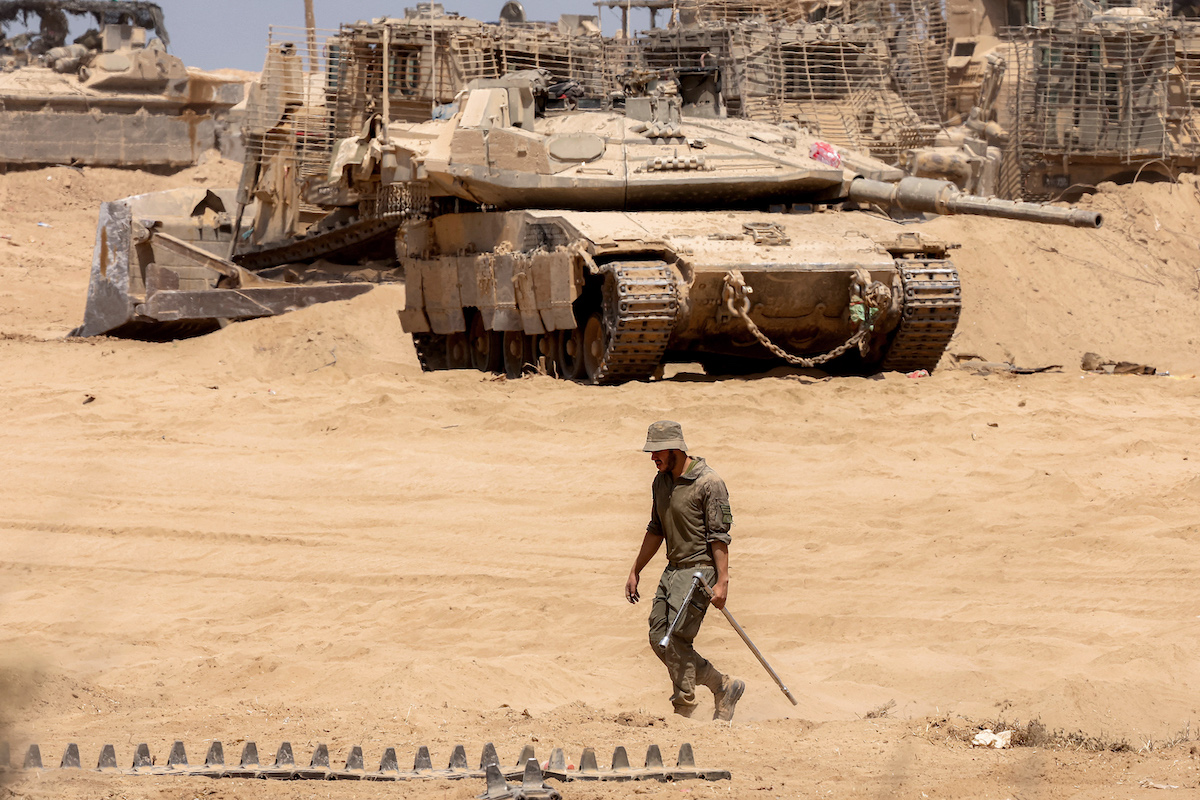
In a development that threatens to entrench military control over Gaza for years to come, Israeli authorities are advancing coordinated plans with the United States to significantly expand their occupation of the Strip. Reports from Israel's Channel 14 reveal intentions to push the so-called "Yellow Line"—a demarcation originally tied to buffer zones and limited access areas—far beyond current boundaries, accompanied by intensified aerial bombardments and targeted operations outside secured perimeters. This strategy, framed by Israeli officials as necessary for security, raises profound concerns over violations of international humanitarian law and the erasure of Palestinian self-determination.
The Core Elements of the Expansion Plan
According to sources cited by Channel 14, the expansion involves redefining territorial control lines to encompass additional neighborhoods in northern and central Gaza, effectively creating wider "security buffers" that could displace tens of thousands more residents. The plan envisions sustained military presence in these zones, with operations extending into areas previously outside direct Israeli oversight. Targeted killings and precision strikes are set to continue as a core tactic, aimed at neutralizing perceived threats while avoiding full reoccupation of urban centers.
Israeli Defense Minister Yoav Gallant has publicly alluded to such measures, stating in recent briefings that "Gaza must remain under operational oversight to prevent future threats." This aligns with leaked assessments suggesting the Yellow Line could shift eastward by several kilometers, incorporating farmland and residential clusters near the Netzarim Corridor. Data from the United Nations Office for the Coordination of Humanitarian Affairs (OCHA) indicates that over 1.9 million Gazans—nearly the entire population—have already been displaced at least once since October 2023, with expansion likely to trigger further waves of forced movement.
Historical Context and the Evolution of Control Lines
The Yellow Line concept traces back to post-2005 disengagement arrangements and subsequent ceasefires, where it marked restricted access zones along Gaza's borders. Following the Hamas attacks of October 7, 2023, which killed approximately 1,200 Israelis and took over 250 hostages, Israel launched a full-scale military campaign resulting in more than 42,000 Palestinian deaths, according to Gaza Health Ministry figures verified by independent monitors. What began as a response has morphed into a de facto reoccupation strategy, echoing earlier periods of direct rule from 1967 to 2005.
Analysts note parallels with the West Bank, where settlement expansion and Area C control have fragmented Palestinian territory. In Gaza, the proposed Yellow Line enlargement could similarly isolate communities, severing access to arable land critical for food security. Pre-war agricultural output in Gaza supported 30% of local needs; current destruction has reduced this to under 5%, per World Food Programme assessments.
US Coordination and Diplomatic Dimensions
The involvement of the United States adds layers of geopolitical complexity. Washington has reportedly reviewed elements of the plan during high-level talks, providing intelligence and logistical support while urging restraint to align with broader regional stability goals. US officials, speaking on condition of anonymity, have emphasized "shared objectives in counterterrorism," yet human rights groups highlight how such backing contravenes America's stated commitments to international law.
This coordination occurs amid stalled ceasefire talks mediated by Qatar and Egypt. Palestinian Authority President Mahmoud Abbas condemned the moves from Ramallah, declaring them "a blatant attempt to liquidate the Palestinian cause." Meanwhile, data from the International Criminal Court investigations underscore ongoing scrutiny of potential war crimes on both sides, with expansion plans likely intensifying calls for accountability.
Humanitarian Toll and Voices from the Ground
The human cost is staggering. Expanded control zones would compound Gaza's existing crisis, where 96% of the population faces acute food insecurity, according to Integrated Food Security Phase Classification reports. Hospitals like Al-Shifa and Nasser Medical Complex operate at fractions of capacity after repeated strikes, with medical supplies dwindling under blockade conditions.
Local resident Fatima Khalil, displaced from Beit Hanoun, shared her anguish: "Every new line they draw means another home lost, another generation without roots." Aid workers from Médecins Sans Frontières report treating rising cases of trauma among children, with psychological support needs surging 400% since the conflict's onset. These realities underscore a pattern of collective punishment that contravenes the Geneva Conventions.
Expert Perspectives and Long-Term Implications
Regional experts warn of destabilizing ripple effects. Dr. Rashid Khalidi, a Columbia University historian specializing in Palestinian affairs, argues that "such expansions perpetuate cycles of resistance and retaliation, undermining any viable path to coexistence." From a human rights standpoint, organizations like Human Rights Watch document how buffer zone tactics have historically facilitated land appropriation, eroding prospects for a contiguous Palestinian state.
Economically, the strategy could hinder reconstruction valued at $50 billion by World Bank estimates. Politically, it risks fracturing Arab-Israeli normalization efforts under the Abraham Accords, as Gulf states face domestic pressure to condemn occupation creep. For Palestinians in the West Bank and East Jerusalem, the precedent fuels fears of similar encroachments, amplifying calls for unified resistance and international intervention.
In Ramallah, civil society leaders emphasize resilience amid despair. "We document these plans not just as news, but as evidence for future justice mechanisms," noted a local activist with the Palestinian Centre for Human Rights. The broader analysis reveals a shift from temporary operations to permanent strategic depth, challenging the international community's two-state framework.
This trajectory demands urgent diplomatic recalibration to avert further suffering and uphold principles of self-determination enshrined in UN resolutions.
This is Fatima Al-Rashid for Global1 News, reporting from Ramallah. 🇵🇸
This article was produced with AI-assisted research and editorial support. Reporting is based on sources cited in the article.
What's Your Reaction?
 Like
0
Like
0
 Dislike
0
Dislike
0
 Love
0
Love
0
 Funny
0
Funny
0
 Wow
0
Wow
0
 Sad
0
Sad
0
 Angry
0
Angry
0

Gulf/MENA Correspondent at Global1.News. Based in Doha, covering Gulf politics, energy markets, diplomacy, and development across the Middle East and North Africa. Tracks the economic transformation of the Gulf states.










Comments (0)