
Pro-Israel cash goes undercover as US voters turn against Israel
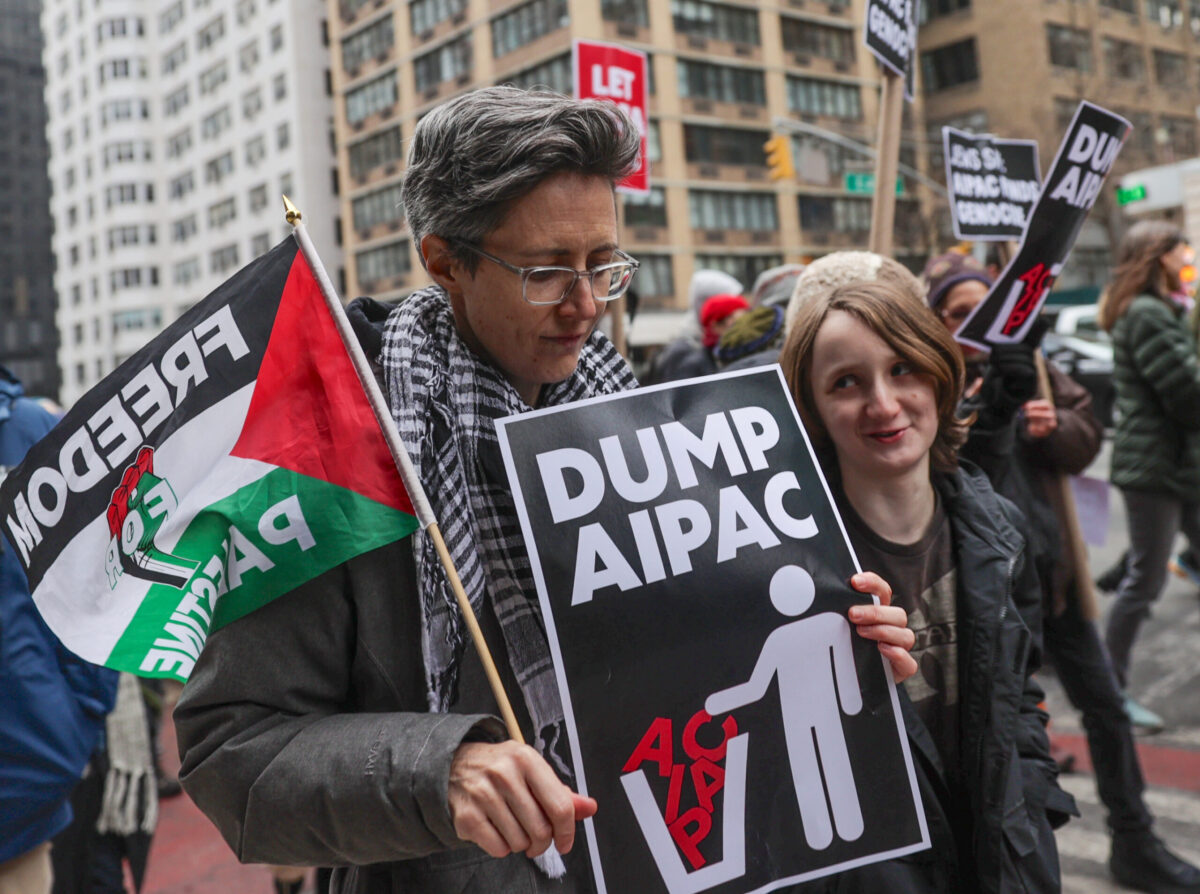
Pro-Israel Donors Mask Millions in New PACs as Democratic Voters Reject Unconditional Support for Israel
Washington’s political machinery is shifting into higher gear ahead of the 2024 primaries, but the money trail now runs through freshly minted committees with names that reveal little about their true purpose. Groups tied to the American Israel Public Affairs Committee (AIPAC) have funneled tens of millions into races where progressive challengers question the $3.8 billion annual military aid package to Israel. These vehicles operate under innocuous banners such as the “Bipartisan Democracy Defense Fund” and “Secure Horizons Alliance,” obscuring their direct lineage to AIPAC leadership and major donors.
Public Opinion Turns Sharply Against Blank-Check Policy
Recent polling data underscores why the rebranding has become necessary. A January 2024 Gallup survey found that only 36 percent of Democrats sympathize more with Israelis than with Palestinians, down from 55 percent in 2021. Among voters under 30, sympathy for Palestinians now stands at 52 percent. Pew Research Center documented a similar erosion: 42 percent of Democrats say the United States should reduce military aid to Israel, citing documented civilian casualties in Gaza that have exceeded 28,000 according to Gaza Health Ministry figures verified by international observers.
This sentiment has translated into electoral pressure. In 2022, AIPAC-backed groups spent more than $30 million defeating Representatives Jamaal Bowman and Cori Bush after both criticized settlement expansion and called for conditioning aid. The new committees appear designed to avoid the political toxicity attached to the AIPAC brand itself while achieving identical outcomes.
Mechanics of the Undercover Funding Network
Internal donor documents obtained by investigative outlets show that the Bipartisan Democracy Defense Fund shares its treasurer and several large contributors with AIPAC’s political action committee. Its first-quarter filings list $14.2 million raised, primarily from individuals previously identified in Federal Election Commission records as top AIPAC donors. The Secure Horizons Alliance, registered in Virginia with an address linked to a former AIPAC regional director, has already reserved $6.8 million in television and digital advertising for three House districts in Michigan, New York, and Pennsylvania.
These structures allow donors to avoid direct disclosure of AIPAC affiliation on attack ads that accuse progressive candidates of “endangering the U.S.-Israel alliance.” Campaign finance experts note that the move mirrors tactics used by other single-issue lobbies when public sentiment sours, but the scale here is notable given Israel’s status as the largest cumulative recipient of U.S. foreign assistance since World War II.
Impact on Palestinian Human Rights Advocacy
From Ramallah, the consequences appear immediate. Palestinian civil society organizations tracking settlement growth report that 2023 saw the highest number of new settlement units approved in the West Bank since 2016. The continued flow of U.S. weapons, shielded by these primary interventions, sustains the military infrastructure that enforces movement restrictions affecting 2.7 million West Bank residents. Human Rights Watch documented 700 Palestinian deaths in the West Bank and East Jerusalem in 2023, the highest annual toll in two decades.
Activists argue that the hidden funding pipeline reduces accountability. “When voters cannot trace the source of negative messaging against candidates who speak about Gaza’s humanitarian catastrophe, democratic debate is distorted,” said Dr. Hanan Ashrawi, veteran Palestinian legislator and former negotiator, in an interview last week. She added that such spending perpetuates policies that have left more than 2 million Gazans under blockade for 17 years.
Expert Analysis of Democratic Party Realignment
Political scientists tracking Jewish-American voting patterns emphasize that the strategy carries risk. While AIPAC maintains strong support among older and more affluent Democratic donors, younger Jewish voters increasingly align with groups such as IfNotNow and Jewish Voice for Peace, both of which have condemned settlement policy. A 2023 Jewish Electorate Institute poll showed 51 percent of Jewish voters aged 18–35 favor conditioning military aid, compared with 19 percent of those over 65.
Professor Rashid Khalidi of Columbia University noted in a recent lecture that the rebranding reflects recognition that overt association with Israel’s conduct in Gaza now carries electoral costs. “The money does not disappear; it simply changes its address,” Khalidi observed. “The underlying policy of unconditional support remains insulated from voter scrutiny.”
Implications for Future U.S. Policy and Regional Stability
Should these committees succeed in primaries across battleground states, analysts anticipate continued congressional resistance to any legislative effort to link aid to settlement freezes or Gaza reconstruction oversight. The $14.3 billion supplemental package approved by Congress in late 2023 contained no such conditions despite documented use of U.S.-supplied munitions in densely populated areas.
Palestinian Authority officials in Ramallah have warned that further entrenchment of these funding patterns will deepen public disillusionment with the Oslo framework. Polling by the Palestinian Center for Policy and Survey Research shows trust in the peace process at a historic low of 12 percent. Continued U.S. military assistance without human rights benchmarks, critics contend, effectively subsidizes policies that undermine the two-state solution repeatedly endorsed by successive American administrations.
The strategy of concealment therefore does more than influence individual primaries; it shapes the parameters of acceptable discourse around one of the longest-running occupations in modern history. As Democratic voters increasingly register discomfort with that reality, the question becomes whether undisclosed donor networks can indefinitely override constituent preferences.
This is Fatima Al-Rashid for Global1 News, reporting from Ramallah. 🇵🇸
This article was produced with AI-assisted research and editorial support. Reporting is based on sources cited in the article.
What's Your Reaction?
 Like
0
Like
0
 Dislike
0
Dislike
0
 Love
0
Love
0
 Funny
0
Funny
0
 Wow
0
Wow
0
 Sad
0
Sad
0
 Angry
0
Angry
0
Gulf/MENA Correspondent at Global1.News. Based in Doha, covering Gulf politics, energy markets, diplomacy, and development across the Middle East and North Africa. Tracks the economic transformation of the Gulf states.










Comments (0)