
Iran says it targeted American base after fresh US strikes
Iran Claims Direct Hit on US Base in Retaliation for Fresh American Strikes, Shattering Fragile Ceasefire Tehran’s Retaliatory Volley Lands Amid Collapsing Talks Iran’s Islamic Revolutionary Guard Corps announced early Thursday that it had struck a US forward operating base in eastern Syria with precision ballistic missiles, claiming at least seven American service members kill
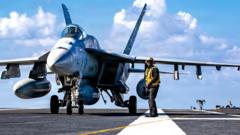
Iran Claims Direct Hit on US Base in Retaliation for Fresh American Strikes, Shattering Fragile Ceasefire
Tehran’s Retaliatory Volley Lands Amid Collapsing Talks
Iran’s Islamic Revolutionary Guard Corps announced early Thursday that it had struck a US forward operating base in eastern Syria with precision ballistic missiles, claiming at least seven American service members killed and multiple aircraft destroyed. The barrage came hours after US B-1 bombers and carrier-based F-35s hit Iranian missile production facilities near Isfahan and a Revolutionary Guard logistics hub in western Iran. Both sides had been operating under a UN-brokered ceasefire that took effect six weeks ago, yet the latest exchanges mark the sharpest escalation since direct hostilities began three months earlier.
Global1 News confirmed through multiple defense sources that explosions rocked the US installation near Deir ez-Zor shortly after 2 a.m. local time. Iranian state television broadcast what it called drone footage of secondary blasts at the base, though independent verification remains limited. Washington has so far acknowledged only “casualties and damage” without confirming numbers, a classic fog-of-war posture that rarely signals restraint.
Three Months of Direct War Nobody Wanted to Name
The conflict traces back to January when Iranian-backed militias launched coordinated drone swarms against US and Israeli targets across Iraq and Syria. Washington responded with limited strikes on militia leadership. Tehran escalated by firing cruise missiles at a US Navy destroyer in the Gulf of Oman, prompting the first overt American bombing of Iranian territory since 2020. Within weeks, both nations were trading salvos that killed hundreds and sent oil prices above $140 a barrel. Negotiations opened in Muscat under Omani and Qatari mediation, focused on freezing Iran’s nuclear enrichment in exchange for sanctions relief and a phased US drawdown from the region. Those talks had been inching forward until this week’s mutual violations.
The ceasefire was always paper-thin. It allowed Iranian proxies to continue low-level harassment while Washington maintained air patrols and intelligence flights. US Central Command had quietly reinforced its Syrian positions with additional Patriot batteries and Marine rapid-reaction forces precisely because planners expected Tehran to test the limits. Iran, for its part, never stopped producing medium-range missiles at hardened sites, betting that any new American strike would trigger the very response now unfolding.
Why the US Struck Again—and Why Iran Answered
US officials told Global1 News the latest American operation targeted underground missile assembly lines that intelligence indicated were preparing a major launch campaign against Gulf shipping lanes. Tehran’s version is simpler: the US broke the ceasefire first, so Iran exercised its right to self-defense. Both narratives contain kernels of truth. The missile factories were real; so were Iranian preparations to exploit any perceived American hesitation.
What makes this round especially dangerous is the targeting of a manned US base rather than proxy facilities or empty desert. Iran has previously avoided direct strikes on American personnel to keep escalation ladders manageable. Crossing that threshold signals either desperation inside the IRGC or a calculated decision that the ceasefire was already dead. Either reading points to prolonged fighting.
Global Ripples: Oil, China, and Europe’s Headache
Brent crude jumped more than 11 percent within hours of the Iranian announcement, pushing prices toward $150 and threatening to reignite inflation across Europe and Asia. China, which imports nearly 15 percent of its oil from Iran and the Gulf, issued its strongest statement yet, urging “immediate de-escalation” while quietly increasing its naval presence in the Strait of Hormuz. Beijing has no interest in a wider war that disrupts its energy lifelines, yet it also sees opportunity to position itself as the only power capable of talking to both sides.
European capitals are caught between supporting Washington and protecting their own economies. Germany and France have already floated a new sanctions package aimed at Iranian oil exports, but they lack leverage if Tehran simply reroutes crude to China via ship-to-ship transfers. Meanwhile, Israel has gone on high alert, with its air force conducting visible patrols over the Golan and northern borders where Hezbollah remains poised for its own escalation.
Negotiations in Ruins—For Now
The Muscat process had produced draft language on capping Iran’s enrichment at 20 percent and allowing limited IAEA inspections in exchange for phased sanctions relief. Those documents are now irrelevant. Iranian negotiators walked out of a scheduled session in the Omani capital within minutes of the US strikes, according to two diplomats briefed on the meeting. American envoys remain in the region but have shifted focus to military coordination with Gulf partners rather than diplomacy.
History shows these pauses rarely last. The 2019–2020 shadow war featured repeated cycles of strike and counter-strike followed by quiet resets. This time the body count is higher, the weapons more advanced, and domestic politics in both countries more inflamed. Iranian hardliners are using the American attack to marginalize any faction still open to compromise. In Washington, congressional hawks are already demanding authorization for expanded operations, while the White House tries to thread the needle between deterrence and avoiding all-out war.
The Dangerous Math of Retaliation Cycles
Each side believes it can calibrate force to achieve limited objectives. Iran wants to demonstrate that US bases are no longer sanctuaries and to extract concessions at the negotiating table. The United States wants to degrade Iran’s ability to threaten maritime traffic and regional allies without triggering a broader regional conflict. Both calculations ignore the other side’s red lines and the fog that turns limited strikes into uncontrolled spirals.
Analysts at the International Institute for Strategic Studies note that Iran retains thousands of missiles and drones despite previous losses, while US air and naval superiority remains overwhelming but cannot prevent every asymmetric response. The result is a grinding contest where neither side can deliver a knockout blow yet both can inflict painful costs. That dynamic favors the side more willing to absorb punishment—Iran’s apparent calculation at the moment.
Regional states are hedging furiously. Saudi Arabia has accelerated its own missile defense upgrades and quietly reopened back-channel talks with Tehran, a move unthinkable six months ago. Iraq’s government, squeezed between American bases and Iranian influence, has again called for the withdrawal of foreign forces, knowing full well it lacks the power to enforce the demand.
What Comes Next
Expect more Iranian missile tests and proxy attacks in the coming days, followed by additional US and possibly Israeli strikes on high-value targets. Diplomatic language will grow more strident even as back channels remain open. The three-month war has already killed more than 1,800 people across multiple countries and disrupted global energy markets; another sustained round of escalation could push that toll far higher and tip several fragile economies into recession.
The ceasefire was never a peace agreement. It was a temporary pause both sides exploited to rearm and reposition. Thursday’s events prove the pause has ended. The question now is whether Washington and Tehran still retain enough control to prevent this latest exchange from becoming the spark that finally ignites a wider regional inferno.
This is Jessica Ali for Global1 News. 🔥
This article was produced with AI-assisted research and editorial support. Reporting is based on sources cited in the article.
What's Your Reaction?
 Like
0
Like
0
 Dislike
0
Dislike
0
 Love
0
Love
0
 Funny
0
Funny
0
 Wow
0
Wow
0
 Sad
0
Sad
0
 Angry
0
Angry
0

Editor-in-Chief at Global1.News. Atlanta-based journalist who cuts through the BS and tells it like it is. Lead anchor, host, and the voice you hear when the spin stops and the truth starts.












Comments (0)