
Iran-Israel Tensions Explode After Katz Marks Khamenei for Death
Folks, the Middle East just hit another boiling point, and this one has the kind of reckless rhetoric that could drag everyone into something much bigger. Israeli Defense Minister Israel Katz dropped a direct threat against Iran's new Supreme Leader, and Iran's foreign minister fired right back with language that leaves zero room for misinterpretation. At the exact moment a US-
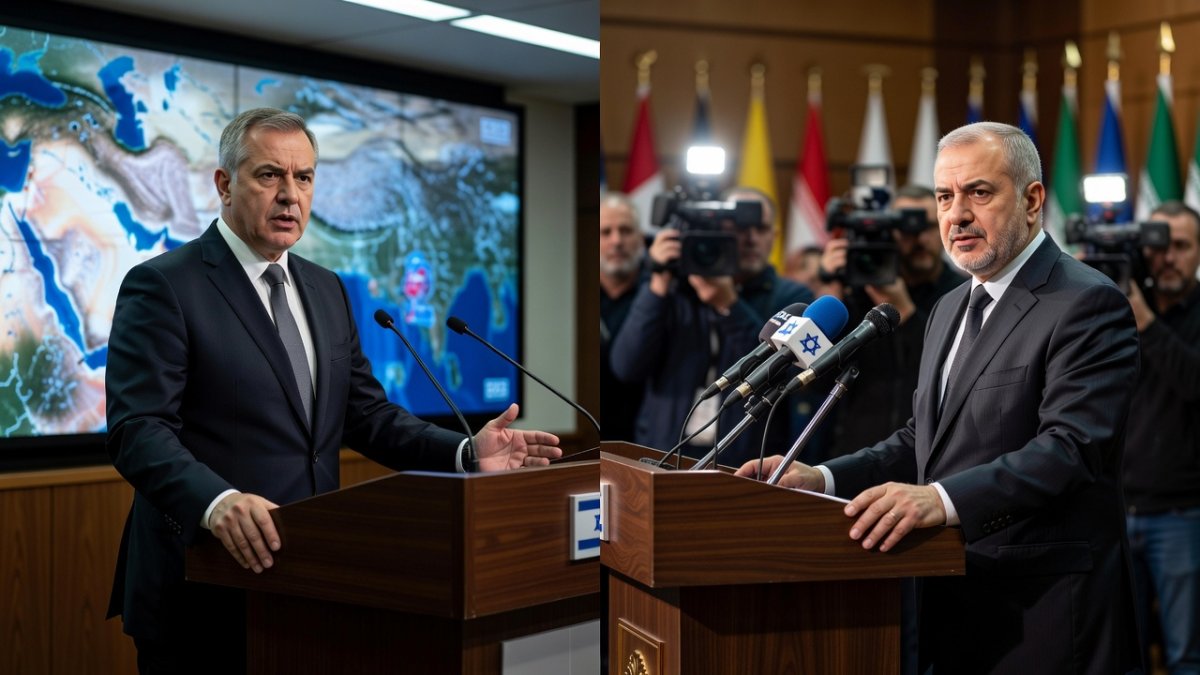
Folks, the Middle East just hit another boiling point, and this one has the kind of reckless rhetoric that could drag everyone into something much bigger. Israeli Defense Minister Israel Katz dropped a direct threat against Iran's new Supreme Leader, and Iran's foreign minister fired right back with language that leaves zero room for misinterpretation. At the exact moment a US-Iran deal looked closer than ever, this explosion of words threatens to blow the whole thing apart. Let me be clear: we're talking about real leadership targets, real negotiations that were moving, and real risks to global energy routes. Here's what's actually happening and why it matters to every single one of us watching from Atlanta to anywhere else.
The "Marked for Death" Bombshell
Israeli Defense Minister Israel Katz made the statement on July 1, 2026, declaring that Iranian Supreme Leader Mojtaba Khamenei has been "marked for death." This is not some vague warning or diplomatic code. It is a direct public threat against the man who now holds the highest position in Iran after succeeding his father, Ali Khamenei. The timing could not be more explosive because it lands right in the middle of fragile US-Iran talks that had finally started showing real progress after months of open conflict.
Mojtaba Khamenei's rise to Supreme Leader represents a continuation of the same hardline structure that has defined Iran's leadership for decades. Katz's words treat that succession as an opportunity for elimination rather than a reason for caution. When a sitting defense minister uses that kind of language in public, it shifts the entire conversation from negotiation to targeted elimination. The statement carries the weight of official Israeli policy and immediately forces every other player, including the United States, to respond or be seen as complicit.
The broader context of ongoing regional conflict makes this threat even more dangerous. After months of direct clashes between US and Iranian forces and proxies, any new escalation around the Iranian leadership itself risks pulling in multiple fronts at once. Katz's declaration is not happening in a vacuum. It arrives precisely when a draft agreement was reportedly close, turning what should have been a moment for de-escalation into a public assassination target announcement.
Araghchi's Warning: "Immediate and Powerful"
Iranian Foreign Minister Abbas Araghchi answered on X with unmistakable clarity, promising an "immediate and powerful response" to any threat against Iran's leadership or its people. He did not mince words or hide behind diplomatic pleasantries. Instead, he directly called on the United States to honor its stated commitment to restrain Israel, using the blunt phrase that Washington must "muzzle its pets in Tel Aviv." That line alone shows how far the temperature has risen and how little patience remains in Tehran.
Araghchi framed the Israeli threat as a deliberate attempt to sabotage the very negotiations that had been gaining ground. He reminded the world that just weeks earlier he had described the deal as "never been closer," a rare note of optimism after months of conflict. By tying the US commitment to restrain Israel directly to the survival of the talks, Araghchi placed responsibility squarely on Washington to act before words turn into missiles or worse.
The response also serves as a public signal to Iran's own population and regional allies that leadership threats will not go unanswered. When a foreign minister uses platform X to issue such a warning, it is designed for maximum visibility and minimum ambiguity. The combination of the "immediate and powerful" pledge and the "muzzle your pets" demand leaves little daylight for back-channel cooling off. This is the kind of exchange that forces capitals to choose sides fast.
The US-Iran Deal That Was Almost There
Before Katz's statement, US-Iran negotiations had reached a genuinely promising stage after months of direct conflict. A draft agreement was reportedly close, and President Trump himself stated that a Memorandum of Understanding was nearing finalization. Iranian Foreign Minister Araghchi had publicly noted the talks were "never been closer," a significant admission from a side that had spent months trading blows with American forces and proxies across the region.
Mediation through Oman and other channels had created enough space for serious drafting to occur. Both sides appeared willing to put concrete items on the table rather than repeat the usual cycle of threats and walkouts. The progress stood in sharp contrast to the preceding months of open hostilities that had raised oil prices, threatened shipping, and pulled multiple countries into the friction.
Araghchi has repeatedly accused Israel of trying to derail exactly this process. The timing of the "marked for death" comment supports that accusation because it lands when momentum existed instead of when talks were stalled. A deal that looked achievable now faces the very real possibility that one public threat could undo weeks of careful mediation. The United States now has to decide whether it will enforce the restraint it reportedly promised or watch the window close.
Israel's Stake in Sabotaging the Deal
Israel's security concerns are real, yet the timing of Defense Minister Katz's statement raises obvious questions about intent. A 14-point draft framework was moving forward that included elements Israel has long opposed, such as sanctions relief and the reopening of the Strait of Hormuz. By publicly marking Iran's Supreme Leader for death, Katz effectively injected an assassination threat into a negotiation that was finally producing paper.
Araghchi's accusation that Israel is deliberately trying to derail the US-Iran deal gains credibility from the calendar. The threat arrives after Araghchi had already signaled the talks were closer than at any point in recent memory. When a defense minister chooses this moment to escalate rhetoric to elimination language, it looks less like spontaneous outrage and more like a calculated move to force the United States to pick between its ally and a potential agreement.
The move also tests whether Washington will actually follow through on any commitment to restrain Israel. If the US allows the threat to stand without pushback, it signals to Tehran that the mediation channel is no longer reliable. That outcome would hand Israel exactly what it appears to want: the collapse of a deal that would ease pressure on Iran and reopen critical waterways. The calculation is high-risk and leaves little room for later claims of surprise if the situation spirals.
What the 14-Point Framework Actually Means
The reported 14-point draft framework contained concrete items that would have changed the daily reality on the ground. A ceasefire would have paused active exchanges between US and Iranian forces after months of conflict. Sanctions relief and the release of frozen funds would have given Iran access to resources currently locked away, while the reopening of the Strait of Hormuz would have eased one of the most immediate threats to global energy shipping.
President Trump had already indicated that a Memorandum of Understanding was close to finalization, suggesting the text had moved beyond vague principles into specific commitments. Mediation through Oman and additional channels had produced enough trust for both sides to keep drafting rather than walking away. Araghchi's earlier comments that the deal had "never been closer" reflected genuine movement on these points rather than empty optimism.
Each element of the framework carried direct consequences. Ceasefire terms would reduce the chance of miscalculation leading to wider war. Sanctions relief and fund releases would test whether economic pressure had actually changed Iranian behavior. Hormuz reopening would lower shipping insurance costs and stabilize oil prices that had been jittery for months. The fact that these items were on paper at all shows how far the talks had advanced before the latest threat interrupted them.
Regional Dominoes Ready to Fall
The threat against Mojtaba Khamenei and the sharp Iranian response do not stay contained between two capitals. Gulf states that had been watching the US-Iran talks with cautious hope now face renewed uncertainty about whether energy routes will remain open. Proxy forces across the region read these statements as green lights for their own actions, increasing the chance that a single incident spirals into multi-front fighting.
Russia and China, both of which have maintained channels with Tehran, will likely use any collapse of the draft framework to argue that Washington cannot deliver on its own mediation efforts. That narrative strengthens their position in other negotiations and weakens US leverage. Meanwhile, European capitals that had quietly supported the Oman channel now have to decide whether to invest more diplomatic capital or step back before they get blamed for failure.
The wider stability risk is straightforward. When leadership targets are named in public and foreign ministers promise immediate powerful responses, the space for quiet diplomacy shrinks fast. Months of conflict had already strained every relationship in the region. Adding an assassination threat on top of an almost-finished deal is the kind of move that turns manageable tensions into something much harder to walk back.
What Happens Next and What You Can Do
Watch whether the United States actually enforces any restraint on Israel or allows the rhetoric to keep escalating. The next statements out of Washington will tell you whether the draft framework still has a pulse or whether the "marked for death" comment has already killed it. Also track any movement in the Strait of Hormuz and any sudden changes in shipping insurance rates, because those numbers move before the missiles do.
Contact your representatives and ask them directly what the US commitment to restrain Israel actually means in practice. Demand clarity on whether the 14-point framework is still being discussed or whether it has been shelved. Public pressure works when enough people ask the same uncomfortable questions at the same time.
Stay informed through sources that separate the threats from the actual negotiations instead of treating every headline as equally likely to produce war. The difference between posturing and preparation matters, and right now the only way to tell is to keep watching the channels that were moving the draft agreement forward before this latest explosion of words.
By Jessica Ali, Staff Writer
This article was produced with AI-assisted research and editorial support. Reporting is based on sources cited in the article.
What's Your Reaction?
 Like
0
Like
0
 Dislike
0
Dislike
0
 Love
0
Love
0
 Funny
0
Funny
0
 Wow
0
Wow
0
 Sad
0
Sad
0
 Angry
0
Angry
0

Editor-in-Chief at Global1.News. Atlanta-based journalist who cuts through the BS and tells it like it is. Lead anchor, host, and the voice you hear when the spin stops and the truth starts.













Comments (0)