
Indian Army Drops Colonial-Era Dress Customs, Introduces Bandis and Battlejackets
What India's Army Actually Changed The Indian Army announced today that it is eliminating several colonial-era elements from its uniform regulations, according to a report from ANI News published June 14, 2026, in New Delhi. The verified changes include the removal of mandatory sword carriage by Reviewing Officers during parades and the elimination of pouch belts from certain m
What India's Army Actually Changed
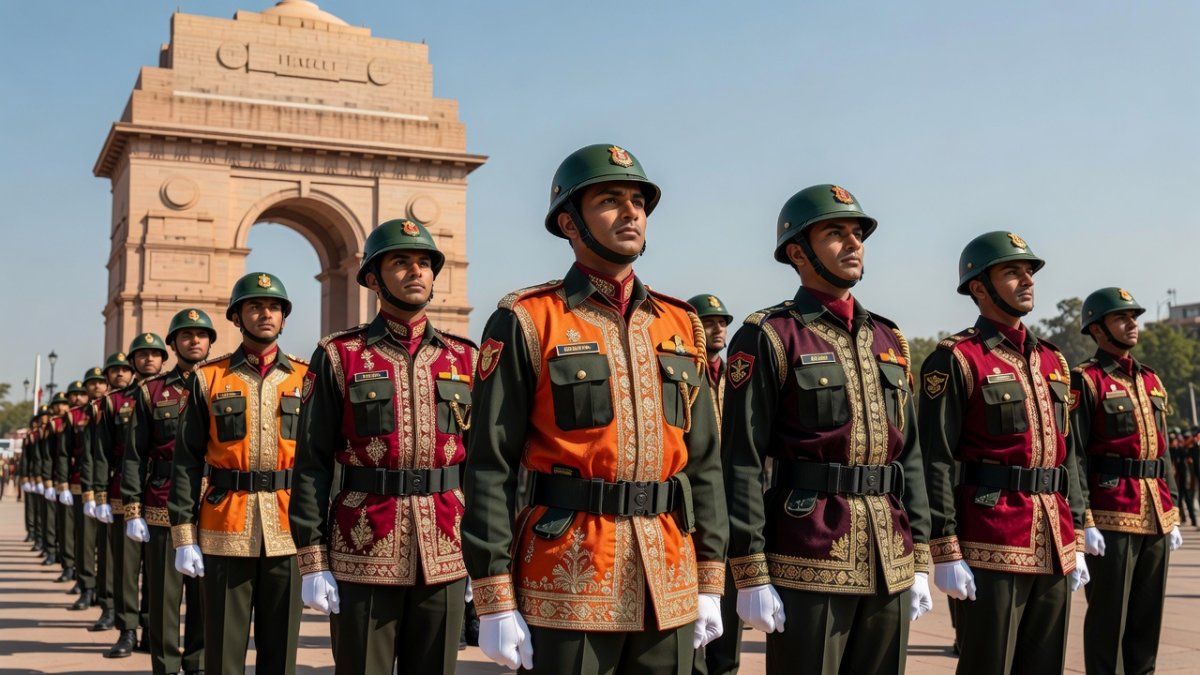
The Indian Army announced today that it is eliminating several colonial-era elements from its uniform regulations, according to a report from ANI News published June 14, 2026, in New Delhi. The verified changes include the removal of mandatory sword carriage by Reviewing Officers during parades and the elimination of pouch belts from certain mess dress configurations. In their place, the service is introducing traditional Bandi jackets, which reflect Indian stylistic traditions, along with practical battlejackets designed for contemporary operational needs. These adjustments follow a deliberate review of dress codes that had remained largely unchanged since the British period.
While the modifications target specific items rather than overhauling the entire uniform system, they represent a targeted effort to align appearance with national identity. ANI News confirmed that the updates were formalized this week after internal consultations within the Army headquarters. Supporters view the moves as overdue modernization, yet critics argue that such alterations risk eroding longstanding ceremonial traditions that have defined military pageantry for generations. The debate underscores how even incremental uniform reforms can ignite discussion about heritage versus adaptation.
Precise implementation timelines remain under review, but the policy shift signals that the Army intends to enforce the new standards across units in the coming months. By citing ANI News as the primary source for these details, observers can verify that the changes are not speculative but grounded in official directives released from New Delhi. This measured approach distinguishes the current initiative from broader cultural campaigns while still addressing visible remnants of the colonial past.
The Deeper Campaign Against Colonial Vestiges
Today's uniform revisions form part of a wider initiative to excise colonial nomenclature and symbols from military infrastructure. Earlier this year, Auchinleck House was renamed Somnath House, honoring a site of historical significance rather than a former British commander. Similar renamings have affected roads and cantonments across the country, replacing designations tied to the colonial era with names drawn from India's own history and geography. ANI News has documented these parallel efforts, noting that the Army's dress code update aligns with the same institutional directive.
Proponents maintain that such steps foster a stronger sense of ownership over military spaces and traditions. Detractors, however, contend that rapid rebranding can overlook the practical value of established names that carry institutional memory. The uniform changes announced today therefore arrive amid an ongoing national conversation about how far and how fast these adjustments should proceed. By situating the dress reforms within this larger context, the Army demonstrates consistency in its approach to historical reevaluation.
Observers note that the process has accelerated under the current leadership, with multiple cantonment boards completing name changes in recent weeks. ANI News reporting from New Delhi emphasizes that these actions are coordinated at the highest levels, ensuring uniformity across commands. The result is a coherent policy thread linking physical infrastructure, ceremonial practices, and now attire, all aimed at reinforcing indigenous identity without discarding operational effectiveness.
Why Uniforms Matter for Military Identity
Uniforms serve as more than functional clothing; they encode unit cohesion, rank hierarchy, and national affiliation. The decision to replace swords and pouch belts with Bandis and battlejackets therefore carries symbolic weight that extends beyond aesthetics. Military analysts have long observed that visible markers of tradition influence how soldiers perceive their role and how the public regards the institution. By updating these markers, the Army is consciously reshaping the visual language through which it projects authority and belonging.
At the same time, uniform changes inevitably spark debate precisely because they touch on deeply held notions of continuity. Some veterans express concern that discarding elements inherited from the colonial period severs a tangible link to the service's formative years. Others counter that retaining such items perpetuates an outdated hierarchy that no longer reflects India's sovereign reality. This tension illustrates why the reforms announced today merit careful scrutiny rather than reflexive approval or dismissal.
Journalistic examination of similar transitions in other forces reveals that successful adaptations balance respect for history with responsiveness to contemporary identity. The Indian Army's measured removal of specific items, paired with the introduction of culturally resonant alternatives, attempts to strike that balance. ANI News coverage highlights internal discussions that weighed both operational utility and cultural resonance before finalizing the policy. The outcome suggests that identity formation in the military remains an active, negotiated process rather than a static inheritance.
Global Implications: Who's Next?
India's move places it alongside other post-colonial states that have revisited military dress codes in recent decades. Several Commonwealth nations have gradually phased out British-derived accoutrements, though few have acted with the same explicit focus on indigenous replacements. The introduction of Bandis and battlejackets offers a model that neighboring countries may study as they consider their own uniform policies. Whether this example prompts parallel reforms remains an open question that defense observers will monitor closely.
Within the Commonwealth, reactions are likely to be mixed. Some member states may view the changes as an assertion of cultural confidence, while others could interpret them as unnecessary politicization of longstanding practices. The debate that has accompanied India's announcement demonstrates that uniform reforms rarely occur in isolation from broader political currents. ANI News reporting underscores that the Army has framed its decisions in professional rather than partisan terms, potentially easing international sensitivities.
Over time, the visibility of Indian personnel in updated attire during joint exercises could accelerate discussion elsewhere. If the new jackets prove both functional and symbolically resonant, other forces may adopt comparable elements. The precedent set today therefore extends beyond India's borders, inviting comparative analysis of how militaries worldwide negotiate the legacy of shared colonial histories.
What This Signals About India's Strategic Autonomy
The uniform reforms coincide with India's expanding role in global security frameworks, including its participation in the Quad. A military that visibly affirms its national character projects confidence that can strengthen partnerships rather than complicate them. The United States and other Quad members have repeatedly stated that a self-assured India serves as a more reliable counterweight in the Indo-Pacific. Today's announcement reinforces that narrative by demonstrating institutional willingness to align symbols with strategic priorities.
Critics sometimes suggest that such cultural adjustments distract from core operational readiness. Yet evidence from the Army's own reviews indicates that the changes were evaluated for practicality alongside symbolism. By eliminating items with limited contemporary utility and introducing alternatives suited to current needs, the service maintains focus on effectiveness while advancing autonomy in presentation. ANI News accounts from New Delhi confirm that senior commanders participated directly in these assessments.
Strategic autonomy ultimately rests on both material capabilities and psychological independence. The decision to update dress regulations contributes to the latter by reducing visible reminders of external influence. Partners who value a capable, self-directed India are likely to interpret the move as further evidence of that trajectory. As the policy takes effect, its reception within alliance structures will provide additional data on how symbolic reforms intersect with geopolitical positioning.
The Bottom Line
The Indian Army's announcement today marks a deliberate step toward aligning ceremonial practice with national identity, sourced directly from ANI News reporting out of New Delhi on June 14, 2026. Specific removals of swords and pouch belts, paired with the addition of Bandis and battlejackets, reflect both practical and cultural considerations. These adjustments occur alongside wider renamings, including Auchinleck House to Somnath House, illustrating a consistent institutional direction.
Uniform changes will continue to generate discussion, as they should in any professional force that values tradition. The key question is whether future adaptations maintain the same balance between heritage and relevance demonstrated in this round of reforms. Other nations emerging from colonial legacies may watch closely to determine whether similar steps suit their circumstances.
Stay alert for comparable developments across the Commonwealth and beyond. Share this analysis with colleagues who follow defense policy, and continue following Global 1 News for verified updates on how military institutions worldwide navigate questions of identity and autonomy. Informed observation remains essential as these stories unfold.
By Jessica Ali, Staff Writer
This article was produced with AI-assisted research and editorial support. Reporting is based on sources cited in the article.
What's Your Reaction?
 Like
0
Like
0
 Dislike
0
Dislike
0
 Love
0
Love
0
 Funny
0
Funny
0
 Wow
0
Wow
0
 Sad
0
Sad
0
 Angry
0
Angry
0

Editor-in-Chief at Global1.News. Atlanta-based journalist who cuts through the BS and tells it like it is. Lead anchor, host, and the voice you hear when the spin stops and the truth starts.














Comments (0)