
Illegal Garimpo Devastates Indigenous Amazon Territories as Brazil Intensifies Crackdowns
In the heart of the Brazilian Amazon, Yanomami and Kayapó families watch their rivers turn toxic as illegal garimpo operations poison fish stocks and destroy ancestral lands. Children suffer rising malnutrition while elders recount how mercury from gold mining has transformed once-vital waterways into silent killers, forcing communities to adapt or perish amid relentless encroa
In the heart of the Brazilian Amazon, Yanomami and Kayapó families watch their rivers turn toxic as illegal garimpo operations poison fish stocks and destroy ancestral lands. Children suffer rising malnutrition while elders recount how mercury from gold mining has transformed once-vital waterways into silent killers, forcing communities to adapt or perish amid relentless encroachment on protected territories.
Illegal Garimpo Devastates Indigenous Amazon Territories as Brazil Intensifies Crackdowns
Altamira, Pará – Brazil, June 2026 — Federal forces launched Operação Xapiri Mebêngôkré in Terra Indígena Kayapó, destroying 31 pieces of heavy machinery and seizing 10,200 liters of fuel plus gold and firearms, while Yanomami territory saw active mining plummet 98.8 percent from 4,570 hectares in 2024 to just 56 hectares in 2025 through over 10,500 actions, 369 arrests, and R$709 million in economic damage inflicted on criminal networks.
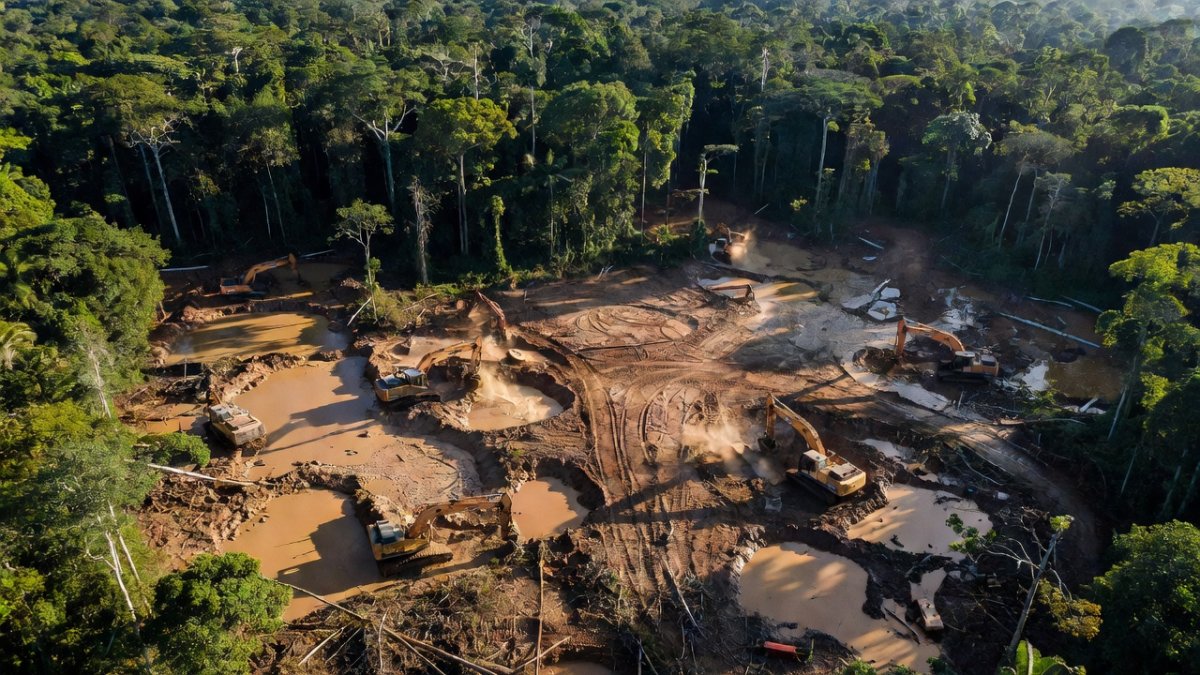
Operation Xapiri Mebêngôkré: Taking the Fight to Kayapó Territory
Joint IBAMA, PF, and FUNAI teams struck deep into Terra Indígena Kayapó (Mebengokre) in southern Pará during the first days of Operação Xapiri Mebêngôkré in June 2026, inutilizing 31 hydraulic excavators, trucks, tractors, generators, motorcycles, and chainsaws while dismantling camps and workshops. Agents seized approximately 10,200 liters of fuel, gold, firearms, ammunition, and communications equipment, also rescuing two captive birds from the devastated site. This coordinated assault targeted the core infrastructure sustaining illegal garimpo on Indigenous lands, directly confronting the machinery that has scarred vast stretches of protected rainforest. The operation underscores Brazil’s renewed commitment to defending Mebengokre territory against the same extractive forces that have historically displaced communities across Latin America. By neutralizing these assets in a single sweep, authorities delivered a tangible blow to operators who previously exploited remote access points with impunity. The action aligns with broader regional efforts to reclaim sovereignty over resources long contested by outsiders, reinforcing FUNAI’s mandate to safeguard cultural survival. Such raids highlight how enforcement can disrupt supply chains when multiple agencies synchronize intelligence and logistics, offering a replicable model for neighboring Amazonian nations facing parallel threats. Communities in the Kayapó territory have long documented the arrival of these machines as harbingers of mercury contamination and social fragmentation, making the destruction of equipment a symbolic restoration of territorial integrity that reverberates through Indigenous governance structures.
Yanomami: The Benchmark for Enforcement Success
Between 2023 and 2024, 33 federal agencies executed 3,536 security operations and 633 IBAMA inspections across Yanomami territory, issuing R$69.1 million in fines for 211 infractions, destroying 320 camps and vehicles, and embargoing 566 hectares. Deforestation alerts reached zero by late 2024, while consolidated garimpo fell roughly 91 percent and child malnutrition deaths dropped 68 percent in the first half of 2024 compared with the prior year. By mid-2026, cumulative actions exceeded 10,500, yielding 369 arrests and R$709 million in economic damage, with more than one ton of mercury and 249 kilograms of gold seized. Operation Flecha Noturna V in May-June 2026 destroyed six clandestine airstrips and confiscated 300 kilograms of cassiterite, followed by a June seizure of gold valued at R$10 million. Active mining areas contracted from 4,570 hectares in 2024 to 56 hectares in 2025, representing a 98.8 percent reduction. These metrics establish Yanomami territory as Latin America’s clearest demonstration that sustained, multi-agency pressure can reverse decades of environmental plunder when political will aligns with operational capacity. Indigenous leaders have credited the interventions with restoring access to uncontaminated hunting grounds and reducing malaria incidence tied to miner influxes. The data reveal how enforcement cascades into public-health gains, particularly for vulnerable children whose recovery reflects broader ecosystem stabilization. This success story provides a counter-narrative to narratives of inevitable Amazonian degradation, proving that targeted federal action can produce measurable territorial recovery across Brazil’s northern frontiers.
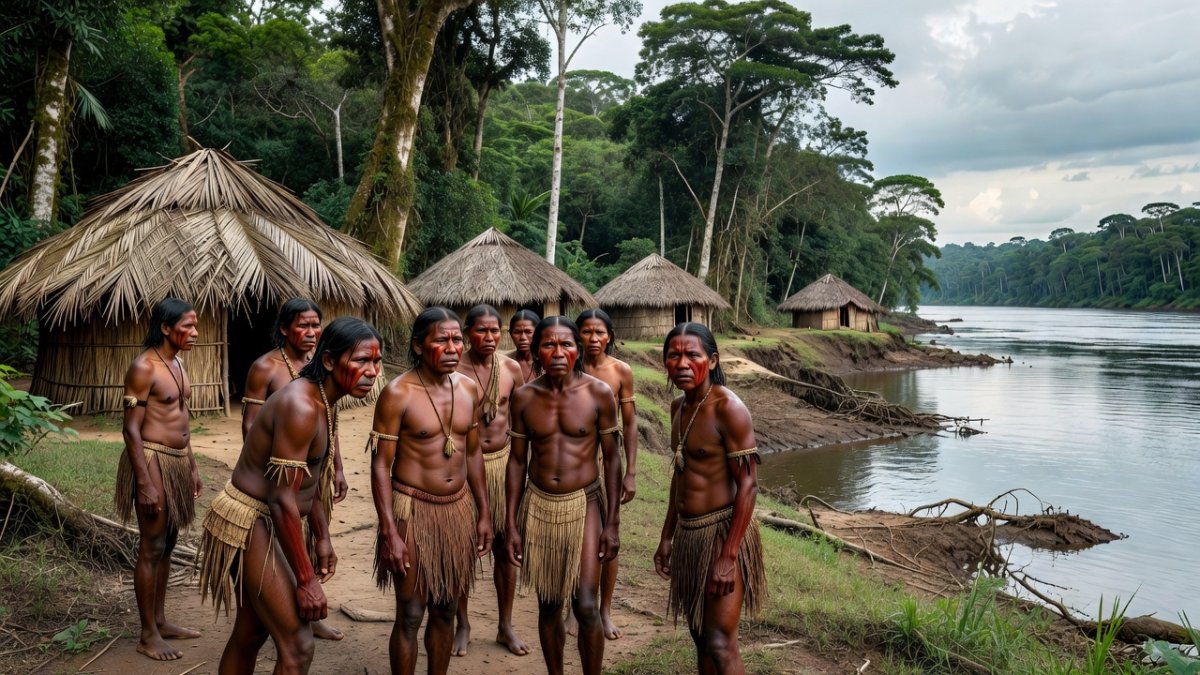
Mercury's Invisible Poisoning: A Public Health Emergency
Miners use mercury to amalgamate gold before burning it off, releasing methylmercury that enters rivers and bioaccumulates through the fish food chain. Levels in affected fish reach up to 60 times international safety limits, while Amazon river dolphins show 20-30 times safe thresholds, with one recorded concentration of 42 mg/kg. Legacy mercury persists in river sediments for decades or centuries, ensuring intergenerational exposure. UNICEF’s October 2025 report warned that illegal garimpo threatens Yanomami children through combined mercury poisoning, malnutrition, and malaria. In February 2026, communities began Yanomami fish farming in artificial tanks as an adaptation to contaminated rivers. The crisis extends across Latin American borders, with pollution from Peru’s Madre de Dios region flowing into Brazilian waters. Miners have adapted by moving deeper into forests and ceding control to organized crime groups, complicating remediation. Public-health data link chronic exposure to neurological damage and developmental delays in Indigenous youth, amplifying existing vulnerabilities from historical displacement. Government agencies now prioritize mercury monitoring alongside enforcement, recognizing that destroyed machinery alone cannot neutralize toxins already embedded in sediments. International cooperation on transboundary pollution remains essential, as the Amazon basin functions as a single hydrological system where upstream decisions dictate downstream suffering. These realities demand integrated responses that pair immediate enforcement with long-term detoxification strategies to protect the cultural and biological continuity of Amazonian peoples.
Munduruku and the Tapajós: The Persistent Front
The Munduruku territory spans 2.4 million hectares in Pará’s Tapajós Basin and supports more than 9,200 Indigenous inhabitants. Between 2016 and 2024, 4,714 hectares were deforested, 86.8 percent attributable to mining, while mercury contamination intensified and malaria cases rose. A May 2026 study by Instituto Mãe Crioula and UFPA found that desintrusão operations increased urban vulnerability for Munduruku families displaced from traditional territories. Garimpeiros adapted with smaller-scale operations and falsified gold-origin permits, allowing illicit production to persist despite raids. InfoAmazonia and Grist investigations revealed that government entities continue issuing mining licenses even in areas known to be illegal. These dynamics illustrate how enforcement gains in one territory can displace pressure onto adjacent Indigenous lands, creating a shifting frontier of extraction across the Brazilian Amazon. Munduruku leaders have documented rising health burdens and cultural erosion as rivers lose their capacity to sustain traditional livelihoods. The persistence of laundering mechanisms undermines the economic damage tallied from seizures elsewhere, allowing criminal networks to reinvest profits. Regional policy must therefore address both on-site destruction and the bureaucratic loopholes that legitimize stolen gold, ensuring that enforcement does not merely relocate harm but dismantles the entire illicit value chain operating within Latin America’s most biodiverse basin.
Organized Crime and the Global Gold Trail
Illegal garimpo areas in the Amazon surpassed legal industrial mining footprints in 2025 assessments, with Greenpeace and Reuters documenting billions in laundered gold routed through falsified permits. The Primeiro Comando da Capital (P.C.C.) now controls several mining zones, integrating extraction into broader criminal economies. Gold laundering routes extend to Dubai and Miami, converting Amazonian destruction into international capital. Mercury pollution crosses borders from Peru’s Madre de Dios into Brazil, demonstrating the transnational character of the crisis. These networks exploit regulatory gaps and corrupt licensing practices, sustaining operations even as federal forces destroy equipment. The economic scale—evidenced by repeated multimillion-real seizures—reveals why criminal organizations invest heavily in adapting tactics, including smaller footprints and falsified documentation. Latin American governments face a coordinated challenge that transcends national jurisdictions, requiring intelligence sharing and financial tracking to sever the global trail. Without disrupting these laundering corridors, enforcement victories remain temporary, as profits quickly fund replacement machinery and new incursions. The involvement of established crime syndicates transforms garimpo from isolated prospecting into a structured industry that threatens state authority across the Amazon basin.
The Bottom Line — Enforcement Alone Cannot Save the Amazon
Enforcement successes in Yanomami and Kayapó territories prove that determined federal action can reverse deforestation and reduce mercury inputs, yet criminal adaptation, legacy contamination, and cross-border laundering render gains fragile. Mercury already embedded in sediments will continue cycling through food chains for generations, while P.C.C. networks and falsified permits allow operations to re-emerge in Munduruku lands and beyond. Policy must evolve beyond raids to include permanent Indigenous land titling, international financial sanctions on laundering hubs, and sustained public-health investments that address the 68 percent drop in child malnutrition deaths as a model rather than an endpoint. Brazil’s experience offers lessons for the wider Amazon region, where similar pressures threaten Indigenous survival from Colombia to Peru. Only integrated strategies that combine enforcement with economic alternatives and diplomatic coordination can prevent the cycle of destruction and displacement from repeating across Latin America’s rainforest frontiers. Communities continue to bear the human cost, demanding that governments treat the Amazon not as a resource frontier but as a living territory whose protection safeguards both cultural diversity and planetary climate stability.
By Elena Vasquez, Staff WriterThis article was produced with AI-assisted research and editorial support. Reporting is based on sources cited in the article.
What's Your Reaction?
 Like
0
Like
0
 Dislike
0
Dislike
0
 Love
0
Love
0
 Funny
0
Funny
0
 Wow
0
Wow
0
 Sad
0
Sad
0
 Angry
0
Angry
0

Latin America Correspondent at Global1.News. Based in Mexico City, covering politics, economics, energy, and culture across the region. Brings an on-the-ground perspective to stories spanning from the Rio Grande to Patagonia.














Comments (0)