
ICC Sets November 30 Trial Date for Duterte — A Watershed Moment for International Justice
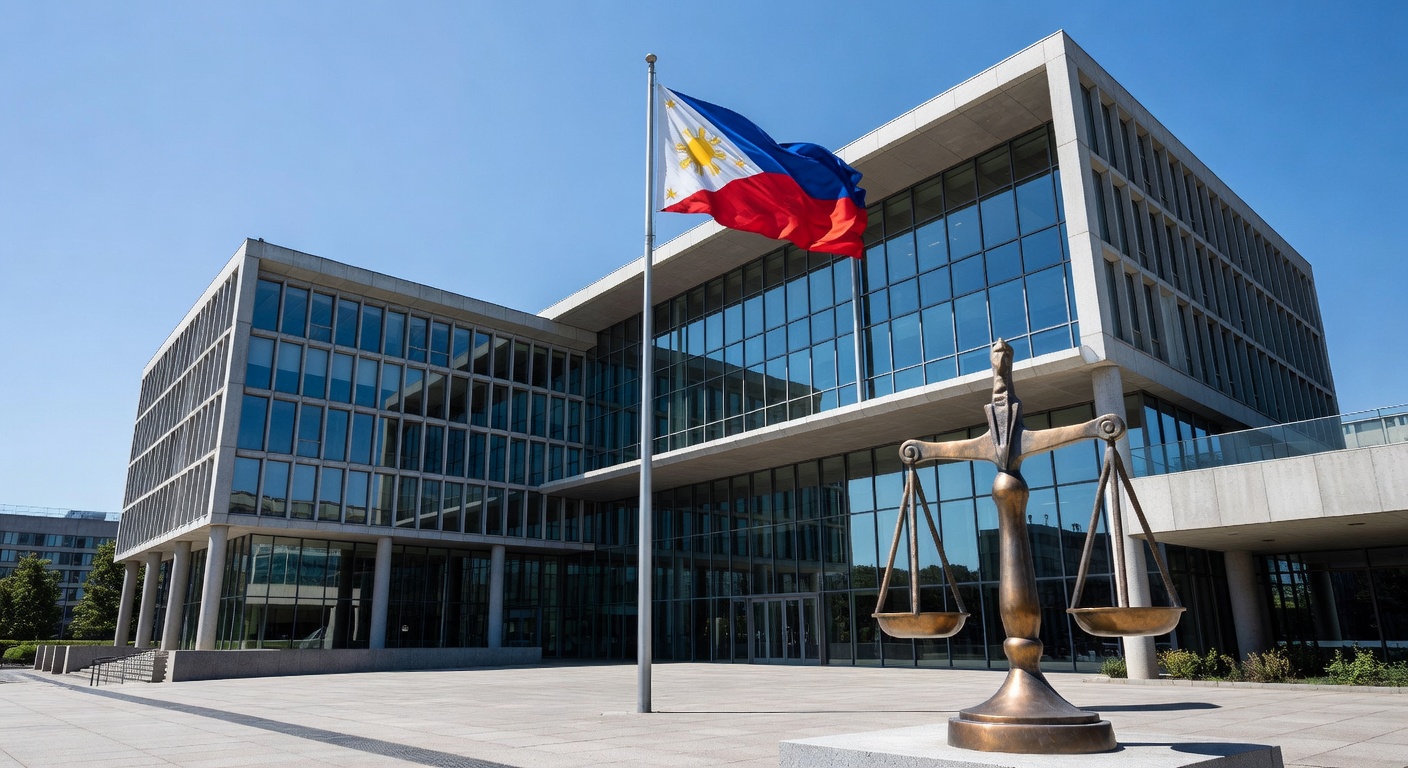
ICC Sets November 30 Trial Date for Duterte — A Watershed Moment for International Justice
The International Criminal Court has done what many thought impossible: it has set a firm trial date for a former Philippine president. On November 30, Rodrigo Duterte will face the court in The Hague on charges of crimes against humanity — and the entire world will be watching.
This is not just a legal proceeding. It is a reckoning. For the victims of Duterte's bloody war on drugs, it is the first sign that accountability may finally be within reach. For the Philippines, it is a day that will test the nation's relationship with international justice. And for the global community, it is a precedent-setting moment that will reverberate far beyond the courtroom walls of The Hague.
The Road to The Hague
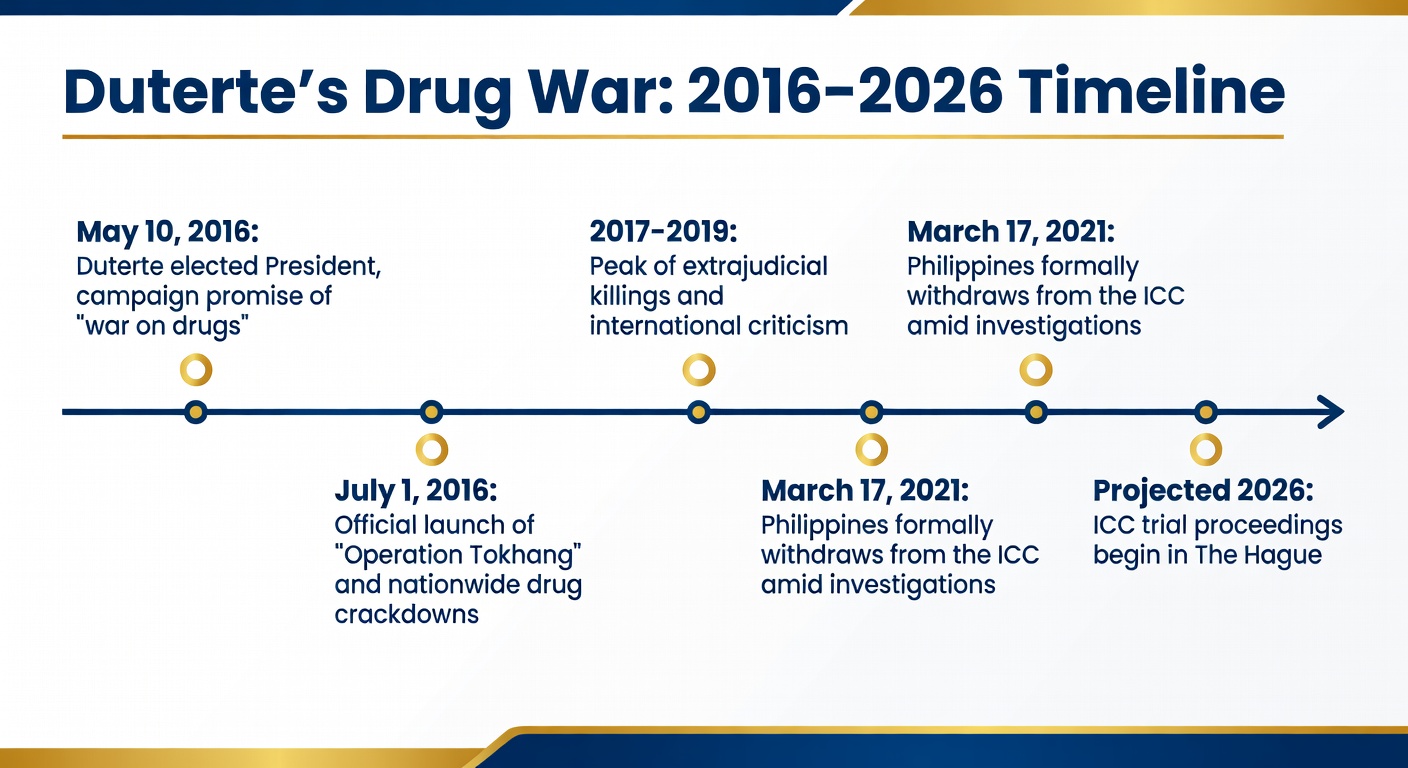
Rodrigo Duterte's drug war, launched immediately after he took office in 2016, was one of the deadliest campaigns of its kind in modern history. Official figures put the death toll at around 6,000 — but human rights organizations, including Amnesty International and Human Rights Watch, have long argued that the actual number is far higher, potentially reaching 30,000 or more.
The policy was straightforward and brutal: Duterte encouraged police and vigilantes to kill suspected drug users and dealers with impunity. "Forget the laws on human rights," Duterte told security forces in 2016. "If you know of any drug addicts, go ahead and kill them in the street." The international community condemned the campaign, but Duterte dismissed criticism as foreign interference.
The ICC investigation was launched in 2021, and in 2025 — after years of legal battles over jurisdiction — the court issued an arrest warrant. Duterte was taken into custody and transferred to The Hague, where he has been held pending trial. Now, with the trial date set, the world will finally see evidence presented in a court of law.
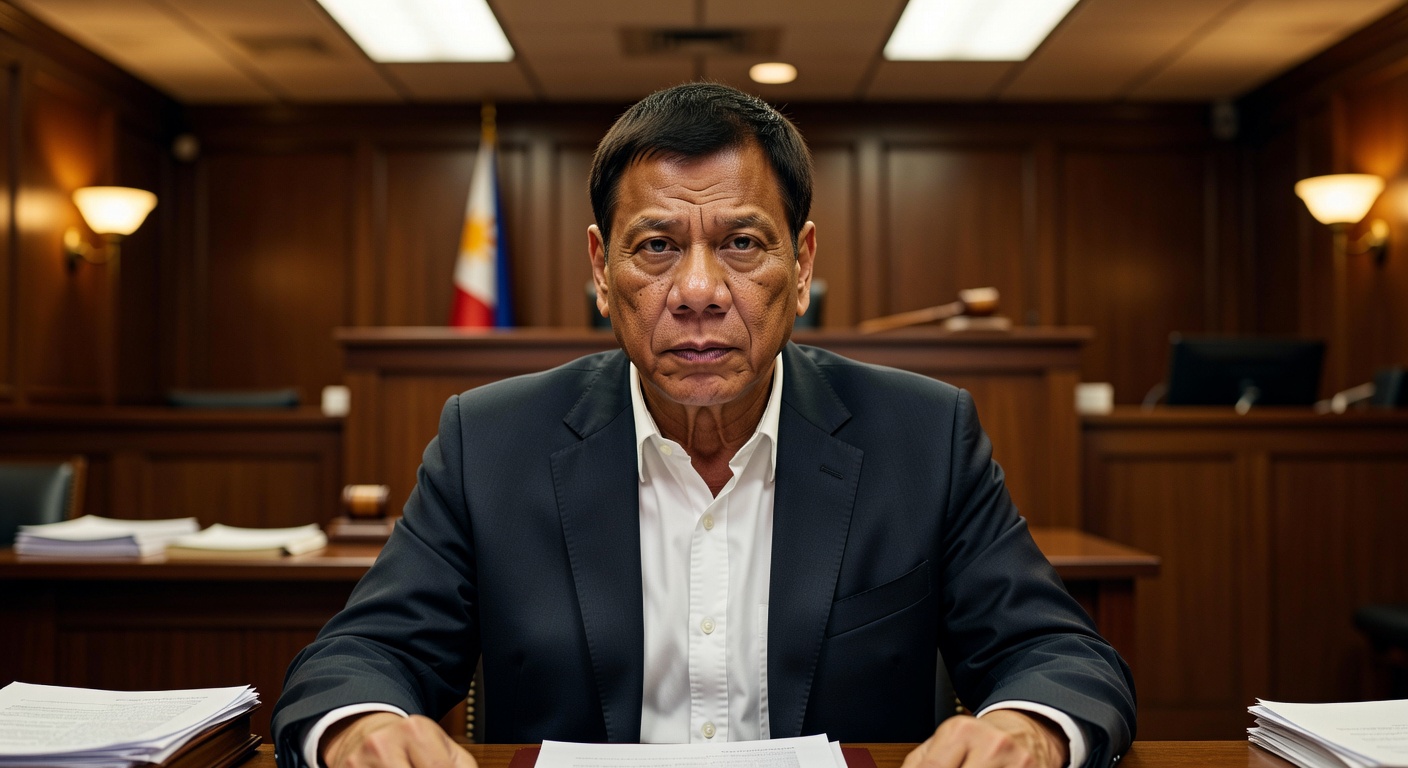
What the Trial Will Entail
The charges against Duterte center on crimes against humanity — specifically, the widespread and systematic killing of civilians. Under the Rome Statute, crimes against humanity include murder, torture, and persecution when committed as part of a widespread or systematic attack directed against any civilian population.
The prosecution's case will rest on three pillars:
Pattern of Evidence: Thousands of recorded police operations, witness testimony from former officers who have since recanted, and autopsy reports that prosecutors say show a consistent pattern of extrajudicial killings. The prosecution intends to demonstrate that these were not isolated incidents but a coordinated state policy.
Command Responsibility: As president and commander-in-chief, Duterte set the policy, publicly encouraged the killings, and shielded those who carried them out from accountability. Prosecutors will argue that command responsibility under international law makes him liable for the acts of those under his authority.
Systemic Cover-Up: Evidence will be presented showing that police falsified reports, that "nanlaban" (he fought back) tags were used to justify killings, and that the government actively obstructed independent investigations.
The Defense Strategy
Duterte's legal team has signaled several lines of defense. The primary argument is jurisdictional — that the ICC has no authority over the Philippines because the country withdrew from the Rome Statute in 2019. However, the court has ruled that it retains jurisdiction over crimes committed while the Philippines was still a signatory (2016-2019).
A secondary argument will be that Philippine courts are capable of handling the cases and that the ICC should defer to domestic proceedings under the principle of complementarity. This argument faces a steep uphill climb given the lack of any meaningful domestic prosecutions of drug war-related killings.
The Broader Implications
Whatever the outcome, the Duterte trial will have lasting consequences. For the Philippines, it represents a crossroads: will the nation confront its painful recent history, or will it retreat into nationalist denial? For the ICC, it is a test of whether the court can hold powerful leaders accountable. For other nations, it sends a message about the reach of international law.
As November 30 approaches, all eyes will be on The Hague. The dock will hold not just Rodrigo Duterte but the hopes and fears of an entire nation.
Key Takeaways
- The ICC has set November 30 as the trial date for Rodrigo Duterte on crimes against humanity charges related to his drug war.
- The prosecution will present evidence of a coordinated state policy of extrajudicial killings, command responsibility, and systemic cover-up.
- Duterte's defense will argue the ICC has no jurisdiction and that Philippine courts should handle the cases.
- The trial is expected to last months and could set significant precedents for international criminal law.
- The case has deeply divided Philippine society, with supporters viewing it as foreign interference and victims' families seeing it as their only path to justice.
Conclusion
The Duterte trial is more than a legal proceeding — it is a moment of truth for international justice. Whether the ICC can successfully prosecute a former head of state for crimes committed during a brutal anti-drug campaign will determine not just Duterte's fate but the future of accountability for leaders who use state power to commit atrocities. The world will be watching. The families of the victims will be waiting. And on November 30, the gavel will fall.
This is Bella Reyes for Global1 News, reporting from Manila. 🇵🇭
The Historical Precedent
Only a handful of former heads of state have faced trial at the International Criminal Court since its establishment in 2002. Laurent Gbagbo of Côte d'Ivoire was acquitted in 2019. Uhuru Kenyatta of Kenya saw charges withdrawn due to insufficient evidence. Charles Taylor of Liberia was convicted by a special court, not the ICC itself. The track record is mixed, and the Duterte case will inevitably be compared to these predecessors.
What sets Duterte apart is the nature of the charges. Unlike Gbagbo, who was accused of crimes related to a contested election, or Kenyatta, who faced charges for post-election violence, Duterte is accused of directing a systematic campaign of extrajudicial killings as a matter of state policy. The scale and duration of the alleged crimes — thousands of killings over six years — is unprecedented in the ICC's history.
The trial will also test the limits of the doctrine of complementarity, which holds that the ICC can only prosecute cases where national courts are unwilling or unable to do so genuinely. Duterte's defense is expected to argue that Philippine courts are capable of handling the cases. But with no significant domestic prosecutions of drug war killings having occurred — and with Duterte having publicly boasted about his role in the campaign — the argument faces substantial hurdles.
The Philippine Domestic Response
The Duterte trial has deeply divided Philippine society. Supporters of the former president — and there are still many — view the ICC proceedings as a form of neocolonial interference, arguing that the court has no right to judge a Philippine leader for actions taken to protect the country from the scourge of drugs. "He did what needed to be done," is a common refrain among Duterte loyalists, many of whom believe the drug war made the streets safer.
Victims' families and human rights advocates see the situation very differently. For them, the ICC represents the only realistic path to justice after years of domestic impunity. "We tried everything in the Philippines," said one mother who lost her son in a drug war operation. "The police would not investigate. The courts would not act. The ICC is our last hope."
This divide reflects a deeper polarization in Philippine society — between those who prioritize order and security and those who prioritize human rights and due process. The trial will force the country to confront this divide in a public and painful way.
The Role of Social Media and Disinformation
The ICC trial is unfolding not just in a courtroom but online, where social media platforms have become battlegrounds for competing narratives about Duterte and his legacy. Pro-Duterte accounts have been amplifying claims that the trial is a Western conspiracy, that witnesses have been bribed, and that the ICC is biased against developing nations. These narratives have found fertile ground among Duterte's supporters, many of whom get their news primarily from Facebook and YouTube.
Fact-checking organizations have documented a significant increase in disinformation targeting the ICC and its investigators. The challenge for credible journalism is to cut through the noise and present the facts of the case in a way that is accessible and trustworthy. It will not be easy.
Looking Ahead
The Duterte trial will be one of the defining legal events of the decade. It will test the ICC's capacity to prosecute crimes against humanity committed by a head of state. It will force the Philippines to reckon with a painful chapter in its history. And it will set precedents that will shape international criminal law for years to come.
Whether the outcome is a conviction or an acquittal, the process itself is historically significant. For the first time, a former Philippine president will sit in the dock and answer for his actions before the world. That alone is a milestone worth marking.
This article was produced with AI-assisted research and editorial support. Reporting is based on sources cited in the article.
What's Your Reaction?
 Like
1
Like
1
 Dislike
0
Dislike
0
 Love
0
Love
0
 Funny
0
Funny
0
 Wow
0
Wow
0
 Sad
0
Sad
0
 Angry
0
Angry
0

Philippines/Southeast Asia Correspondent at Global1.News. Manila-based journalist covering Philippine politics, environment, maritime security, and social issues. Passionate about marine conservation and the communities protecting the Philippines' natural heritage.










Comments (0)