
Health ministry to give financial aid to organ transplant hospitals
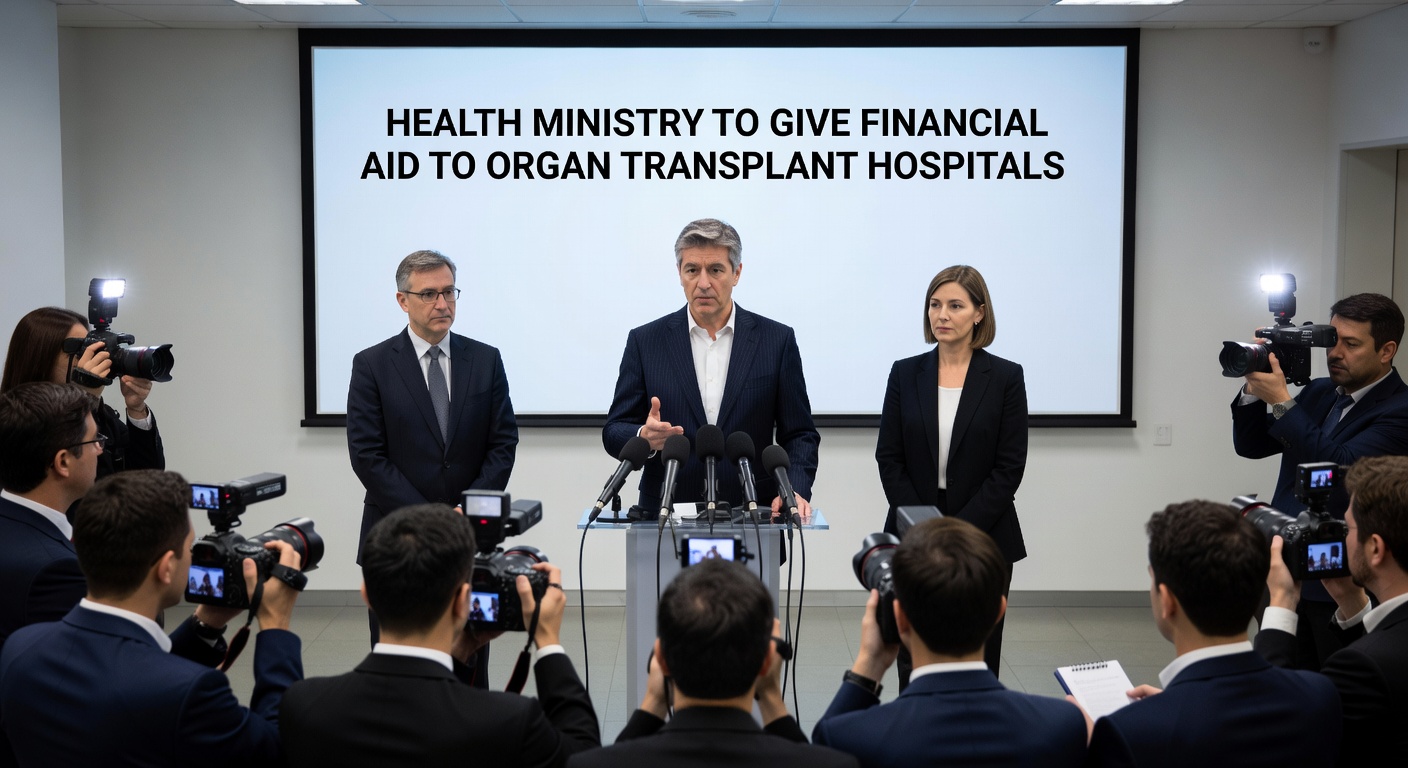
Japan's Health Ministry Unveils Targeted Financial Aid for Organ Transplant Hospitals to Address Staff Shortages
TOKYO — In a move designed to strengthen Japan's fragile organ transplant ecosystem, the Ministry of Health, Labour and Welfare announced on Monday a new financial assistance program for designated transplant hospitals. The initiative allocates subsidies specifically to cover staffing costs, aiming to curb the growing number of canceled procedures caused by shortages of surgeons, coordinators, and intensive care specialists, even as public willingness to donate organs continues to climb.
Program Details and Funding Allocation
The aid package, effective from fiscal year 2025, will distribute up to ¥2.8 billion annually across 48 approved transplant centers nationwide. Hospitals meeting performance benchmarks — such as maintaining a 24-hour on-call transplant team and achieving at least 85 percent procedure completion rates — can receive grants covering 40 to 60 percent of additional personnel expenses. This includes salaries for transplant coordinators, perfusion technicians, and data analysts tasked with managing digital donor registries.
Ministry officials emphasized that the program responds directly to data showing a 23 percent rise in canceled transplants last year, with staff unavailability cited as the primary factor in 67 percent of cases. "We are seeing more families consent to donation, yet operational bottlenecks prevent those gifts from reaching recipients," said Dr. Hiroshi Nakamura, director of the ministry's Organ Transplant Promotion Division, during a press briefing in Kasumigaseki.
Historical Context of Organ Donation in Japan
Japan's organ donation rates have historically lagged behind peer nations. Following the 1997 Organ Transplant Law and its 2010 revision allowing donations after cardiac death under broader criteria, annual deceased donors increased from 43 in 2010 to 128 in 2023. Living donor transplants, particularly kidney and liver, now exceed 1,400 procedures yearly. Despite this progress, Japan still records only 0.99 deceased donors per million population, compared with 36.9 in Spain and 21.4 in the United States.
These figures reflect cultural and logistical hurdles rather than lack of public support. Recent surveys by the Japan Organ Transplant Network indicate that 62 percent of adults now carry donor cards or have registered digitally via the My Number portal, up from 41 percent in 2018. The surge coincides with targeted awareness campaigns and integration of donor status into electronic health record systems developed by Fujitsu and NEC.
Staff Shortages and Rising Cancellations
Staffing remains the critical constraint. A 2024 Japan Surgical Society report documented a 19 percent vacancy rate for transplant-specialized physicians in regional hospitals, with urban centers such as Tokyo and Osaka experiencing burnout-driven turnover exceeding 14 percent annually. When a donor becomes available, hospitals must assemble multidisciplinary teams within hours — a requirement that frequently collides with existing surgical schedules and on-call rotations.
Last fiscal year, at least 47 scheduled transplants were canceled after organs had been procured, according to ministry audits. Each cancellation not only wastes procured organs but also imposes emotional costs on donor families and extends waiting times for the roughly 13,800 patients currently on national transplant lists.
Expert Perspectives on the Initiative
Professor Akiko Sato of Keio University School of Medicine, who has studied transplant logistics for two decades, welcomed the subsidies but cautioned against short-term fixes. "Financial aid must be paired with systemic reforms, including AI-assisted organ matching algorithms that reduce coordination time from hours to minutes," she stated. Sato's team has piloted a machine-learning model that predicts compatibility with 94 percent accuracy using anonymized national registry data.
Hospital administrators also voiced measured optimism. Dr. Kenji Yamamoto, director of the transplant unit at Osaka University Hospital, noted that the grants could fund two additional full-time coordinators per facility. "In the past three years we have lost four potential liver transplants because no available surgeon was free within the six-hour viability window," Yamamoto said. "Targeted funding changes that equation."
Technology Integration and Forward-Looking Implications
As a technology-focused development, the aid program explicitly permits hospitals to allocate up to 25 percent of received funds toward digital infrastructure. This includes blockchain-secured donor registries to prevent data mismatches and remote monitoring platforms that allow specialists in Tokyo to guide procedures at rural facilities via augmented reality interfaces.
Such investments align with Japan's broader Society 5.0 strategy, which seeks to leverage data analytics and automation to offset demographic pressures from an aging workforce. The ministry has partnered with the Japan Agency for Medical Research and Development to evaluate how predictive staffing software could forecast demand spikes based on real-time donor registration trends.
Economically, the program is projected to generate measurable returns. Each successful transplant saves an estimated ¥18 million in long-term dialysis and hospitalization costs over a decade, according to ministry cost-benefit models. Scaling successful procedures by even 15 percent could therefore offset the subsidy outlay within four years while improving quality-adjusted life years for recipients.
Challenges, Ethical Considerations, and Broader Analysis
Implementation hurdles persist. Smaller prefectural hospitals may struggle to meet the accreditation thresholds required for funding eligibility, potentially widening regional disparities. Ethical oversight committees will monitor whether performance-linked grants inadvertently pressure staff or compromise donor family consent processes.
International observers are watching closely. The World Health Organization has cited Japan's low donor rates as a benchmark for policy innovation in Asia. If the subsidy model succeeds, it could serve as a template for neighboring countries facing similar staffing constraints amid rising chronic disease burdens.
Looking ahead, the ministry plans annual reviews incorporating feedback from transplant registries and real-time analytics dashboards. Forward-thinking hospitals are already exploring robotic-assisted procurement techniques and 3D-printed organ scaffolds as longer-term solutions that could further reduce dependence on human availability windows.
The policy signals a pragmatic recognition that increasing donor consent alone is insufficient. Sustainable transplant capacity requires deliberate investment in the human and technological infrastructure that converts willingness into completed procedures.
This is Kenji Tanaka for Global1 News, reporting from Tokyo. 🇯🇵
This article was produced with AI-assisted research and editorial support. Reporting is based on sources cited in the article.
What's Your Reaction?
 Like
0
Like
0
 Dislike
0
Dislike
0
 Love
0
Love
0
 Funny
0
Funny
0
 Wow
0
Wow
0
 Sad
0
Sad
0
 Angry
0
Angry
0

Japan Correspondent at Global1.News. Tokyo-based voice covering Japanese politics, technology, economy, and culture. Tracks the intersection of tradition and innovation in one of the world's most dynamic societies.















Comments (0)