
Indian court denies bail to Nigerian man over drug charges
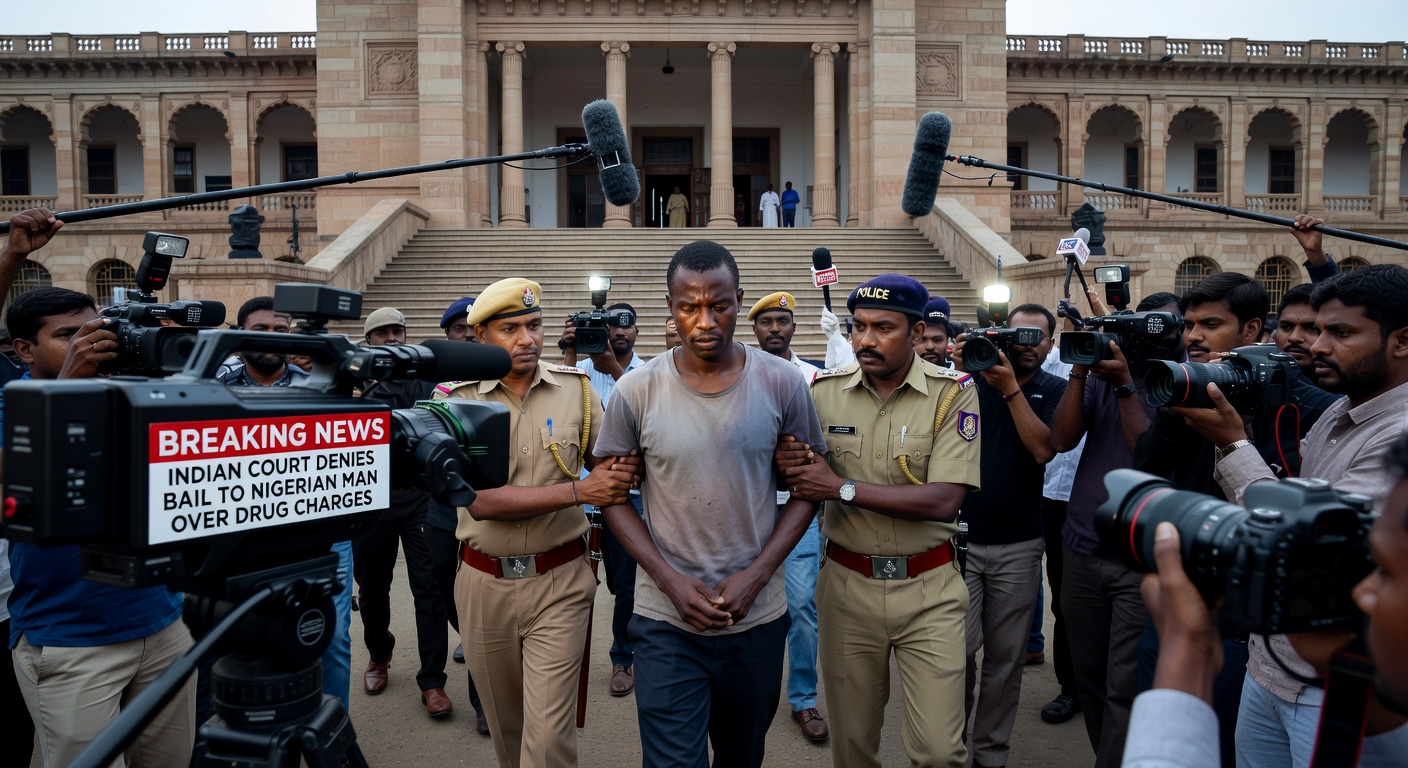
Indian Court Denies Bail to Nigerian National Cristian Soporuchukwu in Drug Trafficking Case
The Ruling and Immediate Context
A Delhi court on Tuesday rejected the bail application of 44-year-old Nigerian national Cristian Soporuchukwu, who faces charges under India’s Narcotic Drugs and Psychotropic Substances Act for alleged involvement in the trafficking of hard drugs. The decision underscores the Indian judiciary’s strict stance on narcotics cases, particularly those involving foreign nationals entering the country on business visas.
Soporuchukwu was arrested in October last year after authorities intercepted communications linking him to the distribution network of methamphetamine and other controlled substances in the National Capital Region. Prosecutors argued that granting bail would risk evidence tampering and flight, given the accused’s international connections. The court agreed, citing the gravity of the charges and the potential for cross-border syndicates to exploit judicial leniency.
From Business Visa to Alleged Criminal Network
Soporuchukwu arrived in India in 2021 on a business visa, ostensibly to explore opportunities in textile trading and small-scale manufacturing. Court documents reveal that within months his activities shifted toward alleged pharmaceutical diversion channels. Indian authorities claim he facilitated the movement of precursor chemicals and finished synthetic drugs through informal networks operating between Delhi, Mumbai, and border states.
Investigators recovered digital records showing encrypted transactions valued at approximately ₹4.7 crore (about $560,000), alongside physical seizures of 12 kilograms of methamphetamine. While Soporuchukwu maintains his innocence and insists the communications were misinterpreted commercial negotiations, the prosecution presented call data records and witness statements from two Indian co-accused who have already turned approvers.
Bilateral Trade Realities Between Nigeria and India
Nigeria and India maintain robust commercial ties, with bilateral trade reaching $18.2 billion in the 2023 fiscal year, according to the Indian Ministry of Commerce. Pharmaceuticals represent one of India’s top exports to Nigeria, valued at over $1.1 billion annually. This legitimate flow of medicines creates both opportunity and vulnerability, as regulatory gaps in both countries have occasionally been exploited by criminal elements.
Economic analysts in Lagos note that high-profile cases such as this one risk casting a shadow over legitimate Nigerian entrepreneurs seeking market access in India. Dr. Ngozi Eze, a trade economist at the Lagos Chamber of Commerce, observes: “Every time a Nigerian is linked to narcotics, it triggers additional scrutiny on visa applications and letters of credit for genuine businesses. The cost is measured not only in legal fees but in lost contracts and delayed shipments.”
Implications for the Nigerian Diaspora
India hosts an estimated 25,000–30,000 Nigerians, many of whom are students or traders operating in the informal sector. Community leaders in Delhi report rising anxiety following the bail denial. Chukwuma Okoro, president of the Nigerian Union in India, stated that members fear collective reputational damage: “We have been working with Indian authorities to promote investment corridors. Cases like this undo years of relationship-building.”
Data from the Nigerian High Commission in New Delhi shows a 17 percent increase in consular assistance requests related to immigration and legal matters in the past 18 months. Many of these involve young professionals whose business visas are now subject to enhanced vetting. Forward-looking policy discussions in Abuja are examining the creation of a dedicated diaspora investment facilitation desk that could provide pre-vetted credentials to reduce such risks.
Regional Drug Trafficking Patterns and Enforcement Trends
The United Nations Office on Drugs and Crime (UNODC) 2023 report highlights a sharp rise in synthetic drug flows along the India–West Africa corridor. Methamphetamine seizures in Indian ports increased by 41 percent year-on-year, with Nigerian and Ghanaian nationals featuring in 23 percent of recorded foreign arrests. Indian enforcement agencies have strengthened coordination with the National Drug Law Enforcement Agency (NDLEA) in Nigeria, resulting in joint operations that dismantled two precursor shipment routes in 2024.
However, experts caution that enforcement alone cannot address root economic drivers. Limited legitimate employment opportunities in parts of Nigeria push some youth toward high-risk ventures. The current case is viewed by security analysts as symptomatic of deeper structural challenges rather than an isolated incident.
Legal and Human Rights Dimensions
Defense counsel for Soporuchukwu has indicated plans to appeal the bail order in the Delhi High Court, arguing that prolonged detention without trial violates both Indian constitutional protections and international conventions on migrant rights. The trial is scheduled to begin in six weeks, with over 40 witnesses listed by the prosecution.
Human rights observers emphasize the need for transparent judicial processes to avoid perceptions of bias against African nationals. At the same time, Indian authorities stress that nationality is irrelevant when evidence meets the threshold for serious narcotics offenses, which carry mandatory minimum sentences of ten years.
Looking Ahead: Policy and Economic Opportunities
The denial of bail sends a clear signal that Indian courts will not relax standards for foreign nationals in drug cases. For Nigerian policymakers, the episode presents an opportunity to accelerate ongoing reforms in export quality control and diaspora engagement. Proposals under consideration include mandatory certification programs for Nigerian traders operating in high-risk sectors and expanded legal aid partnerships with host countries.
Business leaders on both sides continue to advocate for deeper legitimate economic integration. Enhanced regulatory harmonization on pharmaceutical trade, coupled with real-time tracking of precursor chemicals, could simultaneously reduce criminal opportunities and unlock new investment flows estimated at $2–3 billion over the next five years.
As the Soporuchukwu case proceeds through the Indian legal system, its outcome will likely influence not only individual liberties but also the broader trajectory of Nigeria–India commercial relations. Stakeholders in Lagos remain cautiously optimistic that transparent handling of such incidents can ultimately strengthen trust and open pathways for responsible cross-border enterprise.
This is Sarah Okafor for Global1 News, reporting from Lagos. 🇳🇬
This article was produced with AI-assisted research and editorial support. Reporting is based on sources cited in the article.
What's Your Reaction?
 Like
0
Like
0
 Dislike
0
Dislike
0
 Love
0
Love
0
 Funny
0
Funny
0
 Wow
0
Wow
0
 Sad
0
Sad
0
 Angry
0
Angry
0

Africa Correspondent at Global1.News. Based in Lagos, covering politics, business, technology, and culture across the continent. Focused on telling African stories beyond the headlines — the innovation, entrepreneurs, and communities shaping the region's future.















Comments (0)