
Gulf of Paria widens as Trinidad pours oil on troubled Venezuelan waters
Gulf of Paria widens as Trinidad pours oil on troubled Venezuelan waters The Spill That Started It All On May 1, Heritage Petroleum Company Limited detected an oil spill at its offshore Main Field operation in the Gulf of Paria at approximately 7:25 a.m. The company immediately notified Trinidad and Tobago's Ministry of Energy and Energy Industries, the Coast Guard, and the Env
The Spill That Started It All
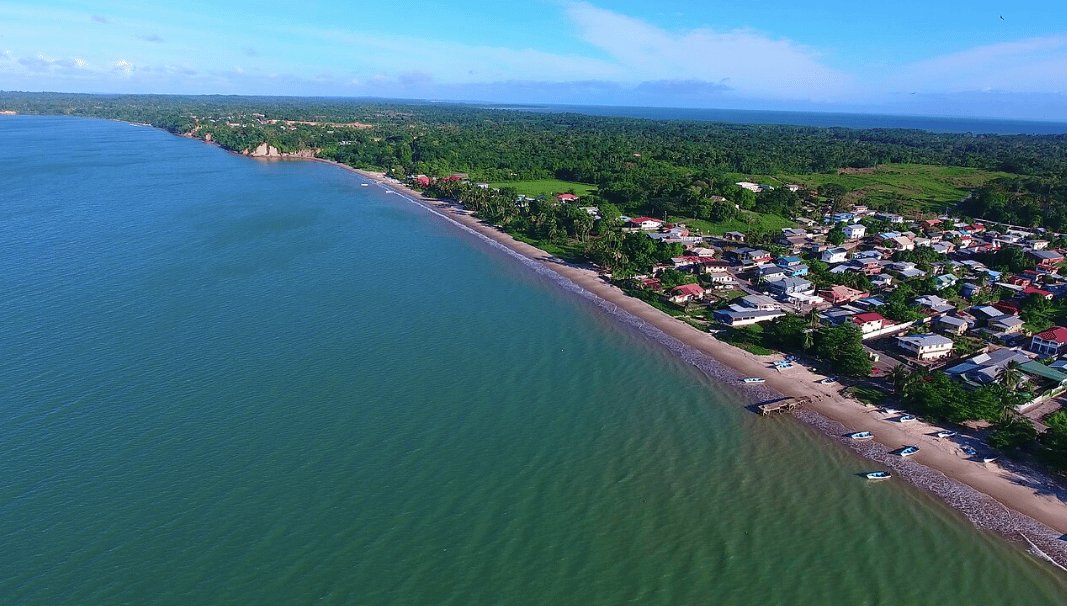
On May 1, Heritage Petroleum Company Limited detected an oil spill at its offshore Main Field operation in the Gulf of Paria at approximately 7:25 a.m. The company immediately notified Trinidad and Tobago's Ministry of Energy and Energy Industries, the Coast Guard, and the Environmental Management Authority. According to Port of Spain, an estimated 10 barrels were spilled. The leak was stopped the same day, repaired and returned to service on May 2. Trinidad's own spill trajectory modelling found that if left untreated, the hydrocarbons could have crossed into Venezuelan waters, prompting authorities to deploy chemical dispersants approximately six to eight nautical miles from the shared maritime border. Follow-up drone and vessel inspections reportedly found no visible hydrocarbons remaining on the surface.
Neither Heritage Petroleum nor the T&T government publicly disclosed the incident until Venezuela raised the alarm internationally. Satellite imagery obtained by Caracas, including images dating back to April 28, days before Trinidad's official May 1 detection date, showed a slick originating from Trinidad. This sequence of events left many in the region questioning why information about even a small spill was not shared openly from the outset, especially given the shared nature of the Gulf of Paria waters that both nations rely upon for livelihoods and ecological balance. The decision to keep the matter internal meant that communities on both sides of the border remained unaware of any potential risk until external pressure brought it to light.
The use of chemical dispersants so close to the maritime boundary highlighted the cross-border dimension from the very beginning. Trinidad and Tobago authorities acted on their modelling to prevent further spread, yet the absence of any public statement at the time created an information vacuum. Fisherfolk and coastal residents in Trinidad who depend on these waters for daily sustenance had no opportunity to take precautionary measures or even to understand what had occurred in their own backyard. This approach to handling the spill internally, without broader notification, set the stage for the diplomatic tensions that would soon follow.
In the days after the incident, internal reports confirmed that the spill had been managed according to domestic protocols, but the lack of transparency meant that the wider public only learned of the event when Venezuela chose to speak out. The trajectory modelling itself underscored how quickly any release in these waters could affect neighbouring areas, making the choice not to disclose even more significant for regional trust. Communities across the Gulf have long understood that what happens in one part of these shared waters can quickly reach the other, yet the handling of this event did not reflect that shared reality.
Venezuela's Public Demand for Answers
Venezuela's Foreign Minister Yván Gil went public on May 12, demanding information and compensation, and warning of impacts across 1,625 square kilometres spanning 12 strategic wetland systems, four national parks, and the livelihoods of more than 500 fishermen in the states of Sucre and Delta Amacuro. Acting President Delcy Rodríguez ordered a multidisciplinary team of environmental specialists, biologists and naval personnel to the affected areas. The satellite imagery dating back to April 28 provided Caracas with evidence that the slick had been visible well before Trinidad's reported detection date, strengthening their position that the incident carried wider implications than initially acknowledged by Port of Spain.
The scale of the areas flagged by Venezuela, including 12 wetland systems and four national parks, illustrated the potential reach of even a modest release in these ecologically sensitive waters. More than 500 fishermen in Sucre and Delta Amacuro were identified as directly affected, highlighting how quickly an offshore incident can disrupt the daily lives of coastal communities who rely on the Gulf for their income and food security. The deployment of specialists by Acting President Delcy Rodríguez signalled that Caracas intended to treat the matter with urgency and to gather its own evidence on the ground.
By framing its demands under international environmental law, Venezuela elevated what might have remained a bilateral technical matter into a public diplomatic issue. The 1,625 square kilometres of potential impact zone crossed multiple protected areas, underscoring the shared vulnerability of the Gulf of Paria ecosystem. Fishermen on the Venezuelan side expressed concern that their catches and equipment could be compromised, adding a human dimension to the satellite data and official statements coming from Caracas.
The public nature of the May 12 announcement by Foreign Minister Yván Gil made clear that Venezuela would not accept a purely domestic response from Trinidad and Tobago. The involvement of naval personnel alongside environmental experts showed the integrated approach Caracas was taking, combining scientific assessment with operational presence in the affected zones. This coordinated response reflected the seriousness with which Venezuela viewed the potential damage to its coastal wetlands and national parks, areas already under pressure from broader environmental challenges in the region.
Port of Spain's Defence and the Transparency Question
Trinidad and Tobago maintained that the spill was minor, contained within 48 hours, and that all proper domestic procedures were followed. The 10-barrel estimate and rapid repair on May 2 formed the core of Port of Spain's position, supported by internal notifications to the Ministry of Energy and Energy Industries, the Coast Guard, and the Environmental Management Authority. Yet the decision not to publicly disclose the incident until Venezuela forced the issue raised questions about how cross-border trust can be maintained when information is shared only after external pressure.
The trajectory modelling that prompted dispersant deployment six to eight nautical miles from the border demonstrated that Trinidad and Tobago recognised the potential for the spill to affect Venezuelan waters. However, keeping this assessment and the subsequent response internal meant that the public in both countries learned of the event only when Caracas chose to highlight it. This approach, while consistent with domestic protocols, left little room for joint monitoring or early cooperation that might have strengthened confidence between the two neighbours.
Port of Spain's insistence that the matter was fully resolved by May 2 stood in contrast to Venezuela's use of earlier satellite imagery from April 28. The difference in timelines contributed to the perception that Trinidad and Tobago had not been forthcoming from the start. For communities living along the Gulf, the absence of any public statement at the time of the spill meant they had no basis to assess whether additional precautions were warranted, even if the official view was that the release posed no lasting threat.
The handling of the incident exposed a gap between following internal procedures and communicating openly across borders in a shared marine space. While Trinidad and Tobago emphasised containment and compliance, the lack of proactive disclosure created space for diplomatic friction that could have been avoided. Rebuilding confidence will require clearer expectations about when and how information about offshore incidents is shared, particularly when modelling shows any risk of cross-border movement.
Opposition Accusations and Domestic Fallout
Former Energy Minister Stuart Young accused both Heritage Petroleum and the government of deliberately withholding information about the offshore spill, describing it as a deliberate cover-up. These claims introduced a political dimension to what began as an operational incident, with calls for a formal investigation into how the matter was managed internally. The accusations highlighted concerns about accountability in the energy sector, where offshore operations carry inherent risks that affect not only the companies involved but also the wider public and neighbouring countries.
The political fallout extended beyond the immediate spill response to questions about oversight of Heritage Petroleum's activities in the Gulf of Paria. Stuart Young's statements suggested that the decision to keep the incident from public view reflected deeper issues in how energy sector incidents are reported and addressed. Calls for an investigation aimed to determine whether existing protocols adequately protect the interests of Trinidad and Tobago citizens and maintain the country's standing with regional partners.
Domestic debate over the spill revealed tensions between the government's emphasis on rapid containment and opposition concerns about transparency. The fact that the public learned of the event only after Venezuela's May 12 announcement fuelled perceptions that information had been managed to avoid scrutiny. This dynamic placed additional pressure on institutions responsible for regulating offshore operations and ensuring that even minor incidents are handled in a manner consistent with public expectations.
The accusations from the opposition underscored the need for clearer standards on disclosure, particularly when incidents occur in waters that border another nation. Stuart Young's intervention brought the matter into the domestic political arena, where questions of accountability in the energy sector intersect with broader issues of governance and regional relations. Any investigation that follows will need to address both the technical response and the communication decisions that shaped public awareness of the spill.
Environmental Stakes in a Shared Marine Ecosystem
The Gulf of Paria holds significant ecological importance for both Trinidad and Tobago and Venezuela, supporting diverse marine life and sustaining coastal communities on either side of the maritime boundary. The vulnerability of these shared waters to even limited releases of hydrocarbons places added pressure on small island developing states already facing climate change impacts such as rising sea levels and changing ocean conditions. Coastal communities and fisherfolk in both countries depend on the health of the Gulf for their livelihoods, making any incident that crosses borders a matter of direct concern to daily life in the region.
The potential reach of the spill into 12 wetland systems and four national parks on the Venezuelan side illustrated how interconnected the ecosystem remains, despite political boundaries. Fishermen in Sucre and Delta Amacuro, along with their counterparts in Trinidad, operate in the same body of water where currents and weather can quickly move any pollutant from one shore to another. This shared dependence means that environmental incidents require coordinated attention rather than isolated national responses.
Tourism in Tobago and the wider Caribbean also stands to be affected by perceptions of risk in the Gulf of Paria, as visitors increasingly consider environmental safety when choosing destinations. The incident served as a reminder that offshore energy activity must be balanced against the need to protect the natural assets that support both local economies and regional tourism. Communities that have long lived alongside these waters understand that their future prosperity depends on maintaining the ecological balance that has sustained them for generations.
Climate change pressures on small island developing states amplify the stakes of any environmental incident in the Gulf. Rising temperatures and shifting weather patterns already challenge the resilience of coastal ecosystems, making it essential that incidents like the May 1 spill are managed with full awareness of their potential to compound existing stresses. The shared marine environment demands that both nations consider not only immediate containment but also the longer-term implications for the communities and natural systems that rely on these waters.
What This Means for CARICOM and Regional Cooperation
The dispute underscores the need for pre-agreed cross-border notification frameworks that would allow neighbouring countries to respond jointly to offshore incidents in shared maritime zones. The Gulf of Paria is not the only area in the Caribbean where energy operations occur near international boundaries, and the current episode sets a precedent for how such matters might be handled elsewhere. Without clear protocols, similar incidents risk escalating into diplomatic disagreements that divert attention from effective environmental management.
CARICOM's potential role in mediating environmental disputes between member states and neighbouring countries could help establish consistent standards for notification and response. The organisation has long promoted regional cooperation on economic and security matters, yet environmental incidents in shared waters require similar attention to prevent unilateral actions from undermining collective interests. A framework developed through CARICOM could provide the structure needed to address future spills before they become sources of tension.
The precedent set by Venezuela's public response and Trinidad and Tobago's internal handling of the spill will influence how other Caribbean nations approach offshore operations near their borders. Countries with shared maritime zones will likely examine their own notification procedures to avoid similar situations. This episode demonstrates that even a limited release can generate wider regional implications when communication between neighbours is not proactive.
Strengthening cooperation through CARICOM could also support capacity building for environmental monitoring and rapid response across the Caribbean. By developing agreed mechanisms for information sharing, the region can reduce the likelihood that offshore incidents lead to public disputes rather than coordinated action. The Gulf of Paria case serves as a practical example of why such frameworks are necessary for maintaining both environmental protection and neighbourly relations in an area where maritime boundaries often overlap with vital economic and ecological interests.
By Sharon Sahatoo, Staff WriterThis article was produced with AI-assisted research and editorial support. Reporting is based on sources cited in the article.
What's Your Reaction?
 Like
0
Like
0
 Dislike
0
Dislike
0
 Love
0
Love
0
 Funny
0
Funny
0
 Wow
0
Wow
0
 Sad
0
Sad
0
 Angry
0
Angry
0

Caribbean Correspondent at Global1.News. Based in Port of Spain, Trinidad, covering Caribbean politics, economy, energy, climate, and culture. Amplifying the voices and stories of the Caribbean region.











Comments (0)