
EU-China Export War Erupts Over Russia Sanctions
China retaliates July 24, 2026, with export controls on 14 EU firms including Rheinmetall after EU's July 23 sanctions hit 14 Chinese entities over Russia support. Rare earth prices surge eightfold; 90%+ Chinese control threatens global supply chains and U.S. markets.
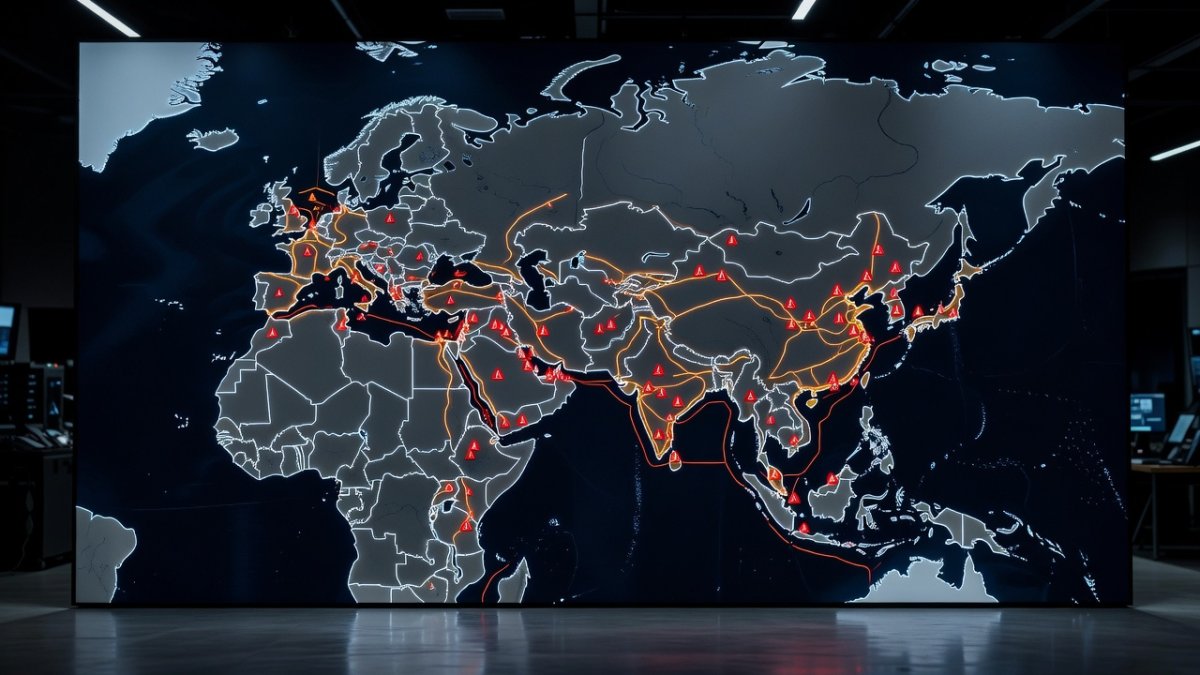
The EU and China just kicked off a no-holds-barred export war that’s about to hammer supply chains, jack up prices, and drag the U.S. straight into the crossfire. What began as sanctions targeting Russia’s war machine has exploded into direct retaliation over rare earths, defense contractors, and dual-use tech, with zero signs of cooling off. This isn’t background noise—it’s the new front line in global trade that will hit everything from your next car to national security. The implications ripple across continents, potentially fracturing NATO unity and accelerating the decoupling of Western economies from Chinese supply chains. This confrontation highlights the vulnerability of globalized production to geopolitical shocks, with everyday consumers facing the brunt through inflated costs and delayed innovations.
EU-China Export War Erupts Over Russia Sanctions
Global Markets — Article continues...
Folks, this just got real ugly real fast. On July 23, 2026, the European Union dropped its 21st sanctions package, hammering Russia's energy, finance, and crypto sectors while blacklisting 14 Chinese and Hong Kong firms for propping up Moscow's war machine. Less than 24 hours later, Beijing slammed the door shut on 14 European entities, banning Chinese exports of dual-use items to them effective immediately. German defense titan Rheinmetall AG sits at the top of that list. Here's the thing—this isn't just tit-for-tat. It's a calculated shot across the bow that exposes how fragile our supply lines really are.
The Sanctions Escalation No One Saw Coming
Let's break it down. The EU's July 23 package added 24 Russian firms and 10 others alongside those 14 Chinese and Hong Kong targets, all accused of enabling sanctions circumvention or feeding Russia's military-industrial complex. The EU's 21st sanctions package, adopted on July 23, 2026, targeted Russia's energy sector with new restrictions on LNG imports and shadow fleet vessels, while imposing asset freezes on financial services firms facilitating crypto-based evasion and blacklisting 24 Russian entities plus 10 intermediaries. The EU Council press release explicitly cited circumvention networks involving Chinese intermediaries, building on prior rounds that had already sanctioned over 2,000 Russian-linked actors since 2022. This escalation reflects years of mounting EU-China friction, including 2023-2025 disputes over Beijing's refusal to condemn the Ukraine invasion and its role in supplying dual-use components that sustained Russian artillery production. EU Sanctions Envoy David O'Sullivan had already warned back in June that China was "a very big problem," noting 90 percent of Russia's dual-use tech imports in 2023 ran through Chinese companies. O'Sullivan's warning that China represented "a very big problem" stemmed from intelligence showing 90 percent of Russia's dual-use tech imports flowing through Chinese firms, a pattern that prompted the inclusion of 14 Chinese and Hong Kong entities in the latest package. Beijing's swift July 24 retaliation mirrored its June 2026 blacklisting of two U.S. firms accused of similar support for Taiwan-related restrictions. The move signals a shift from diplomatic protests to direct economic countermeasures, exposing how sanctions over Russia have become a proxy battleground for broader geopolitical rivalries. China didn't wait for round two. On July 24 it retaliated with its own export control list, hitting European defense and tech players square in the supply chain. This follows Beijing's June 2026 blacklisting of two American firms. The message is loud and clear: mess with our partners and we hit your industrial base. The EU Council's 21st package also targeted Russian shadow fleet vessels and crypto evasion. Over 2,000 sanctioned entities since 2022 underscore the scale of this effort. This layered approach aims to close loopholes but risks entangling neutral parties in the escalating economic conflict, potentially leading to a more fragmented international order where even non-aligned nations must pick sides or face secondary sanctions.
Rheinmetall and the 14 Targeted European Entities
Rheinmetall AG, Germany's biggest defense contractor, leads the pack of 14 European companies now cut off from Chinese dual-use exports. Alongside it sits Sindlhauser Materials, a critical minerals processor also based in Germany, plus a roster of other defense and tech outfits across the continent. These aren't random names. They're firms the EU relies on for everything from armored vehicles to advanced components. China made the ban immediate, no grace period, no negotiations. The move directly counters the EU's attempt to squeeze Russia, turning the sanctions game into a two-front brawl that drags in NATO allies and Asian supply hubs alike.
China's Rare Earth Dominance Turns Lethal
Here's where it gets painful. China already controls more than 90 percent of global rare earth refining capacity and 92 percent of permanent magnet production, according to 2025 U.S. Geological Survey data, leaving Europe and the U.S. with minimal domestic alternatives. The June 2026 blacklisting of two American firms—identified in Chinese commerce ministry statements as involved in advanced semiconductor exports—previewed the current tactic of weaponizing export licenses. Dysprosium and terbium, now under immediate controls, are critical for high-temperature magnets in F-35 fighter jets, electric vehicle motors, and wind turbine generators, where even small quantities enable performance under extreme conditions. The eightfold price surge for these elements has already driven European magnet costs from roughly €80 per kilogram to over €640, forcing manufacturers to absorb margins or delay projects. Broader supply chain vulnerabilities trace back to China's 2010 export curbs during the Senkaku dispute and its 2023 tightening of gallium and germanium controls, which similarly spiked prices and prompted limited Western recycling investments. Without rapid diversification, European industry faces sustained cost inflation that could erode competitiveness in green technology sectors. Imagine trying to build tanks, wind turbines, or EVs when your key ingredients just became eight times more expensive overnight. This isn't abstract policy. It's a chokehold on the materials that power modern industry, and Beijing is squeezing it hard after the EU dared to touch its companies over Russia. These historical precedents demonstrate China's willingness to use economic leverage in territorial disputes, setting a pattern that now extends to sanctions retaliation and risks normalizing export controls as a routine tool of statecraft rather than an emergency measure.
Global Supply Chains Face Immediate Fracture
Supply chains don't bend—they snap under this kind of pressure. German auto manufacturers such as Volkswagen and BMW, which source rare earth magnets for EV drivetrains from Chinese processors, now confront immediate allocation cuts that threaten 2027 production targets. French aerospace firms including Safran and Airbus suppliers reliant on dysprosium-enhanced components for jet engines report lead times extending from weeks to months, directly slowing NATO-standard equipment deliveries. Dual-use items covered by the ban encompass not only rare earths but also precision machine tools, advanced sensors, and encryption hardware that support both civilian and military applications. These disruptions compress NATO defense timelines, with Rheinmetall's armored vehicle output already facing potential six-month delays amid component shortages. Inflationary pressure is mounting as European Central Bank models project a 0.8 percentage point rise in core goods prices through 2027, compounding existing energy cost pressures from the Russia conflict. Manufacturers lack short-term pivots because non-Chinese refining capacity remains below 10 percent globally, forcing reliance on costly stockpiles or third-country intermediaries that Beijing can further restrict. Trade imbalances that were already simmering between Brussels and Beijing just boiled over. Companies can't simply pivot overnight when one country owns the refining capacity. The result is longer lead times, higher inflation, and delayed defense production exactly when Europe needs it most to support Ukraine.
What This Means for American Readers and Markets
Americans, pay attention—this isn't Europe's problem alone. U.S. companies including Lockheed Martin, General Motors, and Tesla face parallel exposure through shared rare earth supply chains, where Pentagon reports indicate 80 percent of defense-grade magnets still originate from Chinese sources. Lockheed's F-35 program and GM's EV assembly lines could see cost increases mirroring Europe's eightfold surge, raising per-unit expenses by thousands of dollars. The Pentagon's procurement pipeline, already strained by Ukraine aid drawdowns, risks schedule slips on munitions and aircraft that depend on these materials. Parallels to the 2018-2020 U.S.-China trade war are evident in the rapid escalation from targeted entity listings to broad export controls, with both sides now using sanctions over third-party conflicts as leverage. American consumers will encounter higher prices for electronics, vehicles, and renewable energy installations, while taxpayers fund elevated defense budgets to offset supply risks. This three-way standoff underscores the need for accelerated domestic refining projects under the Defense Production Act to reduce vulnerability to Beijing's countermeasures. The trade war that started with Russia just became a three-way standoff with real consequences for your wallet and national security. These parallels warn that tit-for-tat measures could quickly expand into sector-wide tariffs, while accelerated Defense Production Act investments offer the only realistic path to insulating critical supply lines from future Beijing retaliation.
Staying Ahead: Action Steps in a Volatile World
Don't sit back and watch the chaos unfold. Track your investments in defense, auto, and tech sectors exposed to rare earth volatility. Push policymakers for diversified sourcing and domestic refining capacity—America can't keep relying on a single supplier that plays geopolitical hardball. Support companies investing in alternative materials and recycling programs. Stay informed through multiple sources, question official narratives on both sides, and demand transparency on how sanctions actually affect everyday supply. Knowledge and pressure are your best defenses when superpowers start trading export bans like punches.
By Jessica Ali, Staff Writer SUMMARY: China retaliates July 24, 2026, with export controls on 14 EU firms including Rheinmetall after EU's July 23 sanctions hit 14 Chinese entities over Russia support. Rare earth prices surge eightfold; 90%+ Chinese control threatens global supply chains and U.S. markets.This article was produced with AI-assisted research and editorial support. Reporting is based on sources cited in the article.
What's Your Reaction?
 Like
0
Like
0
 Dislike
0
Dislike
0
 Love
0
Love
0
 Funny
0
Funny
0
 Wow
0
Wow
0
 Sad
0
Sad
0
 Angry
0
Angry
0

Editor-in-Chief at Global1.News. Atlanta-based journalist who cuts through the BS and tells it like it is. Lead anchor, host, and the voice you hear when the spin stops and the truth starts.













Comments (0)