
F
In a recent DW News report examining Brazil's growing influence on the global stage, the spotlight has turned to Latin America's largest democracy as it prepares for what may be its most consequential election in decades. The political earthquake hit São Paulo this weekend — and its aftershocks will be felt from the Amazon to the Arizona border. Flavio Bolsonaro Launches Brazil Campaign — Milei, Netanyahu Back Challenger to Lula in October Election São Paulo, Brazil — Senator
In a recent DW News report examining Brazil's growing influence on the global stage, the spotlight has turned to Latin America's largest democracy as it prepares for what may be its most consequential election in decades. The political earthquake hit São Paulo this weekend — and its aftershocks will be felt from the Amazon to the Arizona border.
Flavio Bolsonaro Launches Brazil Campaign — Milei, Netanyahu Back Challenger to Lula in October Election
São Paulo, Brazil — Senator Flavio Bolsonaro, the 45-year-old eldest son of former President Jair Bolsonaro, formally launched his presidential campaign on Saturday at the Liberal Party (PL) national convention in São Paulo, setting the stage for a bitter October showdown against incumbent President Luiz Inácio Lula da Silva that will shape not just Brazil's future but the political direction of the entire Latin American region.

The São Paulo Convention — A Right-Wing Show of Force
The Mercado Pago Hall at Arena Pacaembu in São Paulo was packed on Saturday as delegates from the Liberal Party officially nominated Flavio Bolsonaro as their presidential candidate for the October 4 general election. Addressing the convention, the senator pledged to carry forward his father's political legacy, promising tax cuts, a tougher stance on crime, and a continuation of the conservative movement that reshaped Brazilian politics under Jair Bolsonaro's 2019-2023 presidency.
"This is more than a party convention," Bolsonaro told the crowd, according to reports from the event. "This is the beginning of the toughest battles of our life." Party chairman Valdemar Costa Neto described the day as "historic — a moment of unity, enthusiasm, and a showcase of our party's strength."

International Endorsements — Milei on Stage, Netanyahu by Video
The convention drew international attention rarely seen in Brazilian party nominations. Argentine President Javier Milei personally traveled to São Paulo to stand alongside Flavio Bolsonaro, a powerful symbol of the growing alliance between right-wing populist movements across South America. Israeli Prime Minister Benjamin Netanyahu sent a pre-recorded video message of support, telling Bolsonaro, "You're a great champion of Brazil, you're a great champion of the friendship between our peoples."
The foreign support underscores the global stakes of Brazil's October election. As Latin America's largest economy and the world's fifth-most populous nation, Brazil's political direction has ripple effects far beyond its borders — on trade, climate policy, migration, and regional security.
Father's Shadow — Jair Bolsonaro Under House Arrest
The campaign operates under the heavy shadow of Flavio's father, former President Jair Bolsonaro, who remains under house arrest while facing charges of plotting to overturn the results of the 2022 election. The elder Bolsonaro faces more than 40 years in prison if convicted. A handwritten letter from Jair Bolsonaro was released during the convention, calling for support, though Brazilian judicial authorities restricted all non-medical and non-legal visits to the former president until after the election.
This is Flavio's first presidential campaign. Elected to the Senate in 2018, he has spent years positioning himself as his father's political heir while attempting to build his own identity as a serious policy contender. The challenge is formidable: Flavio must energize his father's fervent base while appealing to the broader centrist voters who abandoned the Bolsonaro brand after the January 8, 2023 attacks on Brazil's seats of power.
The Electoral Landscape — Lula Leads but Race Tightens
Recent polling shows a competitive race. A Datafolha survey from July 15 placed President Lula at 48 percent support to Flavio Bolsonaro's 43 percent in a simulated runoff scenario, a gap that narrowed considerably from earlier in the year when Lula held a 15-point advantage. In the first-round scenario, Lula remains ahead but without the outright majority needed to avoid a runoff.
Lula, 80, of the Worker's Party (PT), is seeking a fourth term — having previously served from 2003 to 2010. His administration has focused on social programs, Amazon conservation, and rebuilding international alliances damaged during the Bolsonaro years. However, economic headwinds, inflation concerns, and corruption allegations have eroded some of his support.
Flavio has focused his campaign on public security — a resonant issue in a country where violent crime remains a daily reality for millions of Brazilians in cities like Rio de Janeiro, São Paulo, and Salvador. His platform also promises deregulation and tax reform aimed at attracting investment and creating jobs in Brazil's struggling industrial sector.
US-Brazil Tensions — Visa Denial Rattles Election Landscape
Complicating the campaign landscape, Brazil denied visas this week to two senior State Department officials from the Trump administration who planned to travel to Brazil to scrutinize the country's electoral system. Brazilian Foreign Ministry officials said the government viewed the planned visit as election interference, according to reports confirmed by Bloomberg News and other outlets.
The visa denial has become a flashpoint in the campaign, with Flavio Bolsonaro urging foreign governments to send observers to monitor Brazil's elections. Speaking at an event attended by dozens of diplomats last week, the senator cast doubt on the integrity of Brazil's electronic voting system — echoing the same rhetoric his father used before the 2022 election. The Trump administration has been seeking to influence political contests across Latin America, raising alarms in Brasília, Mexico City, and Bogotá.
What This Means for Latin America — and for Mexico
For Mexican readers, the Brazil election carries profound implications. Brazil and Mexico are Latin America's two largest economies and the dominant players in regional trade, migration, and diplomatic coordination. A Bolsonaro victory would align Brazil more closely with the conservative axis emerging in South America — alongside Milei's Argentina — potentially reshaping regional institutions like Mercosur and the Community of Latin American and Caribbean States (CELAC).
On trade, Brazil's position on the USMCA/T-MEC renegotiation, tariffs, and nearshoring could shift dramatically depending on who occupies the Palácio do Planalto. Brazilian agricultural exports compete directly with Mexican products in the US market, and Brazilian industrial policy influences investment flows across the region. For Mexican migrant communities, the political orientation of Brazil affects regional cooperation on border security and human trafficking — issues that impact families from Tijuana to Tapachula.
What to Watch For
The campaign calendar is tight. With the first-round vote set for October 4, Brazilians will see a compressed electoral season dominated by televised debates, social media battles, and an aggressive ground game in key states like São Paulo, Minas Gerais, and Rio de Janeiro. The first debate between Lula and Flavio Bolsonaro is expected in late August and will be the most-watched political event in Latin America this year.
The question of Jair Bolsonaro's influence — and whether a potential conviction before the election energizes or damages his son's campaign — remains the wild card. Meanwhile, the US-Brazil visa dispute could escalate, with the Trump administration threatening retaliatory measures. For ordinary Brazilians, the stakes could not be higher: inflation, public safety, and the future of democratic institutions hang in the balance as the largest country in Latin America chooses its path forward.
From our Mexican perspective, we watch our hermanos brasileños with hope and concern. What happens in São Paulo and Brasília in October will send ripples through every capital in Latin America — including our own Palacio Nacional.
By Rosa Martinez, Staff Writer
This article was produced with AI-assisted research and editorial support. Reporting is based on sources cited in the article.
What's Your Reaction?
 Like
0
Like
0
 Dislike
0
Dislike
0
 Love
0
Love
0
 Funny
0
Funny
0
 Wow
0
Wow
0
 Sad
0
Sad
0
 Angry
0
Angry
0
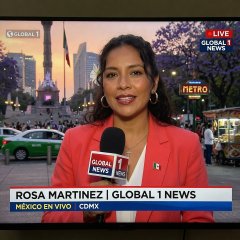
Latin America/Andes Correspondent at Global1.News. Based in Bogota, covering politics, environment, energy, and social movements across the Andean region. Passionate about environmental journalism and communities protecting their land.










Comments (0)