
Gulf of Paria widens as Trinidad pours oil on troubled Venezuelan waters
Gulf of Paria widens as Trinidad pours oil on troubled Venezuelan waters The diplomatic temperature between Port of Spain and Caracas has risen several degrees this week, as Venezuela's Foreign Minister Yván Gil formally demanded information and compensation from Trinidad and Tobago over an oil spill that first surfaced on May 1, 2026 — a dispute that has now dragged on for mor
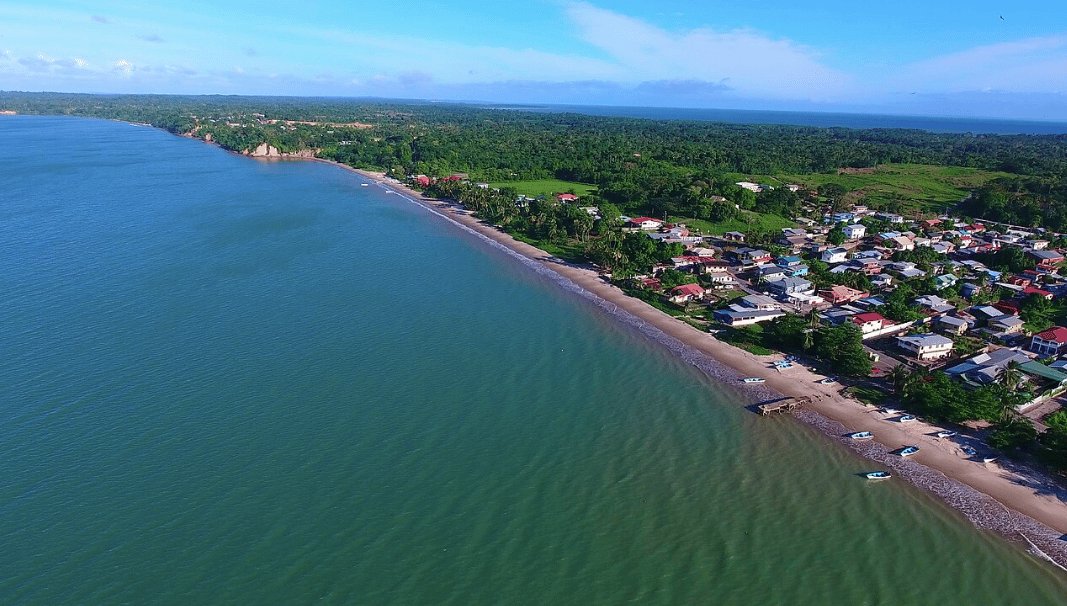
The diplomatic temperature between Port of Spain and Caracas has risen several degrees this week, as Venezuela's Foreign Minister Yván Gil formally demanded information and compensation from Trinidad and Tobago over an oil spill that first surfaced on May 1, 2026 — a dispute that has now dragged on for more than two months and shows no sign of cooling.
Speaking at a press conference in Caracas, Gil accused Trinidad and Tobago of failing to meet its obligations under international environmental law, claiming that the spill — which he said originated from a Heritage Petroleum field in Trinidad's waters — has caused "extremely serious" damage to Venezuelan coastlines and ecosystems. He displayed satellite imagery dating back to April 28 that he says confirms the spill's origin and track across the Gulf of Paria.
The Spill That Got Everyone Talking
It all began on the morning of May 1, when Heritage Petroleum Limited detected a hydrocarbon spill at its Main Field offshore facility at approximately 7:25 am. The government in Port of Spain was quick to downplay the incident. Energy Minister Dr Roodal Moonilal described it as a "small" spill — just 10 barrels, he said — and assured the public it was contained within 48 hours. The affected pipeline was repaired and returned to service, and clean-up operations were completed entirely within Trinidadian waters, according to the Ministry of Energy.
But Venezuela's version of events could not be more different. Gil told reporters that the volume, origin, and type of hydrocarbon spilled remain unknown to his government. He claimed that Trinidad and Tobago failed to notify Venezuela of the incident — a breach, he argued, of the 1990 delimitation treaty that governs the shared waters of the Gulf of Paria. "Trinidad and Tobago has an obligation, first and foremost, to immediately report to the Venezuelan government any spill or environmental incident," Gil stated firmly. "We must have information on the type of product that was spilled and the measures taken to mitigate it."
A Second Spill Raises the Stakes
Just as the two sides were beginning to hold technical discussions, the situation escalated dramatically. On June 12, Venezuela's Ministry of Foreign Affairs issued a communiqué claiming that a second, much larger oil spill had been detected — this one allegedly confirmed by satellite imagery and "surpassing the magnitude" of the May 1 incident. The communiqué warned of risks to marine ecosystems, fishing activity, and coastal communities, and called on Trinidad and Tobago to adopt "immediate measures to prevent further incidents."
The Venezuelan government reserved the right to take action before "competent international bodies" to determine responsibility and demand compensation — language that suggests Caracas is preparing to escalate the matter beyond bilateral diplomacy.
What's at Stake: Environment, Livelihoods, and Regional Relations
This is not just a diplomatic squabble between neighbours. The environmental stakes are substantial. Gil warned during his press conference that the spill could affect 1,625 square kilometres across 12 strategic wetland systems in Venezuela. More than 500 fishermen in the states of Sucre and Delta Amacuro have already faced operational restrictions, and four Venezuelan national parks are at risk.
"There have been operational limitations for the fishing fleet, which generates significant costs and limits marketing. There has been a real economic and environmental impact," Gil said, adding that more than 140 fish species have been affected in the area, in addition to mangroves and coastal wetlands. He also claimed that more than 12 tons of hydrocarbon products have been collected so far and are being analysed, and noted that between 2015 and 2023, more than 876 spills of various types occurred in the region.
For Trinidad and Tobago, the dispute carries serious implications for its reputation as a responsible energy producer. The country is one of the Caribbean's largest oil and gas producers, and its energy sector is central to the economy. A finding of negligence or inadequate environmental oversight could have repercussions far beyond the Gulf of Paria — affecting everything from insurance premiums for offshore operations to the country's standing with international financial institutions and potential investors.
T&T's Response: Investigation, Cooperation, and Pushback
The government in Port of Spain has responded with a mix of diplomatic engagement and firm pushback. Energy Minister Moonilal told reporters that the Air Guard and Coast Guard had been deployed to conduct reconnaissance over the sea and with drones to "determine the facts" regarding the alleged second spill. He added that his ministry had requested the precise coordinates of the spill from Venezuelan authorities.
"We have requested from our Venezuelan counterparts the coordinates for this purported spill," Moonilal said, carefully choosing the word "purported" — a telling indication that Trinidad and Tobago remains sceptical of Venezuela's claims. He noted that he was in constant communication with Foreign Minister Sean Sobers, who had engaged the Venezuelan Embassy in Port of Spain directly.
On the May 1 incident, Moonilal maintained that the spill was minor, that all protocols were observed, and that the government had received no direct communication from Venezuela at the time. "We take their concerns very seriously and await further information," he said.
A bilateral meeting was held on May 22, 2026, where the two sides agreed to strengthen cooperation on managing potential cross-border hydrocarbon spills. But Venezuela's latest demands suggest that dialogue alone may not be enough to resolve the growing rift.
A History of Strained Waters
The Gulf of Paria — the inland sea that separates Trinidad from Venezuela's Paria Peninsula — has long been a source of both cooperation and contention between the two countries. A delimitation treaty signed in the 1990s established the terms for exploiting hydrocarbon deposits on both sides of the border strip, and for decades the arrangement functioned quietly. But the relationship has been tested repeatedly.
In February 2024, a tanker sank in Trinidad and Tobago's waters, and pollution spread into Venezuela's territorial waters — an incident that Venezuela's foreign ministry referenced as precedent for its current grievances. And this spill dispute unfolds against a backdrop of broader political tension. Relations between Port of Spain and Caracas have been strained since Prime Minister Kamla Persad-Bissessar returned to power last year and adopted a harder line on Venezuelan migration, while also strengthening ties with Washington — a shift that culminated in the capture of former Venezuelan president Nicolás Maduro in January 2026.
What This Means for the Caribbean
For the wider Caribbean, this dispute is a reminder of the region's vulnerability to environmental harm that does not respect borders. An oil spill in the Gulf of Paria does not stay in Trinidadian or Venezuelan waters — it threatens mangroves, fisheries, and marine biodiversity that belong to all of us. And when two countries cannot agree on the basic facts — the size of the spill, its origin, the timeline of notifications — it becomes nearly impossible to mount an effective response.
The CARICOM principle of peaceful resolution of disputes should guide both sides here. Neighbouring Caribbean states, including Guyana and Barbados, will be watching closely. Guyana, in particular, has its own ongoing battles over oil spill liability and environmental oversight, with citizens challenging ExxonMobil's insurance guarantees in the courts for months.
For Trinidadian readers, this story hits close to home — quite literally. The Gulf of Paria is our backyard. It is the same body of water that nurtures our fishing communities, supports our energy industry, and connects us to the South American mainland. A dispute of this magnitude, unresolved, has consequences for everyone who depends on these waters — from the fisherfolk of Icacos to the executives at Heritage Petroleum.
The Bottom Line
For the moment, the ball sits firmly in Port of Spain's court. Venezuela has made its demands public and international. The satellite imagery is on the record. The 1990 treaty provides a legal framework for resolving disputes over shared resources. But whether the two sides can move from accusation to co-operation depends on whether both governments can agree on a set of facts — and that has proven elusive so far.
What is clear is that the Gulf of Paria dispute is not going to quietly fade away. With a second spill alleged and international bodies potentially being drawn in, this is a story that will continue to unfold in the weeks and months ahead. For now, Caribbean people can only hope that the shared waters that connect us do not become yet another thing that drives us apart.
By Sharon Sahatoo, Staff Writer
This article was produced with AI-assisted research and editorial support. Reporting is based on sources cited in the article.
What's Your Reaction?
 Like
0
Like
0
 Dislike
0
Dislike
0
 Love
0
Love
0
 Funny
0
Funny
0
 Wow
0
Wow
0
 Sad
0
Sad
0
 Angry
0
Angry
0

Caribbean Correspondent at Global1.News. Based in Port of Spain, Trinidad, covering Caribbean politics, economy, energy, climate, and culture. Amplifying the voices and stories of the Caribbean region.













Comments (0)