
Gulf of Paria Tensions Escalate as Venezuela Raises Fresh Concerns Over Oil Spills from Trinidad Waters
Gulf of Paria Tensions Escalate as Venezuela Raises Fresh Concerns Over Oil Spills from Trinidad Waters The Initial May 1 Spill and Trinidad's Swift Response The incident began on 1 May when Heritage Petroleum Limited detected an oil release at its Main Field around 07:25 hours. Trinidad and Tobago officials moved quickly to assess the situation, describing the event as a conta
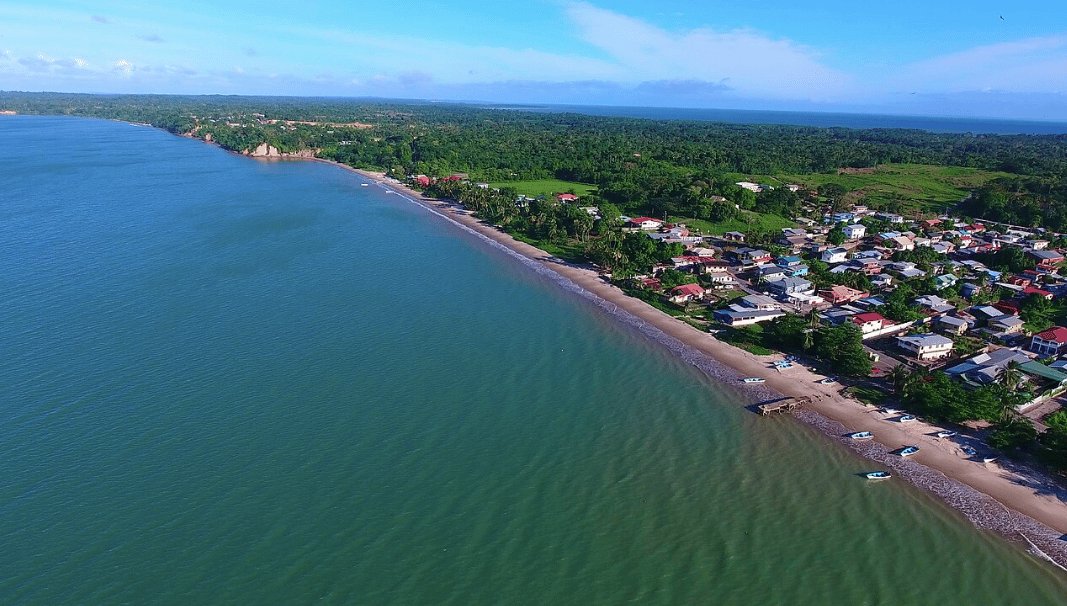
The Initial May 1 Spill and Trinidad's Swift Response
The incident began on 1 May when Heritage Petroleum Limited detected an oil release at its Main Field around 07:25 hours. Trinidad and Tobago officials moved quickly to assess the situation, describing the event as a contained release of approximately ten barrels that was addressed within forty-eight hours. Energy Minister Dr Roodal Moonilal confirmed that the affected pipeline underwent immediate repairs and was returned to service, with all clean-up operations conducted strictly within local waters and in line with established national protocols.
Local authorities, including the Trinidad and Tobago Police Service and coast guard units, coordinated reconnaissance efforts to monitor any potential spread. The government emphasised that no external communication had been received from Caracas at that stage, allowing the focus to remain on domestic containment measures. This approach reflected the standard procedures followed by the energy sector in handling minor operational incidents, particularly in an area where oil and gas activities have long formed the backbone of the national economy.
Trinidad and Tobago's energy landscape, still recovering from the restructuring that followed the closure of Petrotrin, relies heavily on companies such as Heritage Petroleum to maintain production levels. The swift internal response was intended to minimise downtime and protect both workers and nearby coastal communities whose livelihoods depend on stable operations. Officials noted that such incidents, while regrettable, are managed through established safety frameworks that have been refined over decades of offshore activity in the Gulf of Paria.
Venezuela's Press Conference and Compensation Demands
Venezuelan Foreign Minister Yvan Gil held a press conference in mid-May to present satellite imagery dated 28 April, which Caracas claimed showed the spill originating from Trinidadian waters. The Venezuelan government argued that Trinidad and Tobago had an obligation to report any environmental incident promptly and demanded both information and compensation for potential damage to shared marine areas. Minister Gil highlighted risks to more than five hundred fishermen, one hundred and forty fish species, and twelve wetland systems spanning roughly one thousand six hundred and twenty-five square kilometres.
Four Venezuelan national parks were also cited as potentially vulnerable, underscoring the transboundary nature of the Gulf of Paria ecosystem. The communiqué reserved the right to pursue action through international bodies if necessary, framing the matter as a serious breach of environmental responsibility. This stance came amid ongoing regional discussions about resource management and cross-border cooperation in the energy sector.
Trinidad and Tobago maintained that the spill had been minor and fully contained, rejecting suggestions of wider impact. The differing assessments quickly turned the episode into a diplomatic issue, with Port of Spain requesting further details from Venezuelan counterparts to verify claims. Such exchanges are not uncommon in the Caribbean, where shared waters have historically required careful negotiation between neighbouring states with overlapping economic interests.
Emergence of a Second, Larger Spill in June
By early June, Venezuela announced the detection of a second spill, described as significantly larger than the May event and supported by additional satellite imagery. The Venezuelan Ministry of Foreign Affairs issued a formal release stating that the new incident posed heightened risks to marine ecosystems, fishing activity, and coastal communities along the shared gulf. State agencies in Caracas activated mitigation protocols and began continuous monitoring of the affected zone.
Trinidad and Tobago responded by deploying personnel from Heritage Petroleum, the air guard, and the coast guard, utilising both sea vessels and drones for reconnaissance. Dr Roodal Moonilal confirmed ongoing communication with Minister of Foreign Affairs Sean Sobers, who had already engaged the Venezuelan Embassy in Port of Spain. The government specifically requested precise coordinates for the purported second spill to enable independent verification.
This development added pressure on an already sensitive bilateral relationship. While Trinidad and Tobago continued to stress the importance of factual data before accepting broader claims, Venezuelan authorities maintained that the cumulative effect of the incidents warranted urgent transparency. The situation illustrated the challenges of managing environmental incidents in waters where national boundaries are close and economic activities overlap.
Diplomatic Standoff and Ongoing Exchanges
The diplomatic channel between Port of Spain and Caracas has remained active, with both sides exchanging notes through established embassies. Trinidad and Tobago has consistently sought concrete evidence, including exact locations and volumes, before acknowledging any additional liability. Minister Moonilal's public statements have underscored the need for cooperation rather than confrontation, reflecting the country's long-standing preference for dialogue in regional matters.
Venezuela, for its part, has reiterated calls for immediate measures and full disclosure regarding the cause, scope, and consequences of both incidents. The language in official releases has grown firmer, yet neither side has closed the door on further talks. This measured approach aligns with the broader Caribbean tradition of resolving disputes through institutions such as CARICOM, even when environmental stakes are high.
Observers note that energy cooperation between the two nations has historically included joint ventures and shared infrastructure considerations. Any prolonged disagreement could affect future projects, particularly those involving natural gas and cross-border pipelines. Both governments appear aware of these economic realities and have so far avoided steps that would permanently damage working relations.
Environmental Impact on the Gulf of Paria Ecosystem
The Gulf of Paria serves as a vital ecological corridor connecting Trinidad and Venezuela, supporting mangroves, fisheries, and migratory species that sustain communities on both sides. Any oil release, regardless of size, raises concerns about long-term effects on water quality, sediment, and the health of coastal wetlands that act as natural buffers against erosion and storms. Local fishermen in Trinidad have voiced worries about potential declines in catch rates, which directly influence household incomes in coastal villages.
Historical data from the region shows that the gulf has experienced previous incidents linked to both nations' energy operations, making cumulative impact assessments particularly important. Mangrove forests, already under pressure from climate change and rising sea levels, could face additional stress if hydrocarbons persist in the environment. Trinidad and Tobago's Office of Disaster Preparedness has previously coordinated with regional partners on similar threats, recognising that small island developing states share common vulnerabilities.
Scientific monitoring remains essential to distinguish between natural dispersion and lasting contamination. Trinidadian environmental groups have called for independent studies that include input from both countries, arguing that transparent data would benefit all stakeholders. The gulf's biodiversity, including numerous fish species central to local diets and export markets, underscores why careful stewardship continues to be a priority for communities on the north-western coast.
Implications for Trinidad's Energy Sector and Heritage Petroleum
Heritage Petroleum operates within a sector that contributes substantially to government revenue and employment, especially after the transition away from Petrotrin. Any perception of environmental lapses can influence investor confidence and insurance costs for offshore platforms. The company has invested in upgraded monitoring technology in recent years, yet the current situation highlights the ongoing need for robust spill prevention and rapid response capabilities.
Dr Moonilal has emphasised that reconnaissance efforts are being conducted with full transparency, aiming to reassure both domestic and international partners. The energy sector's recovery also ties into wider economic pressures, including inflation and the cost of living, which affect every Trinidadian household. Stable production levels help fund social programmes and infrastructure, making operational reliability a matter of national interest.
Discussions around renewable energy alternatives have gained momentum in recent CARICOM meetings, yet oil and gas remain central to Trinidad and Tobago's immediate economic outlook. The current diplomatic exchanges may prompt renewed focus on joint environmental standards with neighbouring producers, potentially leading to improved regional protocols that reduce future friction.
Wider CARICOM Context of Cross-Border Environmental Disputes
CARICOM has long served as a forum for addressing shared challenges, from disaster response to trade and energy security. Environmental incidents that cross maritime boundaries test the organisation's ability to facilitate technical cooperation and information sharing among member states. Trinidad and Tobago's experience with Venezuela, though bilateral, resonates with other members who manage similar overlapping resource zones.
Regional leaders have previously discussed harmonising oil-spill response frameworks, drawing on lessons from past events in the Caribbean Sea. Such initiatives recognise that small states benefit from collective expertise and pooled resources when facing large-scale threats. The current episode may accelerate these conversations, particularly as climate-related risks intensify during the annual hurricane season.
Immigration and diaspora connections also play a role, as many Trinidadian families maintain ties with relatives in Venezuela and other CARICOM territories. Stable bilateral relations support people-to-people exchanges and cultural events that strengthen community bonds across the region. Maintaining open channels for environmental dialogue therefore carries both practical and social value.
What This Means for Trinidadians and Tobagonians
For ordinary citizens, the unfolding situation brings a mixture of concern and pragmatism. Coastal communities in areas such as Point Fortin and Cedros rely on fishing and related industries that could be affected by any prolonged uncertainty. At the same time, the energy sector provides jobs and supports public services that many families depend upon, creating a delicate balance between environmental protection and economic stability.
Public discourse in Trinidad and Tobago often centres on transparency and accountability from both government and industry. Citizens have expressed a desire for clear updates on monitoring results and any joint initiatives with Venezuela. This reflects a broader cultural emphasis on community involvement in matters that touch daily life, from food prices to public safety.
Looking ahead, the episode may encourage greater investment in local environmental monitoring capacity and regional partnerships. Trinidadians and Tobagonians have historically demonstrated resilience in navigating complex external relations while safeguarding national interests. Continued emphasis on dialogue, factual assessment, and shared stewardship of the Gulf of Paria offers the most constructive path forward for all involved.
By Sharon Sahatoo, Staff WriterThis article was produced with AI-assisted research and editorial support. Reporting is based on sources cited in the article.
What's Your Reaction?
 Like
0
Like
0
 Dislike
0
Dislike
0
 Love
0
Love
0
 Funny
0
Funny
0
 Wow
0
Wow
0
 Sad
0
Sad
0
 Angry
0
Angry
0

Caribbean Correspondent at Global1.News. Based in Port of Spain, Trinidad, covering Caribbean politics, economy, energy, climate, and culture. Amplifying the voices and stories of the Caribbean region.











Comments (0)