
Government urges transport firms to guard against AI misuse
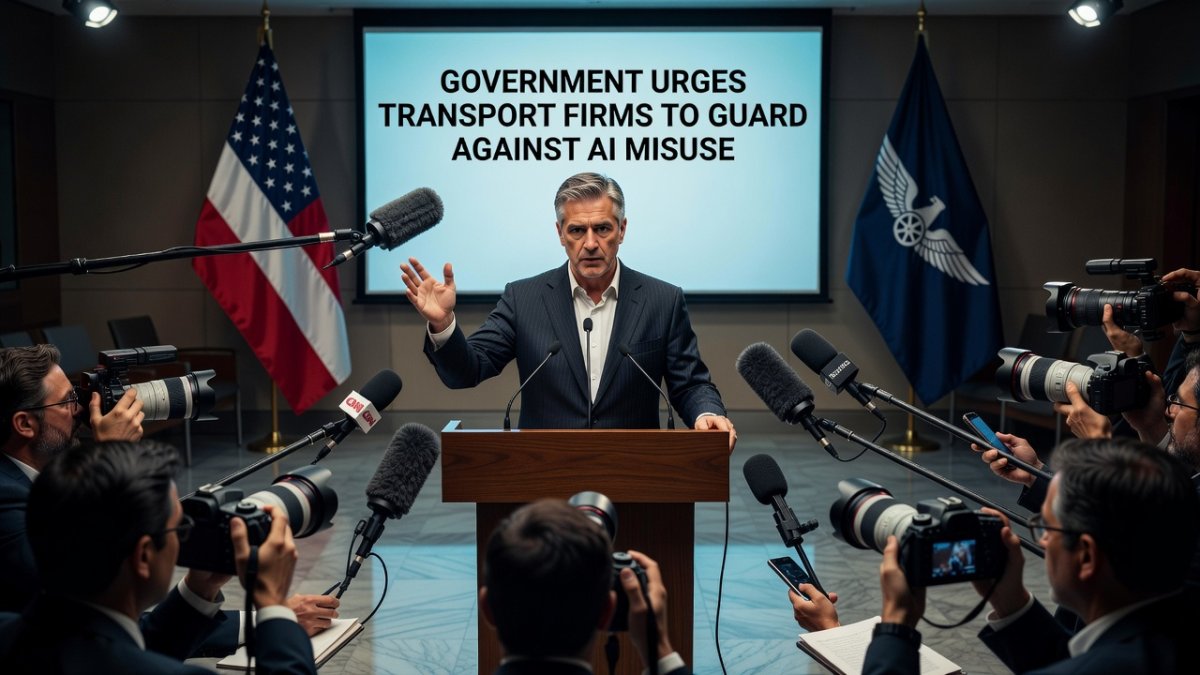
Japan Urges Critical Infrastructure Firms to Fortify Defenses Against AI Misuse in Landmark Security Meeting
Directives Issued at Multi-Sector Summit
Tokyo’s Ministry of Land, Infrastructure, Transport and Tourism convened senior executives from six vital infrastructure sectors on October 18 to issue explicit guidance on mitigating artificial intelligence misuse. The closed-door session targeted transport operators alongside representatives from ports, airports, logistics networks, water supply utilities, and energy distribution grids. Officials emphasized that generative AI tools and autonomous systems now present exploitable vectors that could disrupt operations at national scale.
Deputy Minister Hiroshi Tanaka stated during the meeting that “operators must implement layered verification protocols for any AI model integrated into signaling, routing, or resource allocation systems.” The directive requires each firm to submit audited risk assessments within 90 days, focusing on prompt-injection attacks, model poisoning, and synthetic data manipulation that could mislead predictive maintenance algorithms.
Scale of AI Integration in Japanese Infrastructure
Japan’s critical networks already rely heavily on machine-learning applications. JR East’s autonomous train scheduling platform processes 12 million daily passenger movements using reinforcement learning models updated every 15 minutes. Port operators at Tokyo and Yokohama handle 4.2 million TEU annually with AI-optimized crane allocation that reduces vessel turnaround by 18 percent. Water utilities in Osaka and Nagoya employ neural networks to forecast demand spikes with 94 percent accuracy, cutting leakage rates to under 3 percent.
These deployments create concentrated points of failure. A single compromised vision model guiding automated guided vehicles in a logistics hub could cascade into multi-day supply disruptions. Government data shows AI-related capital expenditure across the six sectors reached ¥184 billion in fiscal 2023, a 37 percent increase from 2021 levels.
Identified Threat Vectors and Real-World Precedents
Briefing documents distributed at the meeting cited three categories of AI misuse. First, adversarial inputs that cause misclassification in computer-vision systems monitoring rail tracks or pipeline corrosion. Second, large-language-model jailbreaks that extract proprietary operational parameters from internal chatbots used by maintenance crews. Third, deepfake voice commands that bypass biometric authentication at remote water-treatment facilities.
International incidents underscore the urgency. In 2023, a European port authority experienced 11-hour paralysis after an AI routing model accepted falsified container-weight data. Japan’s National Institute of Information and Communications Technology recorded a 41 percent rise in AI-specific cyber incidents targeting industrial control systems between 2022 and 2024. No successful domestic breach has been publicly confirmed, yet the ministry warned that detection latency remains unacceptably high at an average of 47 days.
Regulatory Timeline and Compliance Requirements
The new guidance aligns with Japan’s revised Cybersecurity Strategy published in June 2024. Firms must now maintain “AI red-team” exercises at least quarterly and retain immutable logs of all model decisions for 18 months. Non-compliance may trigger administrative fines up to ¥50 million or operational restrictions under the amended Infrastructure Resilience Act.
Smaller regional operators face particular pressure. The Japan Water Works Association estimates that 62 percent of municipal water utilities still rely on legacy SCADA systems lacking native AI safeguards. The ministry pledged technical subsidies covering up to 40 percent of upgrade costs for entities with fewer than 200 employees.
Expert Perspectives on Implementation Challenges
Professor Keiko Nakamura of the University of Tokyo’s Research Center for Advanced Science and Technology noted that many current AI deployments prioritize efficiency over adversarial robustness. “Japanese engineers excel at optimizing under normal conditions,” she said. “They must now redesign loss functions to penalize vulnerability to distribution shifts introduced by malicious actors.”
Industry analysts at Nomura Research Institute project that compliance spending will add 2.8 percent to operating costs for listed transport companies through 2027. However, they also forecast that early adopters of certified AI governance frameworks could secure preferential financing rates from domestic banks, potentially lowering weighted average cost of capital by 15 to 25 basis points.
Economic and Geopolitical Implications
Disruptions to just-in-time logistics networks would directly affect Japan’s export competitiveness. Electronics components and automotive parts account for 31 percent of total exports; a week-long AI-induced port shutdown could erase ¥92 billion in shipments. The government’s warning therefore functions as both security measure and industrial policy signal, encouraging domestic vendors of explainable-AI and federated-learning solutions.
Internationally, Japan’s stance mirrors emerging frameworks in the EU AI Act and U.S. executive orders on critical infrastructure. Yet Tokyo’s emphasis on sector-specific tabletop exercises distinguishes its approach, reflecting lessons from the 2011 Tohoku disaster where fragmented communication amplified cascading failures.
Forward Outlook for Technology Adoption
Looking ahead, the ministry plans a second round of consultations in February 2025 to evaluate quantum-resistant cryptographic standards for AI model weights. Several operators have already begun piloting homomorphic encryption techniques that allow inference on encrypted sensor data, adding roughly 9 percent computational overhead but eliminating plaintext exposure risks.
Kenji Tanaka’s analysis indicates that firms treating these directives as mere compliance checkboxes will lag competitors who embed security-by-design principles into next-generation autonomous systems. The October meeting marks a decisive pivot from AI as productivity tool to AI as contested strategic asset requiring continuous defensive investment.
This is Kenji Tanaka for Global1 News, reporting from Tokyo. 🇯🇵
This article was produced with AI-assisted research and editorial support. Reporting is based on sources cited in the article.
What's Your Reaction?
 Like
0
Like
0
 Dislike
0
Dislike
0
 Love
0
Love
0
 Funny
0
Funny
0
 Wow
0
Wow
0
 Sad
0
Sad
0
 Angry
0
Angry
0

Japan Correspondent at Global1.News. Tokyo-based voice covering Japanese politics, technology, economy, and culture. Tracks the intersection of tradition and innovation in one of the world's most dynamic societies.













Comments (0)