
Taiwan suspects Nvidia chips smuggled to China via Japan
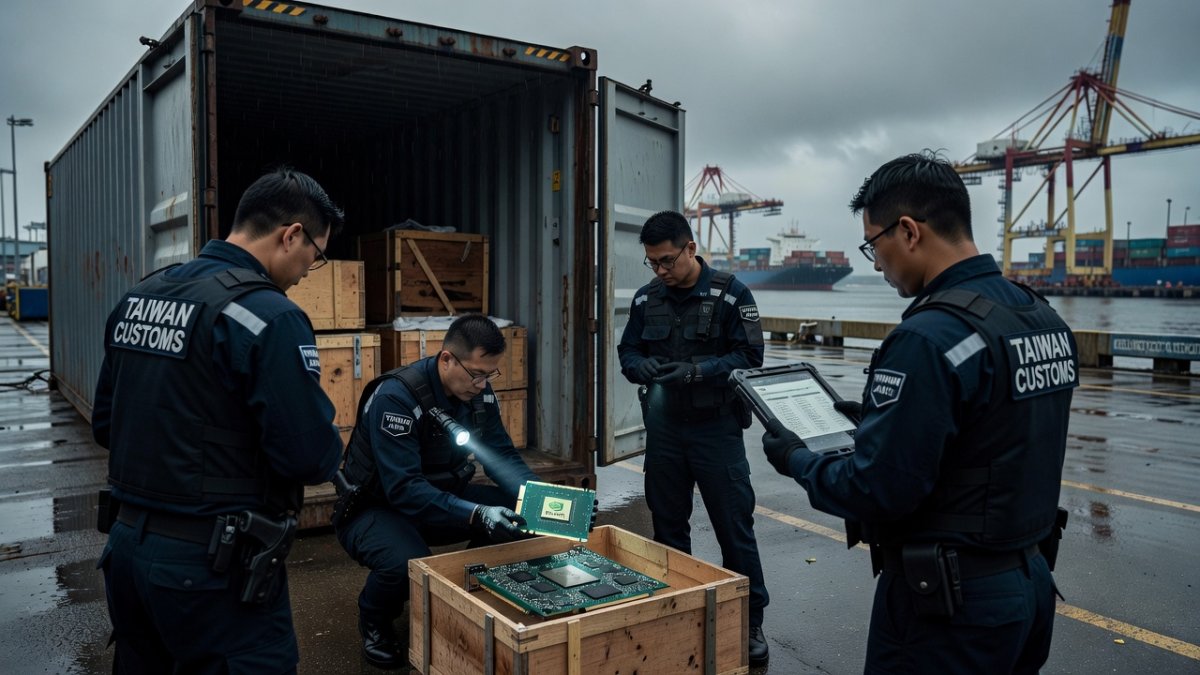
Taiwan Probes Alleged Smuggling of Nvidia AI Chips to China via Japanese Data Centers
Taipei has launched a formal investigation into reports that advanced Nvidia semiconductors, subject to strict U.S. export controls, are reaching Chinese entities through rental arrangements in Japanese data centers. The probe, initiated by Taiwan’s National Security Bureau in coordination with the Ministry of Economic Affairs, focuses on how Chinese AI developers bypass restrictions by leasing compute capacity hosted on hardware physically located in Japan.
Background: U.S. Export Controls and the AI Chip Bottleneck
Since October 2022, the U.S. Bureau of Industry and Security has progressively tightened rules governing the sale of high-performance GPUs to China. Nvidia’s A100 and H100 chips, critical for training large language models, fall under these controls. In response, Nvidia introduced modified variants such as the A800 and H800 with reduced interconnect bandwidth to comply with the 600 TOPS threshold. Yet demand from Chinese firms remains intense, driving annual AI infrastructure spending in China above $10 billion according to IDC estimates released in March 2024.
Japanese data-center operators have emerged as an unintended conduit. Companies including NTT Data, Fujitsu, and Sakura Internet offer GPU-as-a-service packages that allow overseas clients to rent clusters without taking physical possession of the chips. Because the hardware remains inside Japan, transactions often evade direct U.S. licensing requirements that would apply to outright exports.
The Taiwan Investigation: Specific Cases Under Review
Investigators in Taipei are examining at least three contracts signed between mid-2023 and early 2024 in which Chinese state-linked research institutes reportedly accessed H100 clusters located in Osaka and Tokyo facilities. One contract, valued at approximately $4.7 million over nine months, listed a Singapore-registered shell company as the lessee while the ultimate beneficiary was traced to a Shenzhen-based AI startup with ties to the Chinese Academy of Sciences.
Taiwanese officials have not released the names of the entities involved, citing ongoing inquiries. However, sources close to the investigation confirm that customs records from Kaohsiung port show shipments of Nvidia-branded servers destined for Japanese addresses that were later rerouted or mirrored via high-speed leased lines back to mainland networks. The pattern suggests a deliberate strategy of geographic arbitrage rather than outright physical smuggling across the Taiwan Strait.
Japan’s Regulatory Position and Industry Response
Japan’s Ministry of Economy, Trade and Industry (METI) maintains that existing foreign-exchange and trade laws do not explicitly prohibit the rental of compute resources to Chinese clients provided the hardware never leaves Japanese soil. A METI spokesperson stated on 12 June that “service transactions fall outside the scope of the Foreign Exchange and Foreign Trade Act unless physical transfer of controlled items occurs.”
Industry executives nevertheless acknowledge growing discomfort. Sakura Internet CEO Kunihiro Tanaka told Global1 News that the company has begun requiring end-user certificates for any customer exceeding 128 H100 GPUs. “We cannot become the weak link in the supply chain,” Tanaka said. “Enhanced KYC procedures are now mandatory for all GPU cloud contracts above a certain scale.”
Expert Perspectives on Secondary Sanctions Risk
Analysts warn that continued access could expose Japanese operators to U.S. secondary sanctions. Emily de La Bruyère, senior fellow at the Foundation for Defense of Democracies, noted that the U.S. has already applied entity-list designations to Chinese cloud providers that facilitated similar workarounds in Singapore and Malaysia. “The enforcement net is widening,” she said. “Japanese firms that ignore the spirit of the controls may find themselves cut off from U.S. technology ecosystems.”
Japanese think-tank researchers echo the concern. A report published last month by the Institute of Geoeconomics in Tokyo estimated that roughly 18 percent of GPU capacity currently installed in commercial data centers across Japan is utilized by non-Japanese clients, with Chinese-linked entities accounting for nearly half of that foreign usage.
Supply-Chain and Geopolitical Implications
The controversy arrives at a delicate moment for Japan’s semiconductor strategy. Tokyo has committed ¥1.2 trillion in subsidies to attract TSMC’s Kumamoto fab and is positioning itself as a trusted intermediary between U.S. technology and Asian manufacturing. Any perception that Japanese infrastructure facilitates circumvention of export controls risks undermining that positioning.
Meanwhile, Chinese AI developers continue to explore alternative jurisdictions. Recent tenders show increased interest in South Korean and Australian colocation facilities, suggesting the Japan route may already be losing exclusivity. For Nvidia, the situation underscores the difficulty of enforcing usage restrictions once chips leave the factory floor.
Taiwan’s investigation is expected to conclude by September, with possible recommendations for tighter information-sharing protocols among the U.S., Japan, and Taiwan under the Chip 4 framework. Until then, Japanese data-center operators face a narrow path: strengthen compliance or risk becoming the next pressure point in the U.S.-China technology contest.
This is Kenji Tanaka for Global1 News, reporting from Tokyo. 🇯🇵
This article was produced with AI-assisted research and editorial support. Reporting is based on sources cited in the article.
What's Your Reaction?
 Like
0
Like
0
 Dislike
0
Dislike
0
 Love
0
Love
0
 Funny
0
Funny
0
 Wow
0
Wow
0
 Sad
0
Sad
0
 Angry
0
Angry
0

Japan Correspondent at Global1.News. Tokyo-based voice covering Japanese politics, technology, economy, and culture. Tracks the intersection of tradition and innovation in one of the world's most dynamic societies.













Comments (0)