
Gnaoua Festival Returns to Essaouira: 27th Edition Brings 460 Artists for Three Days of Afro-Moroccan Heritage and Global Fusion
Essaouira, Morocco, is preparing to host the 27th edition of the Gnaoua and World Music Festival from June 25 to 27, 2026, bringing together approximately 460 artists from across Africa and the world for three days of spiritual music, cross-cultural fusion, and celebration of a tradition recognized by UNESCO as Intangible Cultural Heritage. The festival transforms this historic
Essaouira, Morocco, is preparing to host the 27th edition of the Gnaoua and World Music Festival from June 25 to 27, 2026, bringing together approximately 460 artists from across Africa and the world for three days of spiritual music, cross-cultural fusion, and celebration of a tradition recognized by UNESCO as Intangible Cultural Heritage. The festival transforms this historic Atlantic port city into a global crossroads of sound, where the ancient rhythms of the guembri meet jazz, gospel, electronic, and Afro-Brazilian beats in free concerts that embody what organisers describe as the values of humanity, living together, and fraternity.
Gnaoua Festival Returns to Essaouira: 27th Edition Brings 460 Artists for Three Days of Afro-Moroccan Heritage and Global Fusion
Dakar, Senegal — The Gnaoua and World Music Festival returns to Essaouira, Morocco, for its 27th edition from June 25 to 27, 2026. Gnawa music traces its roots to descendants of enslaved peoples from the Hausa, Fulani, and Bambara communities of West Africa. These communities brought their spiritual practices across the Sahara centuries ago, blending them with local Moroccan traditions in the port city of Essaouira.
UNESCO inscribed Gnawa music on its Representative List of the Intangible Cultural Heritage of Humanity in 2019. The recognition highlights the music's role in preserving oral histories and healing rituals that connect Morocco directly to sub-Saharan Africa. The festival itself was founded to safeguard this heritage while opening doors to musicians from other continents.
In Senegal, the Saint-Louis Jazz Festival performs a similar role by celebrating jazz alongside local rhythms. Both events create spaces where African musical lineages meet global sounds without losing their core identities. The Gnaoua tradition of the Maâlem master musician parallels Senegal's griot lineage, where music carries family histories and spiritual guidance across generations.
The 2026 edition continues this trans-Saharan exchange that has shaped Senegal's own Mbalax genre through Afrobeat influences. Youssou N'Dour has performed with Gnawa musicians in the past, demonstrating how these connections strengthen cultural ties between Dakar and Essaouira.
Essaouira's Atlantic location made it a natural meeting point for these exchanges. The city's historic medina, recognized as a UNESCO World Heritage site, still hosts the same port activities that once facilitated the movement of people and musical ideas from West Africa.
The 27th Edition: A Lineup Spanning Continents
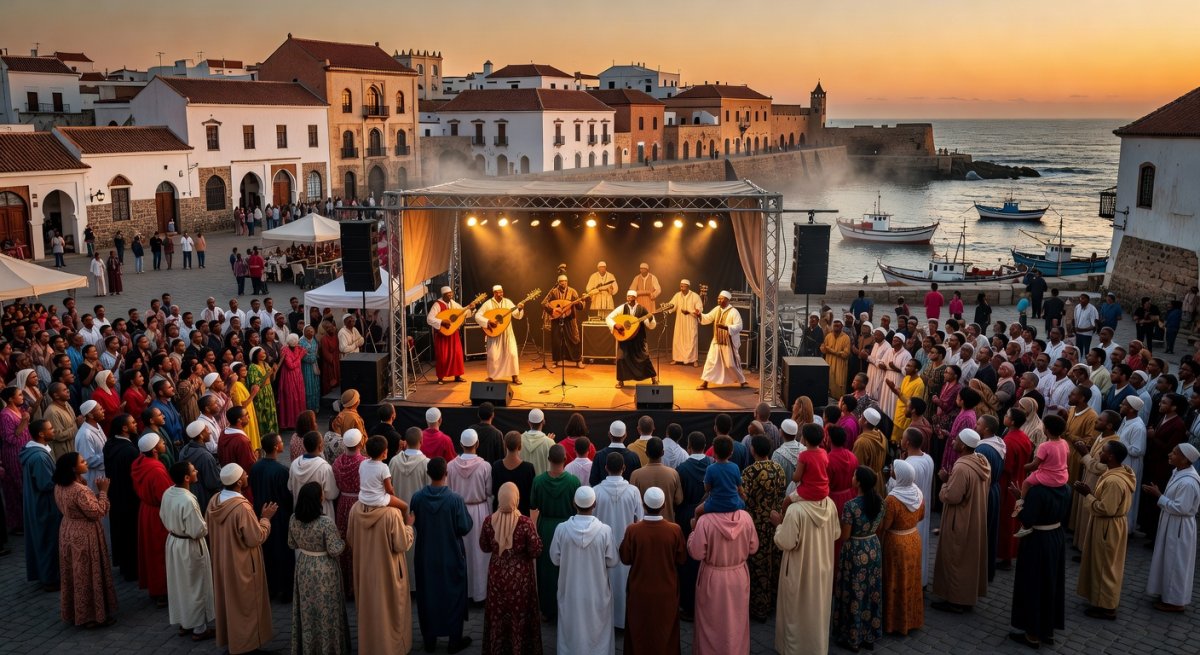
Approximately 460 artists from Morocco and around the world will perform across the 2026 program. The main stage at Moulay Hassan Square will host headliners including Richard Bona from Cameroon, Carlinhos Brown from Brazil, and the Palestinian-Jordanian electronic collective 47SOUL. Moroccan acts such as Hoba Hoba Spirit, Mehdi Nassouli, and Hamid El Kasri will share the bill with Ethiopian vocalist Selamnesh Zéméné and her Badume's Band.
Fusion collaborations define the 2026 edition. On June 27, Carlinhos Brown will join Maâlem Hamid El Kasri for an Afro-Brazilian and Gnawa meeting at the main square. Harlem Spirit of Gospel will collaborate with Mehdi Qamoum on a gospel-Gnawa set, while Richard Bona pairs with Moroccan singer Asma Lmnawar. South Asian spiritual jazz artist Ganavya will appear alongside the Amazigh group Oudaden.
47SOUL is scheduled for the Beach Stage, bringing electronic interpretations of Levantine sounds into the Gnawa environment. These pairings extend the festival's founding mission of cross-cultural dialogue that began in the 1990s. The free admission policy ensures that local residents and international visitors alike can experience these exchanges without barriers.
The program also features Selamnesh Zéméné at Bayt Dakira, where her Ethiopian vocals will meet Gnawa rhythms in intimate surroundings. Such combinations mirror the way Senegal's Dakar Biennale brings visual artists from across Africa into conversation with local creators.
Organizers expect hundreds of thousands of visitors to fill Essaouira's streets during the three days. Past editions have drawn crowds from Senegal, Mali, and Nigeria, reinforcing the festival's position as a continental gathering point rather than a purely national event.
Beyond the Music: Essaouira as a Cultural Crossroads
Essaouira sits on Morocco's Atlantic coast with its medina walls and centuries-old port still intact. The festival uses four primary venues: Moulay Hassan Square for the largest concerts, the Beach Stage for electronic and fusion sets, Borj Bab Marrakech for smaller performances, and Bayt Dakira for more reflective programs. These locations allow music to flow through the city's historic fabric.
The ramparts overlooking the ocean provide natural acoustics that enhance the guembri's deep tones during evening concerts. Local cafes along the main square serve mint tea and seafood tagine to festivalgoers between sets. This integration of music and daily life distinguishes Essaouira from indoor concert halls elsewhere on the continent.
Senegal's Saint-Louis Jazz Festival similarly transforms its island setting each May, with performances spilling from the historic governor's palace into the streets. Both cities demonstrate how architecture and geography shape musical experience. Essaouira's position as a former Portuguese and French trading post adds layers of cultural memory that the festival activates each year.
Most concerts remain free and open to the public, a policy that has remained consistent since the festival's early years. This approach brings together Moroccan families, European tourists, and African musicians in the same spaces, creating the fraternity the africanews report described as central to the event's values.
The 2026 dates fall during the height of the tourist season, when the Atlantic breeze keeps temperatures comfortable for outdoor listening. Essaouira's reputation for fresh seafood and artisan woodworking adds to the sensory experience that surrounds every performance.
Gnawa Music: From Spiritual Practice to Global Stage
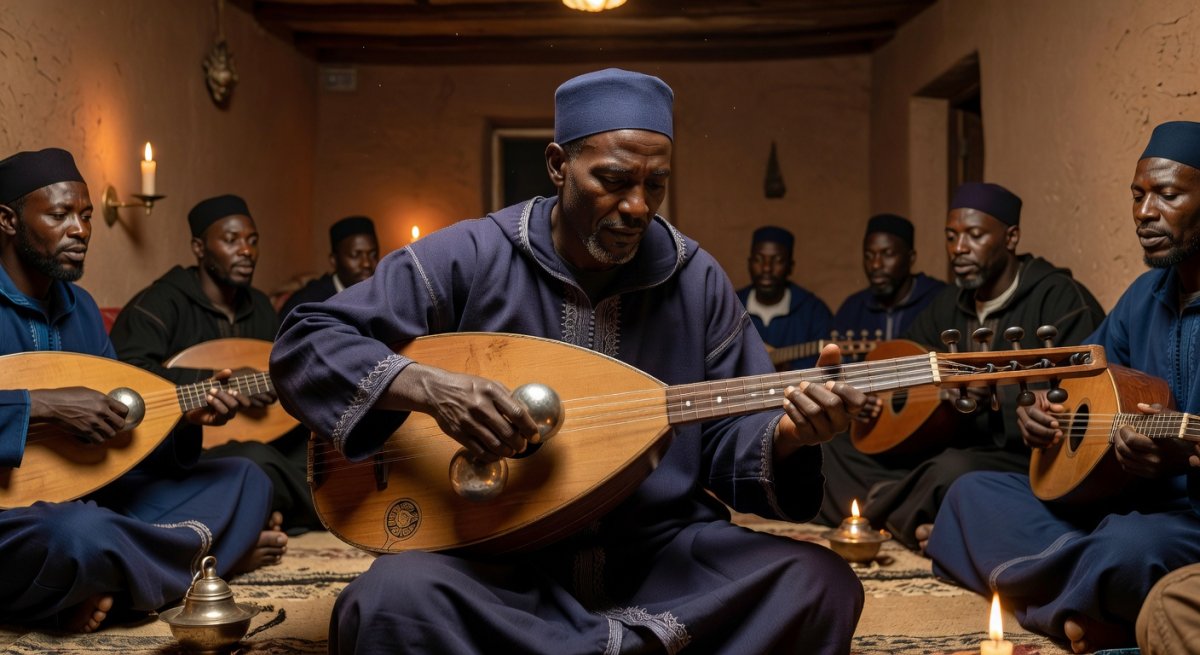
Gnawa music combines Sufi Islamic practices with pre-Islamic African rituals brought from West Africa. The central instrument remains the guembri, a three-stringed bass lute carved from a single piece of wood. Metal castanets called qraqeb provide the driving rhythm that accompanies hypnotic call-and-response vocals led by the Maâlem.
The lila or derdeba ceremony forms the spiritual heart of the tradition. These all-night healing rituals use music to induce trance states that participants believe can resolve physical and spiritual ailments. The festival presents shortened versions of these ceremonies on public stages while preserving their core elements for those who seek deeper engagement.
In Senegal, griots maintain similar roles as keepers of oral history and spiritual music. The Maâlem tradition in Morocco carries the same responsibility for transmitting knowledge across generations. Youssou N'Dour's collaborations with Gnawa masters have shown how these parallel practices can enrich each other without erasing distinct identities.
The 2019 UNESCO recognition has brought new international attention to the guembri and qraqeb. Younger Moroccan musicians now study with established Maâlems while experimenting with amplification and recording techniques. This evolution keeps the music alive for new audiences while honoring its origins among the Hausa, Fulani, and Bambara communities.
The festival's emphasis on living together finds expression in these musical dialogues. When Richard Bona's jazz bass meets the guembri or when gospel harmonies blend with Gnawa chants, the performances demonstrate how African spiritual traditions continue to adapt and travel.
Africa's Festival Circuit: A Continent Celebrating Its Culture
The Gnaoua Festival joins a growing network of African events that celebrate musical heritage while supporting creative economies. Senegal's Saint-Louis Jazz Festival, the Sauti za Busara festival in Zanzibar, and the Lagos Jazz Festival each draw international visitors who spend on lodging, food, and local crafts. These gatherings generate measurable income for host cities and create year-round work for musicians and technicians.
FESPACO in Ouagadougou and the Dakar Biennale perform parallel functions for film and visual arts. Together these events strengthen Africa's position in global cultural conversations. The Gnaoua Festival's 460 artists and hundreds of thousands of annual visitors contribute directly to Essaouira's economy through hotel bookings and market sales during the June dates.
Morocco's recognition of Gnawa music as intangible heritage aligns with similar efforts across the continent to protect traditional knowledge. When 47SOUL performs electronic sets at the Beach Stage alongside traditional Maâlems, the contrast highlights how African artists balance preservation with innovation.
The trans-Saharan connections celebrated in Essaouira echo Senegal's own history of cultural fusion. Mbalax emerged from the meeting of Wolof rhythms with Cuban and American influences, much as Gnawa music absorbed West African elements into Moroccan Sufi practice. Both traditions demonstrate Africa's long-standing role as a site of creative exchange rather than isolation.
Organizers in Essaouira have studied models from Saint-Louis and Zanzibar to refine their approach to artist hospitality and audience management. These shared practices strengthen the continent's festival infrastructure and create pathways for musicians to tour across multiple events in a single season.
What to Watch For at the 2026 Edition
The June 25 opening at Moulay Hassan Square will set the tone with a large ensemble featuring both established Maâlems and younger Gnawa groups. Attendees should arrive early to secure space near the stage, as the square fills quickly once the guembri begins its opening rhythms.
The June 27 collaboration between Carlinhos Brown and Hamid El Kasri promises one of the most anticipated fusions of the weekend. Their rehearsal footage from previous joint appearances suggests extended improvisations that blend Brazilian percussion with Gnawa call-and-response patterns. The Beach Stage set by 47SOUL on June 26 offers a contrasting electronic energy that draws a younger crowd.
Bayt Dakira will host more intimate performances, including Selamnesh Zéméné's appearance with Badume's Band. These smaller venues allow listeners to hear the subtleties of the qraqeb and vocal interplay that can be lost in larger spaces. The free entry policy means visitors can move between venues throughout each day.
Senegal's cultural community has taken note of the 2026 program. Several Dakar-based musicians plan to attend, following the path Youssou N'Dour established through his earlier Gnawa collaborations. Their presence will strengthen the ongoing dialogue between Senegalese and Moroccan musical traditions.
The 27th edition reaffirms the festival's commitment to the values of humanity, living together, and fraternity described in the africanews coverage. As Essaouira prepares to welcome artists from Cameroon, Brazil, Ethiopia, and Palestine alongside its own Gnawa masters, the event continues to model how music can bridge distances while honoring deep historical roots.
By Amara Diop, Staff Writer
This article was produced with AI-assisted research and editorial support. Reporting is based on sources cited in the article.
What's Your Reaction?
 Like
0
Like
0
 Dislike
0
Dislike
0
 Love
0
Love
0
 Funny
0
Funny
0
 Wow
0
Wow
0
 Sad
0
Sad
0
 Angry
0
Angry
0

West Africa/Sahel Correspondent at Global1.News. Dakar-based journalist covering politics, security, climate, and development across Francophone and Anglophone West Africa. Tells the stories of a region undergoing profound transformation.











Comments (0)