
France Heatwave: Alcohol Ban at Fête de la Musique Hits 35 Regions
France Imposes Alcohol Ban as Heatwave Hits Summer Festival The French government has moved swiftly to impose a partial alcohol ban as a historic heatwave threatens to overwhelm public services during the annual Fête de la Musique. Millions typically gather across towns and cities for this open-air celebration, yet officials determined that unrestricted drinking would place una
France Imposes Alcohol Ban as Heatwave Hits Summer Festival
The French government has moved swiftly to impose a partial alcohol ban as a historic heatwave threatens to overwhelm public services during the annual Fête de la Musique. Millions typically gather across towns and cities for this open-air celebration, yet officials determined that unrestricted drinking would place unacceptable strain on emergency responders already stretched by soaring temperatures. The decision followed urgent assessments of health risks in the most affected departments.
Red alert status now covers much of western and central France, encompassing Paris and surrounding areas where the highest level of precaution applies. This designation triggers the strictest measures, including the prohibition on public alcohol consumption from noon on Sunday. Other parts of the country remain under orange alert, reflecting a graduated response calibrated to varying degrees of danger across regions.
The timing aligns precisely with the summer solstice festival, which begins its main activities on the evening of 21 June. Authorities acted after reviewing forecasts that indicated peak temperatures would arrive on Monday, leaving little room for delay. Event organisers received instructions to adjust plans immediately to safeguard both participants and medical capacity.
The Government's Emergency Response
Prime Minister Sébastien Lecornu’s office issued a clear statement following a crisis meeting, directing prefects to enact decrees banning alcohol consumption in public spaces within red-alert departments. The measures extend to all state-organised events, where no alcohol may be served. This coordinated approach aims to reduce incidents that could divert resources from those most vulnerable to heat-related illness.
Prefects hold responsibility for implementing these decrees at the local level, ensuring consistency across the 35 regions under red alert. Officials emphasised that the restrictions would help preserve emergency services, allowing medics to focus on elderly residents, children and isolated individuals rather than managing alcohol-related emergencies during the festival.
Event organisers were specifically instructed to limit alcohol availability at Fête de la Musique gatherings. The guidance prioritises public safety over tradition, recognising that unchecked consumption could exacerbate dehydration and heat stress in temperatures expected to exceed 40 degrees Celsius. Compliance will be monitored closely by local authorities throughout the celebrations.
Record Temperatures and the Red Alert System
Météo-France has forecast temperatures reaching as high as 41 degrees Celsius in parts of western and central France, a level that poses severe risks to public health. These projections prompted the activation of the red alert system, the highest tier in the national framework, which demands exceptional protective actions. The agency described the duration of the heatwave as uncertain, advising continued vigilance.
The red alert covers extensive areas including the capital, while numerous additional regions operate under orange alert conditions. This two-tier structure allows authorities to tailor responses according to intensity, with red zones facing the most rigorous restrictions on activities that could increase heat exposure or medical demand. Météo-France continues to update forecasts as conditions evolve.
Such extreme readings represent a significant departure from typical June patterns, placing pressure on infrastructure and services nationwide. The decision to link the alcohol ban directly to the red-alert threshold underscores the government’s determination to mitigate secondary risks during the music festival, when large crowds gather outdoors for extended periods.
Security Deployment and Public Safety Measures
French authorities have deployed approximately 4,800 police officers and 2,500 firefighters to maintain order and respond to incidents during the Fête de la Musique. These substantial numbers reflect the scale of the event and the additional challenges posed by the heatwave. Officers will focus on crowd management and enforcement of the new alcohol restrictions in affected areas.
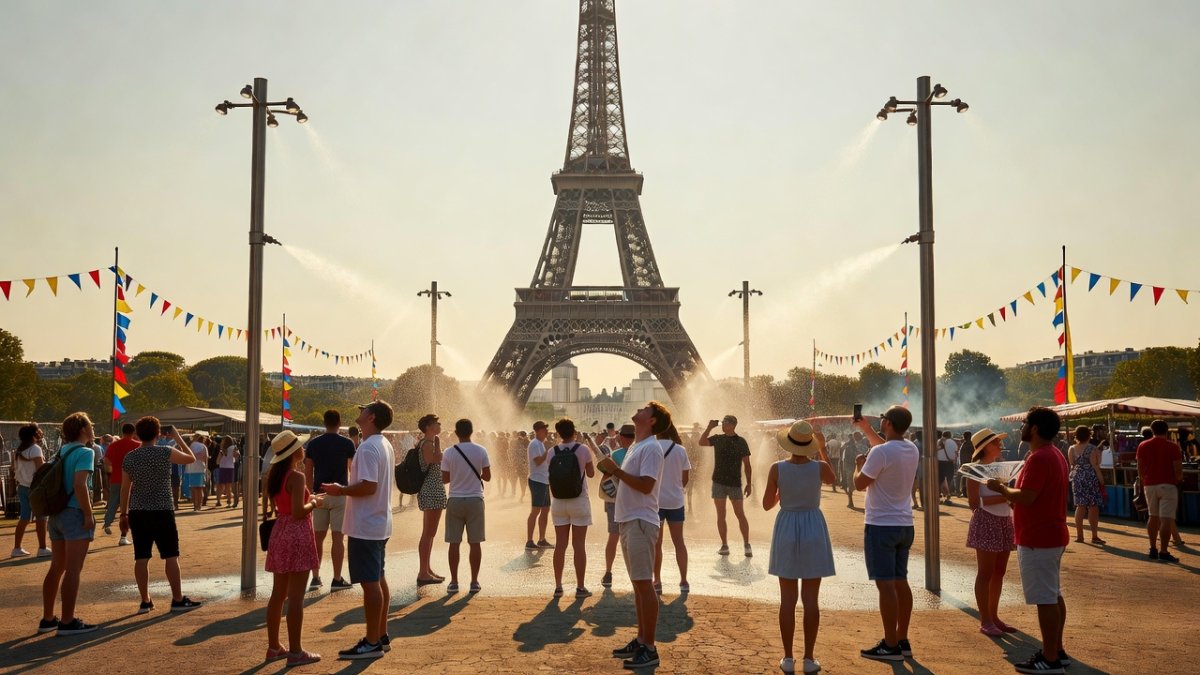
In Paris, patrols along the Seine have been increased to prevent drownings, a recurring hazard during hot weather when people seek relief in the river. City officials have also kept parks and gardens open through the night, providing cooler spaces for residents and visitors. Misting stations have been installed at the Eiffel Tower and other popular venues to offer immediate cooling.
These layered safety measures combine traditional policing with targeted heat-mitigation strategies. The emphasis on preventing water-related accidents and ensuring accessible green spaces demonstrates a comprehensive approach that addresses both behavioural risks and environmental discomfort during the extended celebrations.
Disruption to Transport and Education
Dozens of train services have already been cancelled as a direct consequence of the extreme temperatures, disrupting travel plans for commuters and tourists alike. Rail operators cited safety concerns arising from overheated tracks and equipment, illustrating how the heatwave extends beyond health impacts to affect daily mobility across the country.
A total of 845 schools have closed ahead of Monday, removing a key source of supervised activity for children during the hottest period. Educational authorities acted to protect pupils and staff from prolonged exposure, with closures concentrated in the red-alert departments where conditions are most severe.
Outdoor sporting events have likewise been suspended, further limiting recreational options at a time when many would normally gather for summer activities. These cancellations compound the sense of disruption, as communities adjust routines to accommodate the unprecedented weather while still attempting to mark the music festival in modified form.
Fête de la Musique: A Tradition Under Pressure
Established in 1982, Fête de la Musique has grown into a cherished national tradition held each year on the summer solstice. The festival invites musicians of every skill level to perform in streets, squares and parks, transforming towns and cities into vast, open-air concert venues that attract both locals and international visitors.
The event’s inclusive ethos encourages spontaneous participation, creating a distinctive cultural atmosphere that celebrates music in all its forms. Yet this year’s restrictions on alcohol introduce a notable departure from previous iterations, requiring organisers to balance the festival’s convivial spirit with urgent public-health imperatives.
The partial ban represents a pragmatic adaptation rather than a cancellation, preserving the core experience while acknowledging the exceptional circumstances. Participants will encounter a more restrained environment, with emphasis placed on hydration and shade rather than the usual social drinking that has accompanied past celebrations.
Lessons for the UK: Heatwave Preparedness and Cultural Events
British travellers planning trips to France this weekend will encounter altered festival conditions, prompting many to reconsider itineraries or prepare for stricter rules around public behaviour. The situation offers a timely reminder of how quickly European summer events can be reshaped by extreme weather, with implications for those crossing the Channel for cultural experiences.
Comparisons with UK heatwave planning reveal differences in alert systems and response speed, as the Met Office employs its own colour-coded warnings that trigger varying levels of local authority action. British councils have developed resilience plans for large gatherings, yet the French approach of linking alcohol restrictions directly to red alerts provides a model worth examining for future domestic festivals.
Pressure on the NHS during previous UK heat episodes underscores the value of proactive measures to reduce emergency demand. Local authorities here could draw from the French emphasis on preserving medical capacity by adjusting event permissions in advance, particularly for outdoor music programmes that attract dense crowds.
Glastonbury and similar large-scale events in Britain already incorporate extensive welfare provisions, yet integrating heat-specific alcohol guidance could further strengthen preparedness. The French experience demonstrates that timely, targeted restrictions can protect both participants and public services without entirely halting cultural traditions.
Macron's Appeal and the Broader Climate Challenge
President Emmanuel Macron used social media to urge citizens to watch over one another during the heatwave, highlighting the need for collective attention toward elders, children and vulnerable individuals. His message on X framed the crisis as a shared responsibility, encouraging communities to extend support beyond official measures.
The appeal reflects growing recognition that heatwaves now demand sustained societal adaptation rather than isolated emergency responses. As summer events across Europe face similar pressures, organisers may increasingly need to incorporate health-driven limitations on activities that could compound risks in high temperatures.
This episode signals a broader shift in how cultural festivals are managed amid rising climate extremes. Future iterations of Fête de la Musique and comparable celebrations will likely feature more robust contingency planning, ensuring traditions endure while prioritising the safety of all participants in an era of intensifying summer heat.
By Erica Thornton, Staff WriterThis article was produced with AI-assisted research and editorial support. Reporting is based on sources cited in the article.
What's Your Reaction?
 Like
0
Like
0
 Dislike
0
Dislike
0
 Love
0
Love
0
 Funny
0
Funny
0
 Wow
0
Wow
0
 Sad
0
Sad
0
 Angry
0
Angry
0

US Politics and Policy Correspondent at Global1.News. Based in Washington DC, covering American politics, policy, elections, and the courts. Knows how the system works and tells you what it actually means.













Comments (0)