
Five dead and 34 wounded after bus crashes into multiple vehicles on I-95 in Virginia
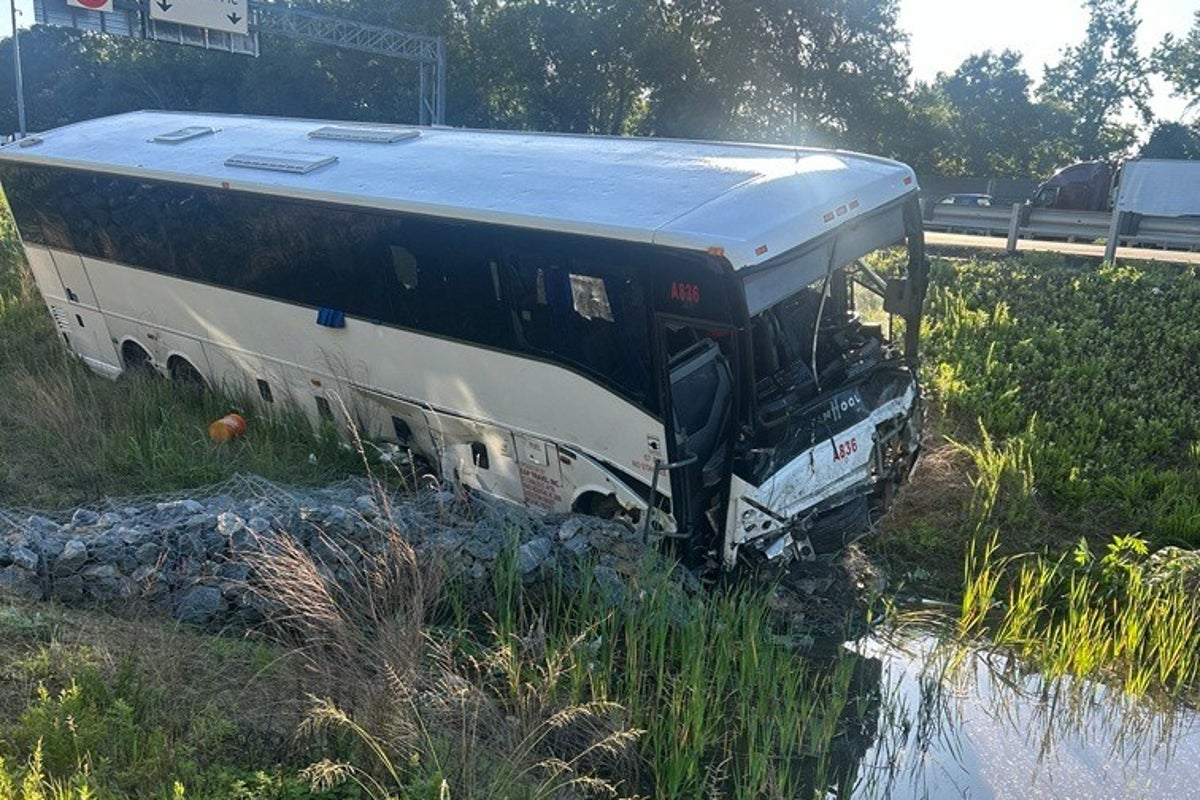
Five Dead as Charter Bus Ploughs Through Virginia Work Zone on I-95
The stretch of Interstate 95 south of Richmond, Virginia, became the scene of a devastating multi-vehicle collision yesterday morning when a northbound charter bus failed to reduce speed through an active roadwork area, slamming into six passenger vehicles and leaving five people dead and 34 others injured, several critically. Virginia State Police confirmed the bus was travelling at approximately 65 mph in a posted 45 mph zone marked by temporary barriers and electronic signs warning of construction ahead.
The Sequence of the Crash
According to preliminary reconstruction by state investigators, the bus struck a line of slowed traffic shortly after 8:40 a.m. local time. The impact caused a chain reaction that involved a compact car, three SUVs and two pickup trucks. Debris scattered across three lanes, forcing the closure of I-95 in both directions for more than seven hours. Rescue crews used hydraulic tools to free trapped passengers while medevac helicopters ferried the most serious cases to VCU Medical Center and other facilities in the Richmond area.
One survivor, 34-year-old software engineer Priya Patel from Fairfax, described the moment of impact from the back seat of her sedan. “There was no braking sound, just this enormous force from behind. The world went sideways.” Her account aligns with data from the bus’s electronic logging device, which showed no deceleration until milliseconds before contact.
Victims and Immediate Aftermath
The fatalities included a family of three from North Carolina whose vehicle was crushed between the bus and a concrete barrier, along with two other drivers whose identities authorities have not yet released pending notification of relatives. Among the wounded are nine children under the age of 12, three of whom remain in intensive care with spinal injuries. Hospital spokespeople reported that blood supplies were briefly strained before neighbouring counties dispatched reserves.
Paramedics on scene noted that the work-zone configuration funnelled traffic into fewer lanes, amplifying the severity of the rear-end collision. Temporary concrete barriers, while designed to protect workers, also limited escape routes for motorists caught in the impact path.
Investigation Focuses on Driver and Signage
Virginia State Police have named the bus driver, 48-year-old Marcus Ellison of Charlotte, North Carolina, as a person of interest. He survived with broken ribs and is currently under guard at a local hospital while toxicology results are awaited. Investigators are examining whether fatigue, distraction or mechanical failure contributed to the failure to heed multiple warning signs over a 1.2-mile approach.
The National Transportation Safety Board has dispatched a team to assist. Early telemetry suggests the bus’s speed never dropped below 60 mph once inside the work zone, despite flashing arrow boards and a reduced speed limit enforced by state troopers earlier that morning. A construction contractor confirmed that the zone had been active for pavement resurfacing since Monday, with daily lane reductions between 7 a.m. and 5 p.m.
Work-Zone Safety Data and Systemic Concerns
Federal Highway Administration statistics reveal that work zones account for roughly 24,000 injuries and more than 800 fatalities annually across the United States. Virginia alone recorded 47 work-zone deaths in the past five years, a figure that has risen even as overall interstate fatalities have modestly declined. Experts point to a combination of driver inattention, inadequate signage placement and the sheer volume of construction projects funded by the recent federal infrastructure bill.
Dr Helen Carruthers, a transport safety researcher at the University of Virginia, told Global1 News that electronic signs alone often fail to change driver behaviour. “We see speed reductions of only 5–8 mph on average in these zones unless law enforcement is physically present,” she said. “The expectation that motorists will self-regulate has proven unrealistic.”
Comparison with UK Motorway Protocols
British readers may note the contrast with standards on motorways such as the M25 or M6, where average speed cameras and mandatory 50 mph limits enforced by gantry signs have demonstrably cut work-zone collisions. Temporary barriers there are frequently fitted with impact-absorbing attenuators rated for higher speeds, and variable message signs provide distance-to-hazard information rather than generic warnings. While no system eliminates risk entirely, the data suggest that consistent enforcement and graduated speed reductions produce measurable safety gains.
One American transport consultant, speaking on condition of anonymity, acknowledged that cost pressures often lead states to rely on signage rather than continuous police presence. “A trooper in a work zone costs real money,” he said. “Signs are cheaper until the lawsuits arrive.”
Implications for Interstate Travel
The crash has prompted renewed calls in the Virginia General Assembly for legislation requiring average-speed enforcement cameras in all long-term work zones. Similar proposals failed in previous sessions amid concerns over privacy and revenue generation. Governor Glenn Youngkin’s office issued a statement expressing condolences while stopping short of endorsing new technology, citing ongoing budget negotiations.
For motorists, the incident underscores the narrow margin for error on heavily travelled corridors like I-95, which carries more than 150,000 vehicles daily near Richmond. Travel apps have already begun rerouting long-distance trips onto secondary roads, though those alternatives carry their own congestion and safety risks during peak holiday periods.
Insurance analysts expect liability claims to exceed $50 million once all medical and wrongful-death suits are filed. The charter company’s insurer has not yet commented on coverage limits or potential subrogation against the construction contractor for barrier placement.
As night fell, crews continued clearing wreckage under portable floodlights while traffic crawled past on reopened lanes. The human cost, however, will linger far longer than the physical debris.
This is Erica Thornton for Global1 News, reporting from London. 🇬🇧
This article was produced with AI-assisted research and editorial support. Reporting is based on sources cited in the article.
What's Your Reaction?
 Like
0
Like
0
 Dislike
0
Dislike
0
 Love
0
Love
0
 Funny
0
Funny
0
 Wow
0
Wow
0
 Sad
0
Sad
0
 Angry
0
Angry
0

US Politics and Policy Correspondent at Global1.News. Based in Washington DC, covering American politics, policy, elections, and the courts. Knows how the system works and tells you what it actually means.













Comments (0)