
Where Is Putin's Central Banker? — The Mysterious Disappearance of Elvira Nabiullina
The Sudden Vanishing of a Key Figure Folks, if you're as fired up as I am about this developing story out of Moscow in June 2026, let's cut straight to it. Elvira Nabiullina, the 62-year-old governor of Russia's Central Bank since 2013, has not been seen in public for over a week as of June 10. She skipped the NAUFOR conference on June 9 and missed the critical June 10 meeting
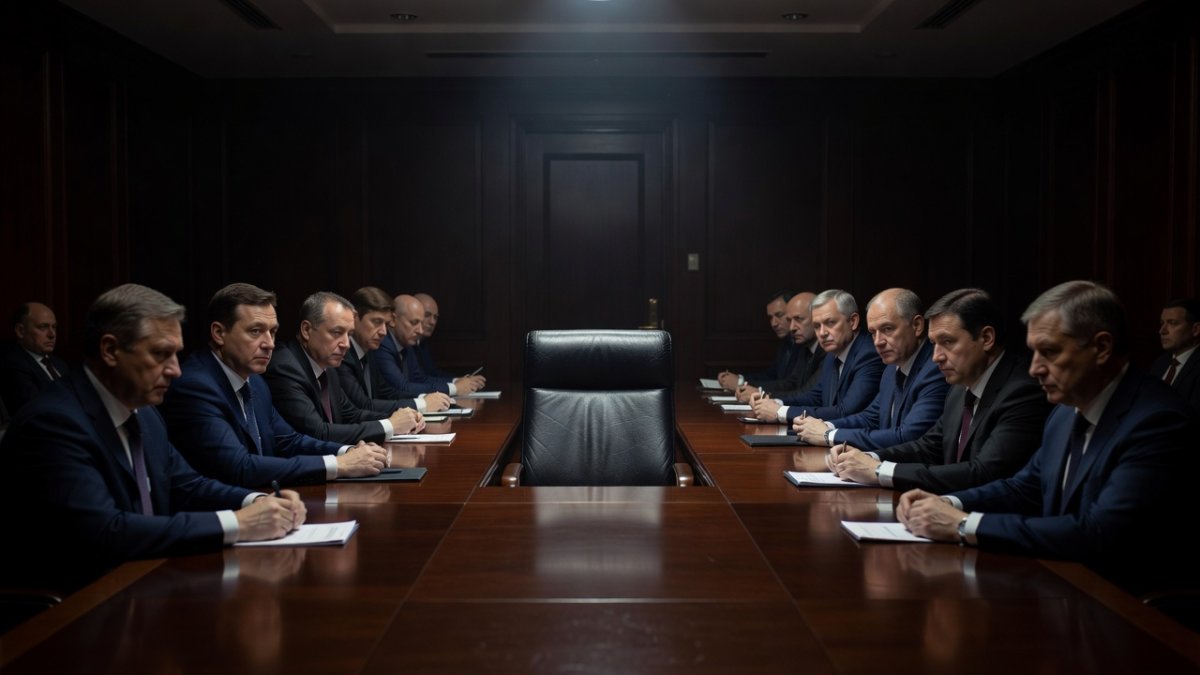
The Sudden Vanishing of a Key Figure
Folks, if you're as fired up as I am about this developing story out of Moscow in June 2026, let's cut straight to it. Elvira Nabiullina, the 62-year-old governor of Russia's Central Bank since 2013, has not been seen in public for over a week as of June 10. She skipped the NAUFOR conference on June 9 and missed the critical June 10 meeting with Putin focused on the economy, inflation, and interest rates. Neither she nor any of her deputies showed up, according to reports from Agentstvo. This is not some minor absence. This is the woman who has steered Russia's financial ship through the roughest waters since the 2022 sanctions hit.
The Central Bank press office claims she is on sick leave, but they offer zero details on her condition or when she might return. She also skipped the St. Petersburg International Economic Forum on June 4, again citing sick leave. In a country where public appearances by top officials are tightly scripted, this kind of prolonged disappearance raises serious questions. Putin relies on her to project stability, yet here she is, nowhere to be found when key economic decisions are on the table. If you're watching this unfold, you know something feels off about the timing.
Her nearly 13 years in the role make this even more striking. Nabiullina earned the title of Central Bank Governor of the Year from Euromoney back in 2015 for her steady hand. Now, with her third and final term set to expire in June 2027, Putin faces a March 2027 deadline to nominate a successor. An unexplained absence at this stage could signal deeper fractures inside the Kremlin. The lack of transparency from the press office only fuels the speculation that this is more than a simple illness.
Architect of Russia's Wartime Financial Shield
Elvira Nabiullina built the system that kept Russia's economy afloat after the 2022 sanctions slammed into place. She stabilized the ruble and the broader financial system at a moment when many predicted collapse. That work turned her into the architect of the wartime economy, the one person Putin counted on to keep the machine running while military spending soared. Without her steady policies, the ruble could have cratered far worse than it did.
She launched a deliberate experiment to slow economic growth in order to tame inflation, even as Putin refused to rein in military outlays. Inflation fell from over 10 percent at the end of 2024 to around 5.6 percent by mid-2025 and kept dropping. That success came at a cost, though. The key interest rate sits at a historic 21 percent, a level that strangles businesses and draws fury from oligarchs who see their margins evaporate. Nabiullina has openly admitted an unprecedented labor crisis, with reserves down by 2.5 million workers as defense plants and the front line pull people away from the civilian economy.
Her approach showed real results on paper, yet it exposed the limits of running a war economy without broader reforms. Senior officials have already warned Putin that the current level of war spending is unsustainable. The Defense Ministry is now pushing for an additional 3 trillion rubles, or 36 billion dollars, this year alone. Nabiullina's absence removes the one voice that had been trying to balance these pressures. If she stays sidelined, the Kremlin loses its most experienced hand at managing the fallout.
High Rates, Crippled Businesses, and Growing Internal Rage
That 21 percent interest rate is not just a number. It is actively choking Russian companies that need credit to operate. Oligarchs who once stayed quiet are now voicing open frustration because the policy prioritizes inflation control over easy money for their empires. Nabiullina's experiment of deliberately slowing growth to bring inflation down worked on the metrics, but it left real pain on factory floors and in boardrooms across the country.
The labor shortage she admitted adds another layer of strain. With 2.5 million workers pulled into defense production or military service, civilian sectors are starved for talent. This is not abstract economics. It is a direct hit on the very industries that keep daily life functioning while the war machine demands more. Her policies bought time, yet they also highlighted how unsustainable the current path has become.
Putin has so far refused to curb military spending despite these warnings. That choice puts Nabiullina in an impossible spot. She delivered lower inflation, but the price is a business environment that feels like it is suffocating. If her absence continues, the pressure on whoever steps in will only intensify. The oligarchs are watching, and their patience is wearing thin.
Nationalists Turn on the Central Banker
Nationalist and pro-war factions inside Russia have stepped up their attacks on Nabiullina. They accuse her of putting financial stability ahead of the needs of the war effort. In their view, the high interest rate and growth slowdown are signs she is not fully committed to victory at any cost. These voices are gaining volume precisely because her policies have delivered measurable results that do not match their all-out spending demands.
Her record of stabilizing the system after 2022 sanctions makes her a target for those who want faster, riskier moves. They see her experiment with slower growth as a betrayal of the wartime priority. The fact that she has publicly acknowledged the labor crisis only gives them more ammunition to claim she is highlighting problems instead of solving them through unlimited funding.
This internal criticism comes at a delicate moment. With her term ending in 2027, any prolonged absence could embolden these factions to push for a successor who aligns more closely with their views. The Central Bank has been one of the few institutions still projecting competence. If nationalists succeed in weakening her position, the entire economic framework she built could face direct challenge.
Ripple Effects on the War Economy and Beyond
Nabiullina's disappearance matters because she is the person who made Russia's wartime economy function under sanctions. Without her visible leadership, questions arise about who is steering day-to-day decisions on inflation and rates. The missed June 10 meeting with Putin on these exact topics leaves a vacuum at the highest level. That vacuum could slow responses to the Defense Ministry's request for another 3 trillion rubles.
The labor crisis she admitted is not going away. Defense plants and the front continue to absorb workers, and the 2.5 million shortfall is already biting civilian output. If the Central Bank cannot maintain its balancing act, inflation could rebound even as growth stays suppressed. Putin’s refusal to cut military spending only tightens the knot.
Global markets notice when Russia’s financial controls look shaky. Any sign of instability at the Central Bank feeds uncertainty about energy prices and supply chains that still touch economies far from Moscow. US national security planners track these developments because a faltering Russian economy could alter the pace and sustainability of the war itself. The absence of the one official who managed these trade-offs removes a predictable element from an already volatile situation.
What Comes Next for Leadership and Stability
Putin must nominate a successor by March 2027, well before Nabiullina’s term ends in June of that year. Her current absence raises the stakes around that decision. If she returns quickly, the transition planning can proceed along familiar lines. If she does not, the Kremlin may accelerate the search for someone who can handle both the nationalists and the economic realities she navigated.
The experiment she ran, slowing growth to fight inflation while military spending stayed untouched, bought Russia time but exposed deep contradictions. Senior officials have already flagged that war spending cannot continue at current levels. The additional 3 trillion rubles the Defense Ministry wants will test whatever leadership follows her.
Her nearly 13 years of service gave the Central Bank a reputation for professionalism that few other Russian institutions enjoy. Losing that continuity now would leave the wartime economy more exposed than at any point since 2022. The coming months will show whether this sick leave is temporary or the start of a larger shift in who controls Russia’s money.
Stay Informed and Push for Accountability
If you're as fired up as I am about what this disappearance could mean for global stability, start by tracking official statements from the Central Bank of Russia and credible reporting out of Moscow. Share verified updates with your networks so the story does not get buried. Contact your congressional representatives and urge them to keep sanctions pressure calibrated to any signs of Russian economic weakness. Demand that US intelligence assessments on Russia’s war financing remain transparent to the public. The more eyes on this, the harder it becomes for the Kremlin to hide fractures that affect us all. By Jessica Ali, Lead Anchor — Global 1 News
This article was produced with AI-assisted research and editorial support. Reporting is based on sources cited in the article.
What's Your Reaction?
 Like
0
Like
0
 Dislike
0
Dislike
0
 Love
0
Love
0
 Funny
0
Funny
0
 Wow
0
Wow
0
 Sad
0
Sad
0
 Angry
0
Angry
0

Editor-in-Chief at Global1.News. Atlanta-based journalist who cuts through the BS and tells it like it is. Lead anchor, host, and the voice you hear when the spin stops and the truth starts.












Comments (0)