
El Niño 2026 Looms as Latin America's Greatest Climate Test in a Generation
In the coastal villages of northern Peru, families already watch rising tides erode their homes while farmers in Brazil's Northeast prepare for another punishing dry season. Global temperatures continue their relentless climb, and the developing El Niño of 2026 now threatens to push the planet into uncharted extremes across Latin America. El Niño 2026 Looms as Latin America's G
In the coastal villages of northern Peru, families already watch rising tides erode their homes while farmers in Brazil's Northeast prepare for another punishing dry season. Global temperatures continue their relentless climb, and the developing El Niño of 2026 now threatens to push the planet into uncharted extremes across Latin America.
El Niño 2026 Looms as Latin America's Greatest Climate Test in a Generation
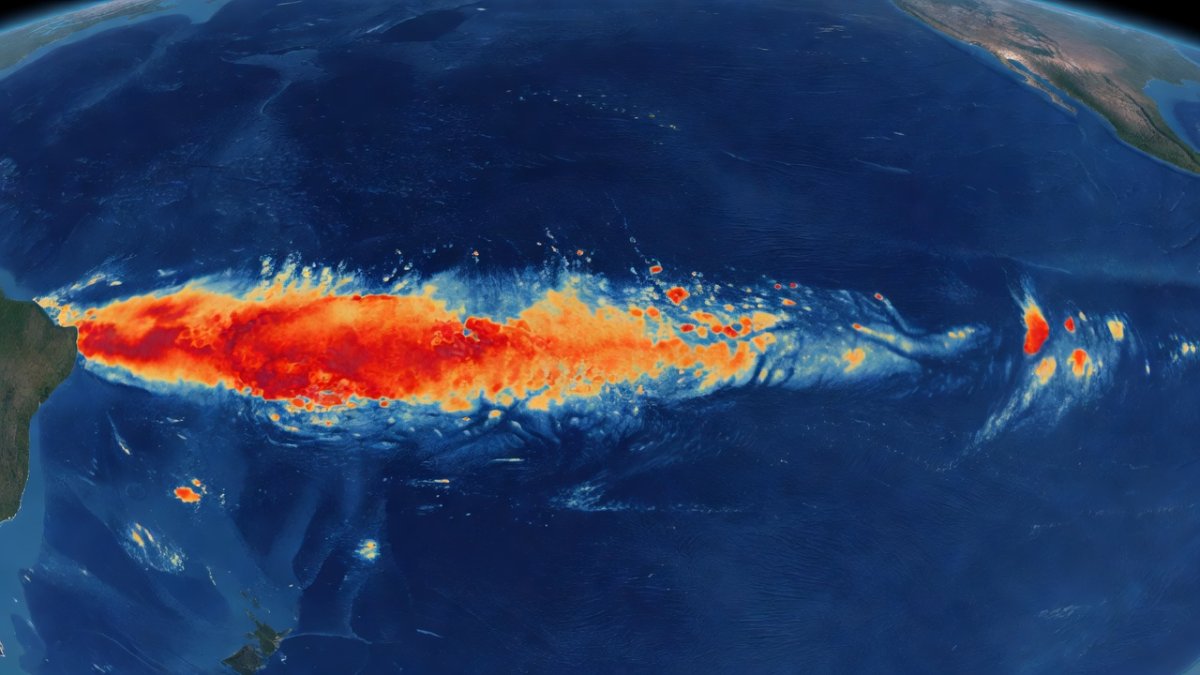
Lima – 14 May 2026 — Forecasters now assign an 82 percent chance that El Niño will develop between May and July 2026, with a 96 percent probability it will persist through December 2026 to February 2027. The World Meteorological Organization places the likelihood at 80 to 90 percent through at least November. Sea surface temperature anomalies in the Niño 1+2 region already reach +1.7°C, with localized hotspots hitting +5°C. Subsurface heat content anomalies of +7 to +7.5°C are surging eastward like a freight train toward South America's coast. NMME models project Niño 3.4 anomalies could peak near +3.1°C by late 2026, raising the possibility of a Super El Niño rivaling the catastrophic 1877-78 event.
The Warning from Scientists — What Makes 2026 Different
NOAA's Climate Prediction Center and the WMO both describe conditions that differ sharply from previous cycles. The combination of record ocean heat content and an already elevated global temperature baseline means this El Niño arrives on a warmer planet than any predecessor. Meteorologists note that 1982-83, 1997-98 and 2015-16 were the strongest events in the modern record, yet none developed atop the current level of background warming. The freight train of subsurface warmth now moving east carries more energy than those earlier episodes. WMO scientists emphasize that nearly global dominance of above-normal land surface temperatures will amplify every regional impact. In Latin America this translates into sharper rainfall contrasts between the drenched coasts of Peru and Ecuador and the parched interior of Brazil. Early warning systems exist today that were absent in past decades, yet the scale of the expected anomalies still demands urgent preparation across multiple countries simultaneously.
El Niño's Engine: Oceans Heating Up at Record Speed
The physical driver behind the 2026 event lies in the extraordinary accumulation of heat beneath the equatorial Pacific. Subsurface temperature anomalies of +7 to +7.5°C represent the largest values ever recorded in the region during a developing El Niño. These warm waters are propagating eastward at depth, destined to surface near the coasts of Peru and Ecuador within months. Sea surface temperatures in the Niño 1+2 region already show +1.7°C anomalies, with pockets exceeding +5°C. NMME ensemble forecasts indicate that Niño 3.4 anomalies may reach +3.1°C by November-December 2026. Such values would place the event in the super El Niño category, comparable only to the legendary 1877-78 episode. The WMO notes that the probability of El Niño conditions holding through November 2026 stands between 80 and 90 percent. This sustained oceanic heating will reinforce atmospheric circulation changes that shift the intertropical convergence zone southward, directly affecting rainfall patterns from Colombia to southern Argentina.
Latin America on the Front Line: Floods, Droughts and Fires
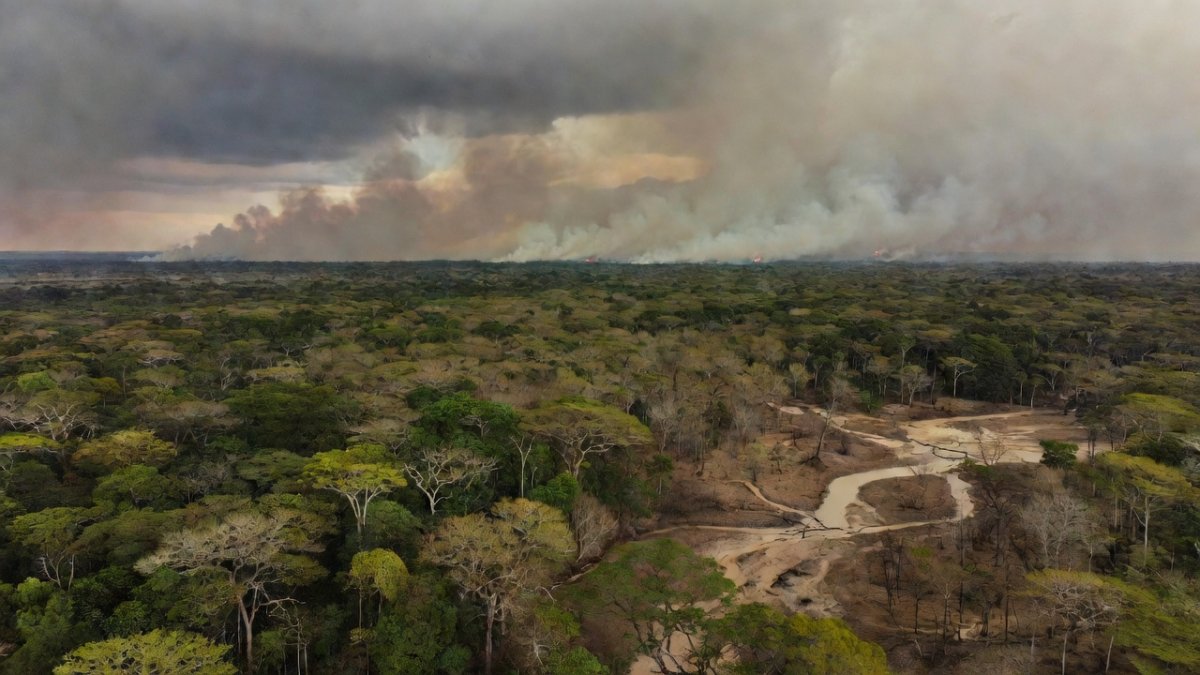
Peru and Ecuador face the most immediate threat from intense rainfall, flash floods, landslides and accelerated coastal erosion as the warm water arrives. In contrast, the Amazon basin and northern Brazil are projected to receive well below-average rainfall, expanding the seca and sharply raising wildfire risk across the Amazon, Cerrado and Pantanal. CPTEC/INPE and IBAMA have already begun prepositioning firefighting resources. The Southern Cone presents the opposite problem: MetSul meteorologists warn that southern Brazil, Uruguay and Argentina could see rainfall totals exceeding those recorded in 2024, with widespread flooding expected. These opposing extremes will occur within the same season, stretching national response capacities. WMO forecasts indicate that above-normal land temperatures will dominate across nearly the entire continent, further drying soils already stressed by drought in central Brazil while increasing evaporation rates along the flooded southern rivers. The spatial pattern matches classic El Niño teleconnections yet arrives with greater amplitude than any event since instrumental records began.
What This Means for Brazil: Agriculture, Energy and Food Prices
Brazil's agricultural sector stands to absorb the heaviest economic blow. Reduced soy and corn yields are expected across Mato Grosso and Goiás as rainfall deficits deepen. Wheat imports will rise to compensate for lower domestic production, adding upward pressure on food prices. Analysts estimate the El Niño could contribute an additional 0.8 percentage points to food price inflation by early 2027. Hydropower generation faces parallel risks; reservoirs in the Southeast and Northeast are already below historical averages, and further rainfall shortfalls will force greater reliance on thermal plants. INMET and CPTEC/INPE seasonal outlooks show the Northeast particularly vulnerable, echoing the rainfall deficits that historically devastate the region. MetSul has flagged the possibility that flooding in Rio Grande do Sul and Santa Catarina could surpass 2024 levels, damaging infrastructure and livestock operations. The combined effect on agriculture, energy costs and transport logistics will ripple through the entire economy, hitting low-income households hardest through elevated staple prices.
Lessons from History — The Ghost of 1877
The 1877-78 El Niño produced the Grande Seca in Brazil's Northeast, triggering famine and mass migration that killed hundreds of thousands. Sea surface temperature reconstructions suggest anomalies approached or exceeded those now forecast for late 2026. While modern infrastructure, early warning systems and social safety nets make mass mortality far less likely today, the underlying climate mechanisms remain unchanged. The same eastward surge of warm water that devastated 19th-century agriculture now threatens 21st-century supply chains. Historical records from Peru show catastrophic flooding along the coast during that same event, a pattern expected to repeat. Meteorologists comparing 2026 conditions with 1877-78 note that today's higher baseline temperatures could intensify both the drought and flood extremes. Brazil's Northeast, still marked by the social memory of the Grande Seca, now possesses irrigation networks and emergency grain reserves that did not exist 150 years ago, yet the scale of the projected rainfall deficit tests even these advances.
What Comes Next: Preparation in an Era of Climate Crisis
National meteorological services across Latin America are coordinating through the WMO to issue synchronized alerts. Peru's civil defense agency has begun reinforcing river defenses in Tumbes and Piura. In Brazil, IBAMA and state governments are expanding firebreaks and prepositioning aircraft in the Amazon and Pantanal. Argentina and Uruguay are updating flood contingency plans for the Paraná and Uruguay river basins. The 96 percent probability of El Niño persistence through February 2027 gives governments a clear timeline for action. Investments in climate-resilient crops, expanded reservoir capacity and regional food stockpiles can blunt the worst impacts. International support for early warning systems has improved dramatically since 2015-16, yet funding gaps remain in the most vulnerable municipalities. The current event offers a test of whether Latin American nations can translate scientific certainty into coordinated, large-scale adaptation before the peak impacts arrive in late 2026 and 2027.
The Bottom Line — A Hemisphere Under Pressure
The 2026 El Niño arrives with oceanic heat content and atmospheric conditions that have no precedent in the observational record. From the flooded coasts of Peru to the burning savannas of the Cerrado, every nation in Latin America will feel measurable effects on food production, energy supply and public safety. The data from NOAA, WMO and NMME models are unambiguous: an 82 percent chance of development by mid-year, 96 percent persistence into 2027, and temperature anomalies capable of rivaling the most destructive event in 140 years. While early warning systems and modern infrastructure reduce the human death toll compared with 1877, the economic and ecological costs will still be severe. Latin America now stands at the front line of a climate phenomenon whose full force has yet to arrive.
By Elena Vasquez, Staff Writer
This article was produced with AI-assisted research and editorial support. Reporting is based on sources cited in the article.
What's Your Reaction?
 Like
0
Like
0
 Dislike
0
Dislike
0
 Love
0
Love
0
 Funny
0
Funny
0
 Wow
0
Wow
0
 Sad
0
Sad
0
 Angry
0
Angry
0

Latin America Correspondent at Global1.News. Based in Mexico City, covering politics, economics, energy, and culture across the region. Brings an on-the-ground perspective to stories spanning from the Rio Grande to Patagonia.















Comments (0)