
The Death Sentence of Yang Youlin: Examining Capital Punishment and Party Discipline in Contemporary China
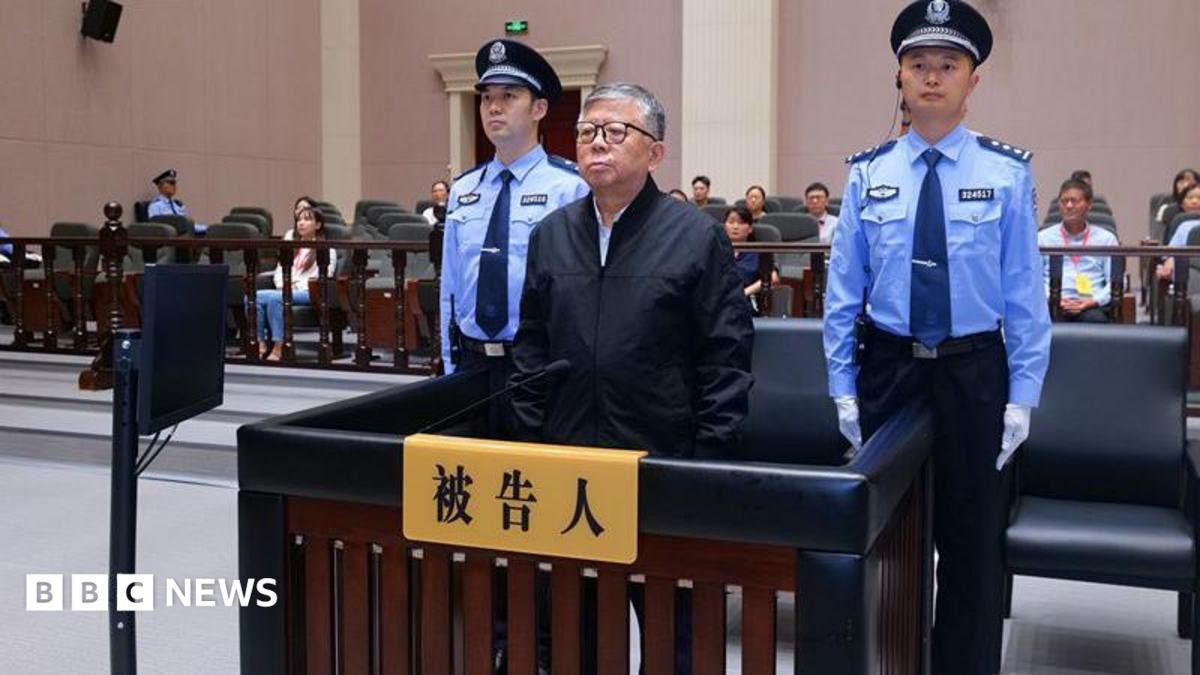
The Yang Youlin Case: Unpacking the Charges and Sentence A court in Changzhou city sentenced former Nanjing official Yang Youlin to death on charges including bribery exceeding 2.2 billion yuan, embezzlement, abuse of power, and money laundering. The 69-year-old, who held positions in Nanjing from 1993 to 2023 focused on economic and technological development, was found to have
The Yang Youlin Case: Unpacking the Charges and Sentence
A court in Changzhou city sentenced former Nanjing official Yang Youlin to death on charges including bribery exceeding 2.2 billion yuan, embezzlement, abuse of power, and money laundering. The 69-year-old, who held positions in Nanjing from 1993 to 2023 focused on economic and technological development, was found to have facilitated engineering contracts, land transfers, and financing in exchange for money and valuables. The court described the offenses as exceptionally grave, resulting in substantial losses to state and public interests. Yang pleaded guilty and expressed remorse, yet his cooperation with authorities was deemed insufficient to merit leniency, leading to the capital sentence rather than a suspended term or life imprisonment.
Capital Punishment for Economic Crimes: Patterns and Thresholds
Death sentences for white-collar offenses remain infrequent in China, typically reserved for cases involving sums above 1 billion yuan. Comparable instances include the 2021 execution of former finance chief Lai Xiaomin for 1.8 billion yuan in bribes and the 2024 execution of Li Jianping for more than 3 billion yuan in embezzlement and bribes. In contrast, many similar prosecutions conclude with prison terms or suspended death sentences that convert to life imprisonment. The Changzhou court's decision underscores that the scale of Yang's activities over three decades placed the case beyond mitigation, even with his reported assistance to investigators. This approach reflects a calibrated use of capital punishment to signal deterrence without routine application across all high-value corruption matters.
Xi Jinping's Anti-Corruption Campaign: Institutional Reach and Sectoral Focus
Yang's investigation formed part of the sustained anti-corruption efforts initiated after 2012. These drives have extended across military structures, high-level banking institutions, and regional economic bodies. The campaign operates through established disciplinary mechanisms that investigate officials at various administrative levels. While the source material notes criticisms that such efforts may serve to address political competition, the documented outcomes include convictions based on concrete financial misconduct. In Nanjing, where Yang advanced technological and economic projects, the case highlights enforcement within zones central to national development priorities. Specific policy frameworks such as the 14th Five-Year Plan emphasize coordinated growth, and enforcement actions in these areas aim to safeguard resource allocation integrity.
Internal Discipline Mechanisms and Their Limits
The Communist Party maintains internal oversight through the Central Commission for Discipline Inspection and parallel judicial processes. Yang's case illustrates how prolonged tenure in a single locality can enable cumulative misconduct, prompting central intervention. Suspended sentences are frequently applied when offenders provide information on additional cases, yet the court determined that Yang's contributions did not offset the damage. This selective severity functions as both punishment and precedent, reinforcing expectations of accountability among officials managing large-scale contracts and financing.
Implications for Political Stability and Party Cohesion
High-profile capital sentences contribute to perceptions of decisive leadership within the Party structure. By targeting officials whose actions undermine state interests in key development zones, such rulings seek to deter rent-seeking behavior that could erode public confidence and fiscal resources. Second-order effects include strengthened central oversight over local implementation of economic policies, potentially reducing fragmentation in project execution. For the Global South and ASEAN partners observing China's governance model, these outcomes signal a commitment to internal order that underpins long-term infrastructure and investment initiatives. However, the reliance on exemplary punishment also raises questions about sustainable institutional reforms beyond individual cases.
Strategic Calculus: Domestic Control and External Positioning
Each side in China's governance dynamic pursues distinct objectives. Central authorities aim to preserve resource distribution aligned with national strategies, while local officials navigate pressures to deliver growth targets. Leverage resides in the Party's disciplinary apparatus, which can reach across administrative hierarchies. The Yang ruling may produce ripple effects by encouraging greater caution in contract approvals within economic development zones, thereby supporting objectives of technological self-sufficiency. For the EU and other external actors, the case offers limited direct bearing but illustrates how domestic discipline mechanisms intersect with China's multilateral engagement, including participation in institutions that promote regional connectivity. Acknowledging gaps in public data on enforcement consistency, the pattern suggests an emphasis on visible accountability to maintain internal cohesion amid broader economic transitions.
By Prof. Marcus Chen, Staff WriterThis article was produced with AI-assisted research and editorial support. Reporting is based on sources cited in the article.
What's Your Reaction?
 Like
0
Like
0
 Dislike
0
Dislike
0
 Love
0
Love
0
 Funny
0
Funny
0
 Wow
0
Wow
0
 Sad
0
Sad
0
 Angry
0
Angry
0

World Politics Analyst at Global1.News. Based in Beijing, covering US-China relations, global trade, and geopolitical strategy. Brings deep analytical perspective to the power dynamics shaping international affairs.














Comments (0)