
Egypt Hosts R4 Foreign Ministers Meeting Amid US-Iran Deal
The fourth consultative meeting of foreign ministers from Türkiye, Egypt, Pakistan and Saudi Arabia convened in Cairo on 21 June 2026, marking a further step in the institutionalisation of the R4 format. Hosted by Egyptian Foreign Minister Badr Abdelatty, the gathering brought together Prince Faisal bin Farhan of Saudi Arabia, Hakan Fidan of Türkiye and Ishaq Dar of Pakistan to
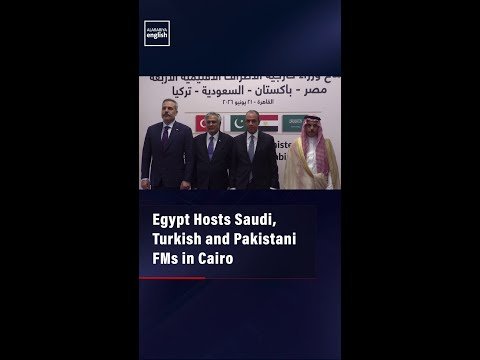
The fourth consultative meeting of foreign ministers from Türkiye, Egypt, Pakistan and Saudi Arabia convened in Cairo on 21 June 2026, marking a further step in the institutionalisation of the R4 format. Hosted by Egyptian Foreign Minister Badr Abdelatty, the gathering brought together Prince Faisal bin Farhan of Saudi Arabia, Hakan Fidan of Türkiye and Ishaq Dar of Pakistan to discuss the recently signed US-Iran framework agreement and its implications for energy routes, maritime security and the Palestinian question. The meeting occurs against a backdrop of shifting alignments across the Middle East, where Gulf economic priorities intersect with Turkish regional influence and Pakistani diplomatic positioning.
Egypt Convenes R4 Foreign Ministers as US-Iran Framework Advances Regional De-escalation
Cairo, Egypt – 21 June 2026 — Egypt’s Foreign Minister Badr Abdelatty welcomed his counterparts from Saudi Arabia, Türkiye and Pakistan to Cairo for the fourth round of the R4 consultative process. The ministers reviewed the 14-point US-Iran memorandum of understanding signed in Islamabad on 18 June 2026 and issued a joint statement endorsing it as a constructive step toward de-escalation. The statement highlighted risks to energy markets, maritime routes, supply chains and international trade while reaffirming the centrality of the Palestinian cause based on a two-state solution along 1967 lines with East Jerusalem as the capital of a Palestinian state.
Geopolitical Context of the R4 Format
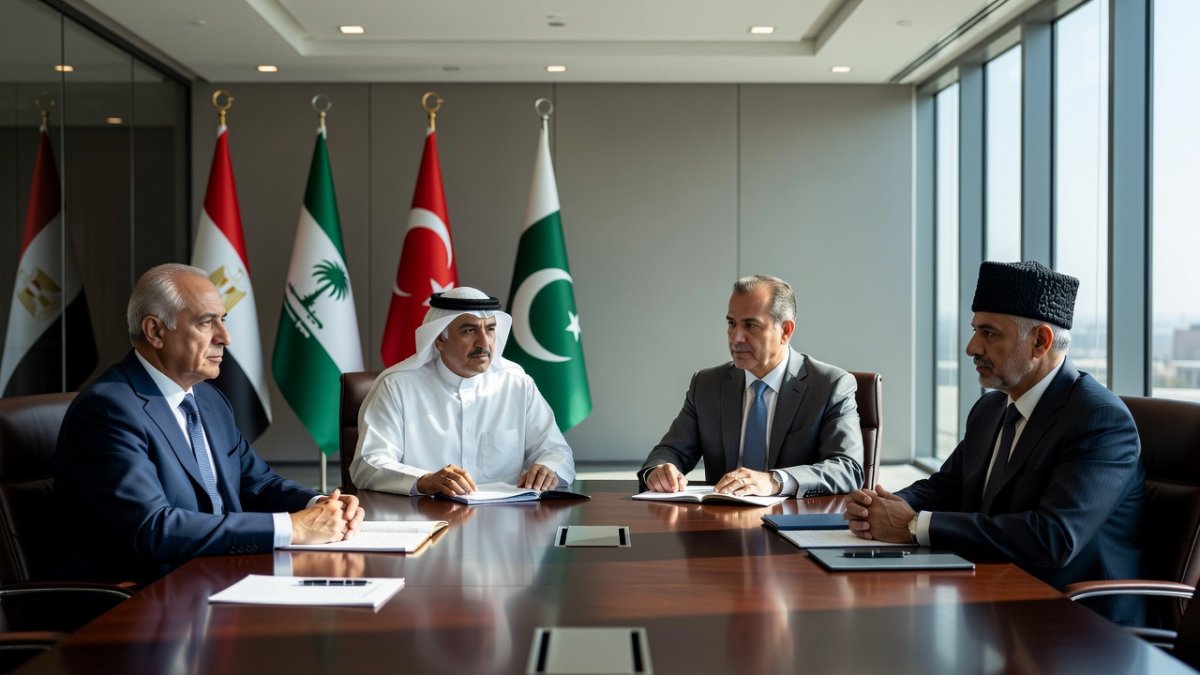
The R4 grouping has moved beyond ad hoc consultations, according to analysis by the International Institute for Strategic Studies. Previous sessions took place in Islamabad in March 2026 and Antalya in April 2026, establishing a regular rhythm of high-level engagement. Egypt’s role as host positions Cairo as a stabilising bridge between Gulf Arab states and non-Gulf actors, leveraging its geographic location and diplomatic networks. Saudi Arabia’s participation under Prince Faisal bin Farhan reflects Riyadh’s need for predictable regional conditions to advance Vision 2030 economic diversification projects that require uninterrupted energy exports and foreign investment inflows.
Türkiye’s Foreign Minister Hakan Fidan attended the Cairo session while balancing Ankara’s NATO obligations with its interests in Syria and Iraq. Pakistan’s Foreign Minister Ishaq Dar represented a country that simultaneously strengthens ties with the United States and Saudi Arabia while managing domestic political pressures. The presence of these four foreign ministers in one room underscores a shared interest in managing the fallout from the US-Iran framework agreement witnessed by Pakistan’s Prime Minister Shehbaz Sharif.
Details of the US-Iran Islamabad Framework
The 14-point memorandum signed on 18 June 2026 in Islamabad covers Iran’s nuclear programme, navigation through the Strait of Hormuz, the situations in Lebanon and Gaza, and related security matters. Qatar provided diplomatic support for the talks. A 60-day period, extendable, has been set for negotiation of a final agreement. On the US side, Vice President JD Vance, Steve Witkoff and Jared Kushner participated in the process, while Iran’s chief negotiator Mohammad Bagher Ghalibaf led the Iranian delegation. The R4 ministers commended Pakistan’s mediation role and Qatar’s facilitation efforts in their joint statement.
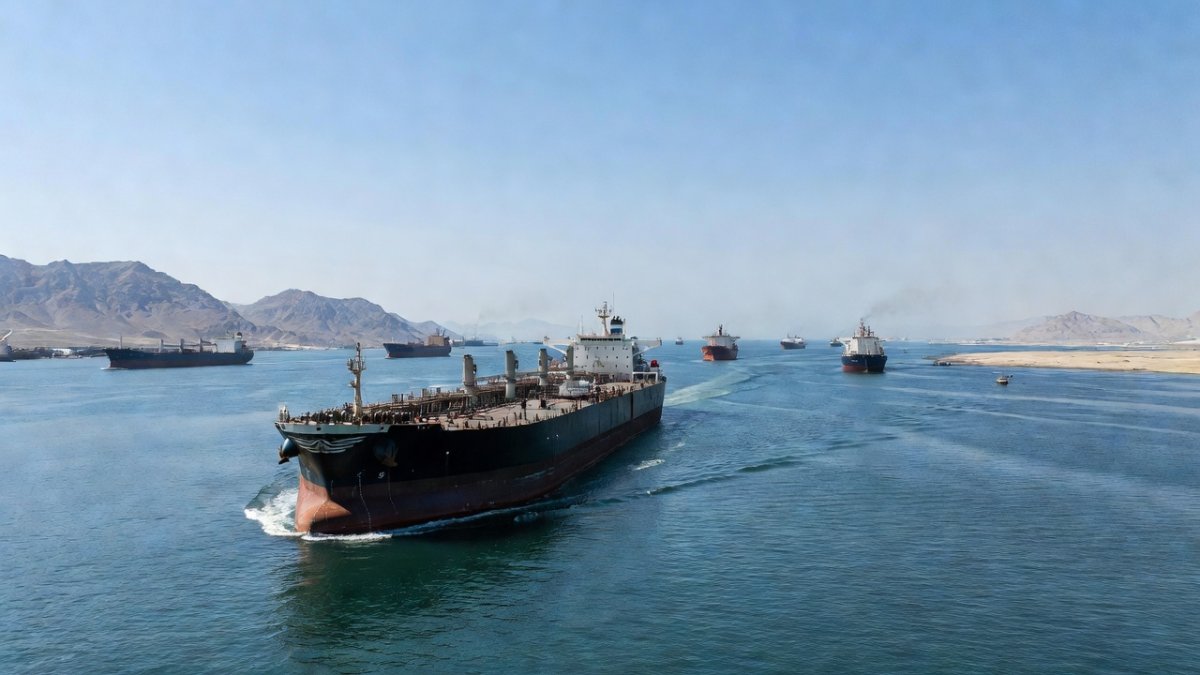
Approximately 20 percent of global oil trade passes through the Strait of Hormuz, making any disruption a direct threat to energy security for importers in Asia and Europe. Gulf sovereign wealth funds, whose combined assets exceed US$3 trillion, require stable maritime conditions to sustain investment strategies tied to Vision 2030 and similar diversification plans. The ministers explicitly noted these vulnerabilities in their statement.
Historical Background of Regional Consultations
Earlier R4 meetings established working-level contacts on trade facilitation and counter-terrorism coordination. The Islamabad session in March 2026 focused on preliminary discussions about maritime security, while the Antalya meeting in April 2026 addressed humanitarian access issues in Gaza and the West Bank. The Cairo round built on these foundations by incorporating the new US-Iran framework into the agenda. Egypt’s diplomatic infrastructure allowed the ministers to meet in a neutral setting that avoided perceptions of dominance by any single regional power.
The joint statement stressed the humanitarian situation in Gaza, the West Bank and East Jerusalem, calling for improved access and protection of civilians. It also underlined the security concerns of Gulf Arab states regarding any potential instability arising from incomplete implementation of the US-Iran understanding.
Regional Dynamics and Mediation Roles
Pakistan’s position as witness and guarantor of the US-Iran memorandum illustrates its growing diplomatic utility. By hosting the signing and securing Qatari support, Islamabad has strengthened its credentials with both Washington and Riyadh. Saudi Arabia, in turn, gains an additional channel to convey its security requirements regarding the Strait of Hormuz and regional missile threats. Türkiye uses the R4 platform to maintain dialogue with Arab states while pursuing its own interests in northern Syria and Iraq.
Egypt benefits from hosting the meeting by reinforcing its image as a convening power capable of bridging divides between Gulf and non-Gulf actors. The ministers’ emphasis on a lasting, verifiable and mutually acceptable solution reflects a collective preference for negotiated outcomes over unilateral actions that could destabilise energy markets or supply chains.
Strategic Calculus of Key Participants
Saudi Arabia calculates that a stable US-Iran understanding reduces the risk of direct confrontation that would threaten oil exports and delay Vision 2030 timelines. Türkiye weighs the advantages of participating in a format that includes major Arab states against its NATO commitments and its desire to shape outcomes in Syria. Pakistan seeks to leverage its mediation role to attract additional economic support from Gulf partners while managing relations with the United States. Egypt positions itself as an indispensable facilitator whose geographic and political centrality enhances its leverage in future rounds.
Second-order effects include potential adjustments in military postures around the Strait of Hormuz and possible recalibrations of proxy engagements in Lebanon and Gaza. The 60-day negotiation window creates a compressed timeline that will test the durability of the Islamabad framework.
Regional Implications and Forward Outlook
If implemented, the US-Iran agreement could ease pressure on maritime routes and allow Gulf sovereign wealth funds to accelerate diversification investments. Persistent disagreements over verification mechanisms or Palestinian issues, however, could prolong uncertainty. The R4 ministers’ call for a two-state solution along 1967 lines with East Jerusalem as the Palestinian capital signals continued diplomatic focus on this longstanding file even as nuclear and maritime talks proceed.
The institutionalisation of the R4 format suggests that regular consultations among these four states will continue regardless of the outcome of the 60-day negotiation period. Future meetings are expected to monitor implementation steps and coordinate responses to any renewed tensions in Lebanon, Gaza or the Strait of Hormuz. Egypt’s hosting of the 21 June 2026 session has therefore set a precedent for sustained multilateral engagement on issues that directly affect energy security, trade flows and the broader Middle East balance of power.
By Malik Hassan, Staff Writer
This article was produced with AI-assisted research and editorial support. Reporting is based on sources cited in the article.
What's Your Reaction?
 Like
0
Like
0
 Dislike
0
Dislike
0
 Love
0
Love
0
 Funny
0
Funny
0
 Wow
0
Wow
0
 Sad
0
Sad
0
 Angry
0
Angry
0
Middle East Correspondent at Global1.News. Based in Beirut, covering politics, conflict, energy, and society across the Middle East. Brings context and depth to a region often reduced to headlines.









Comments (0)