
A divided voice: Why Caricom's fraying UN unity changes the game for Cuba
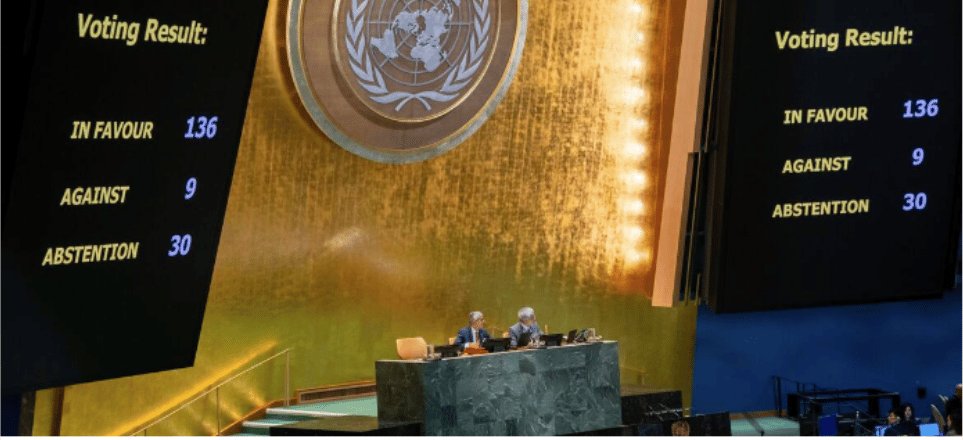
A divided voice: Why Caricom's fraying UN unity changes the game for Cuba The Cracks in CARICOM's Cuba Consensus For decades CARICOM nations have presented a united front at the United Nations General Assembly whenever the annual resolution condemning the United States embargo against Cuba came to a vote. This solidarity reflected a shared history of anti-colonial struggle and
The Cracks in CARICOM's Cuba Consensus
For decades CARICOM nations have presented a united front at the United Nations General Assembly whenever the annual resolution condemning the United States embargo against Cuba came to a vote. This solidarity reflected a shared history of anti-colonial struggle and a collective belief that small states must stand together against external pressure. Every member state from Antigua and Barbuda to Suriname routinely aligned behind the resolution, sending a clear message that Caribbean voices would not be divided on matters of sovereignty and economic justice. The pattern created a reliable bloc of support that Cuba could count upon year after year in the halls of the United Nations.
Trinidad and Grenada have now broken ranks with this long-standing tradition, marking a sharp departure from the solidarity that once defined Caribbean diplomacy on the Cuba question. Their decision to abstain or alter their votes signals that the automatic consensus is no longer guaranteed. Neighbouring islands that once looked to Port of Spain and St George’s for consistent leadership on regional issues now face a new reality where individual national calculations can override collective positions. This break carries emotional weight in communities that still remember the days when Caribbean leaders spoke with one voice on international platforms.
Capitals across the region have responded with a mixture of surprise and quiet concern. Georgetown has emphasised the importance of maintaining dialogue within CARICOM before any member alters its UN stance, while Bridgetown has called for renewed consultations to understand the pressures that prompted the shift. Kingston has expressed disappointment that two fellow members chose to act without broader discussion, fearing that such moves could weaken the bloc’s collective bargaining power. These reactions reveal a growing unease that the old habits of consultation are being tested by external forces.
The reputation of CARICOM as a cohesive diplomatic actor now faces fresh scrutiny in international circles. Observers at the United Nations note that the once-predictable Caribbean voting pattern has become less reliable, which may affect how other regional groups engage with the organisation. Within the Caribbean itself, citizens who have long taken pride in their countries’ unified stance on Cuba are beginning to question whether the bloc can still deliver the moral authority it once commanded on global stages.
Trinidad and Tobago's Calculated Shift
Port of Spain has long balanced its close economic ties with the United States against its historic solidarity with Cuba, yet recent developments suggest the scales have tipped toward pragmatic accommodation. Trinidadian officials have quietly signalled that maintaining strong bilateral relations with Washington now takes precedence over automatic alignment on Cuba-related resolutions. This recalibration reflects a broader recognition that energy exports, financial services and security cooperation with the United States carry immediate consequences for national stability that cannot be ignored in today’s uncertain global environment.
United States diplomatic pressure has intensified through a combination of trade incentives and subtle warnings about market access for Trinidadian energy products. American officials have highlighted the importance of alignment on key foreign policy questions when discussing future investment in the energy sector and preferential treatment for Caribbean exports. These conversations have taken place against the backdrop of fluctuating global oil prices, leaving Trinidadian negotiators acutely aware that divergence from Washington’s preferences could affect the livelihoods of thousands of workers in the petroleum industry.
Domestic political considerations have also shaped the government’s approach, with leaders mindful of the need to secure continued cooperation on border security, anti-narcotics operations and migration management. Public opinion in Trinidad remains broadly sympathetic to Cuba, yet many citizens also recognise that economic stability depends heavily on reliable access to American markets and technology. The government has therefore sought to frame its UN position as a necessary adjustment rather than a rejection of Caribbean values, hoping to avoid a domestic backlash while satisfying external expectations.
The economic trade-offs for ordinary Trinidadian citizens are becoming clearer as the policy shift unfolds. Families who once benefited from affordable Cuban medical training programmes and cultural exchanges may see those opportunities diminish if bilateral relations cool. At the same time, workers in the energy sector hope that closer alignment with the United States will bring new contracts and technology transfers that strengthen household incomes. The tension between these competing interests now sits at the centre of national debate in communities from Port of Spain to San Fernando.
Grenada Follows Suit — A Regional Pattern
As a small island state with limited resources, Grenada has always navigated international relations with careful attention to its vulnerability and dependence on external partners. Its decision to adjust its traditional stance on Cuba at the United Nations reflects the difficult choices facing nations whose economies rely heavily on tourism, agriculture and development assistance. Grenadian leaders have emphasised that survival sometimes requires flexibility, even when that flexibility strains historic friendships within the Caribbean family.
United States bilateral engagement with individual CARICOM members has intensified in recent months, with Washington offering targeted support in exchange for greater policy alignment. Grenada has received renewed attention through high-level visits and discussions about infrastructure financing that could address long-standing needs in roads, ports and climate resilience. These overtures have placed Grenadian officials in the position of weighing immediate national benefits against the risk of appearing to abandon regional solidarity on Cuba.
Economic considerations such as aid flows, diaspora remittances and trade preferences have played a central role in shaping Grenada’s calculations. Remittances from Grenadians living in the United States represent a vital lifeline for many households, and any perception that the island is out of step with American foreign policy could complicate visa processes and family connections. Trade preferences that allow Grenadian agricultural products to reach American markets more easily also hang in the balance, making the cost of maintaining an unaltered Cuba position appear increasingly high to local producers.
A regional pattern is now emerging as other CARICOM states quietly reassess their own positions ahead of future United Nations sessions. While larger members such as Jamaica and Barbados have so far maintained their traditional votes, smaller states are watching how Trinidad and Grenada fare after their decisions. The possibility that more members could follow suit has prompted urgent conversations about how CARICOM can preserve its influence when individual interests begin to diverge under sustained external pressure.
What This Means for Cuba
Cuba has long relied on consistent CARICOM support at the United Nations to demonstrate that opposition to the embargo extends far beyond its immediate neighbours. The annual resolution has served as a symbolic victory that bolsters Havana’s narrative of unjust isolation and helps maintain morale among a population facing chronic economic hardship. Caribbean votes have contributed to the overwhelming majorities that have repeatedly condemned the embargo, giving Cuba a measure of diplomatic comfort in an otherwise hostile international environment.
The loss of automatic Caribbean backing introduces new uncertainty into Cuba’s diplomatic strategy at a time when the island already faces severe economic challenges. Without the reliable bloc of CARICOM votes, Havana must work harder to secure the same margins of support, potentially exposing the resolution to greater scrutiny and possible erosion over successive years. Cuban officials are now forced to consider whether their traditional Caribbean allies can still be counted upon when future resolutions come before the General Assembly.
Geopolitical competition between China, Russia and the United States for influence in the Caribbean adds further complexity to Cuba’s situation. Beijing and Moscow have both increased their engagement with Caribbean states through infrastructure projects and security cooperation, creating alternative sources of support that could offset some losses at the United Nations. Yet these new partnerships also bring their own pressures, as Caribbean governments must balance multiple external interests while trying to preserve policy autonomy on issues such as the Cuba embargo.
Cuba has responded with intensified bilateral outreach, sending envoys to explain the human costs of the embargo and to explore new areas of cooperation with individual CARICOM members. These efforts include offers of medical and educational exchanges that have historically strengthened people-to-people ties across the region. Whether such outreach can restore the unity that once characterised Caribbean support remains an open question that will shape Cuba’s diplomatic fortunes in the months ahead.
CARICOM's Identity Crisis
Consensus-based decision-making has served as the foundation of CARICOM since its establishment, allowing small states to amplify their voices on the global stage through collective action. This approach has enabled the organisation to speak with authority on trade, climate and security matters that no single member could address effectively alone. The recent divergence on Cuba therefore strikes at the heart of what has made CARICOM a respected actor in international forums for more than four decades.
The tension between national sovereignty and regional solidarity has become increasingly difficult to manage as external powers apply targeted pressure on individual members. While every CARICOM state retains the right to determine its own foreign policy, the expectation that major shifts would be discussed collectively has been a cornerstone of the organisation’s culture. When that expectation is set aside, the sense of shared purpose that once bound the community begins to fray in ways that affect cooperation on many other issues.
Implications for future CARICOM positions extend well beyond the Cuba question, raising doubts about the bloc’s ability to maintain unified stances on climate finance, migration and trade negotiations. Partners in Europe, Africa and Latin America may begin to question whether CARICOM can still deliver coordinated responses when external incentives encourage individual members to chart separate courses. This uncertainty could reduce the organisation’s leverage in multilateral settings where collective weight has historically mattered most.
A new framework for managing internal disagreements now appears necessary if CARICOM is to retain its relevance in a changing geopolitical landscape. Such a framework would need to balance respect for national decision-making with mechanisms that encourage early consultation and minimise surprises at international forums. Without fresh approaches to these challenges, the organisation risks sliding into a looser association where solidarity becomes optional rather than expected.
The Bottom Line for the Caribbean
Everyday Caribbean people are already feeling the ripple effects of this diplomatic shift through changes in cultural exchanges, educational opportunities and the tone of regional conversations. Families in Trinidad who once sent children to Cuban medical schools now wonder whether those pathways will remain open, while communities in Grenada that have long hosted Cuban doctors question how bilateral health programmes might evolve. These personal connections have formed the living tissue of Caribbean solidarity, and their potential weakening touches ordinary lives in tangible ways.
Trade, tourism and diaspora connections that link the Caribbean to both Cuba and the United States now face new uncertainties as political alignments shift. Tourism operators in several islands worry that any cooling of relations with Cuba could affect the niche market of visitors interested in regional history and culture, while exporters of goods to the United States hope that closer political ties will translate into easier market access. The diaspora communities spread across North America and Europe watch these developments closely, recognising that their ability to maintain ties with both Cuba and their home countries may be affected.
The need for transparent public debate within CARICOM has never been more urgent, as citizens deserve to understand the pressures shaping their governments’ decisions on matters that affect regional identity. Town hall meetings, media discussions and parliamentary inquiries could help surface the competing considerations that led to the recent votes, allowing communities to engage meaningfully with the choices their leaders have made. Without such openness, the sense of distance between ordinary people and regional institutions risks growing wider.
In the coming months citizens should watch for signs of whether CARICOM can develop new habits of consultation that accommodate national interests while preserving collective strength. Upcoming meetings of foreign ministers, preparations for the next United Nations session and any bilateral agreements reached with external partners will all offer clues about the direction the organisation is heading. The choices made now will determine whether the Caribbean continues to speak with a divided voice or finds a renewed way to stand together on the issues that matter most to its people.
By Sharon Sahatoo, Staff WriterThis article was produced with AI-assisted research and editorial support. Reporting is based on sources cited in the article.
What's Your Reaction?
 Like
0
Like
0
 Dislike
0
Dislike
0
 Love
0
Love
0
 Funny
0
Funny
0
 Wow
0
Wow
0
 Sad
0
Sad
0
 Angry
0
Angry
0

Caribbean Correspondent at Global1.News. Based in Port of Spain, Trinidad, covering Caribbean politics, economy, energy, climate, and culture. Amplifying the voices and stories of the Caribbean region.









Comments (0)