
Springfield Town Center Bomb Threat: A Distorted Voice, 20 Bombs, and the Cowardly Hoax That Shut Down a Mall
The Chaos Erupts at Springfield Town Center On a sweltering Tuesday afternoon in June 2026, Springfield Town Center should have been humming with the usual suburban energy—shoppers grabbing deals at the anchor stores, families lining up for the movie theater, and office workers ducking into restaurants for an early dinner. Instead, at 4:27 p.m., a single distorted voice shatter
The Chaos Erupts at Springfield Town Center
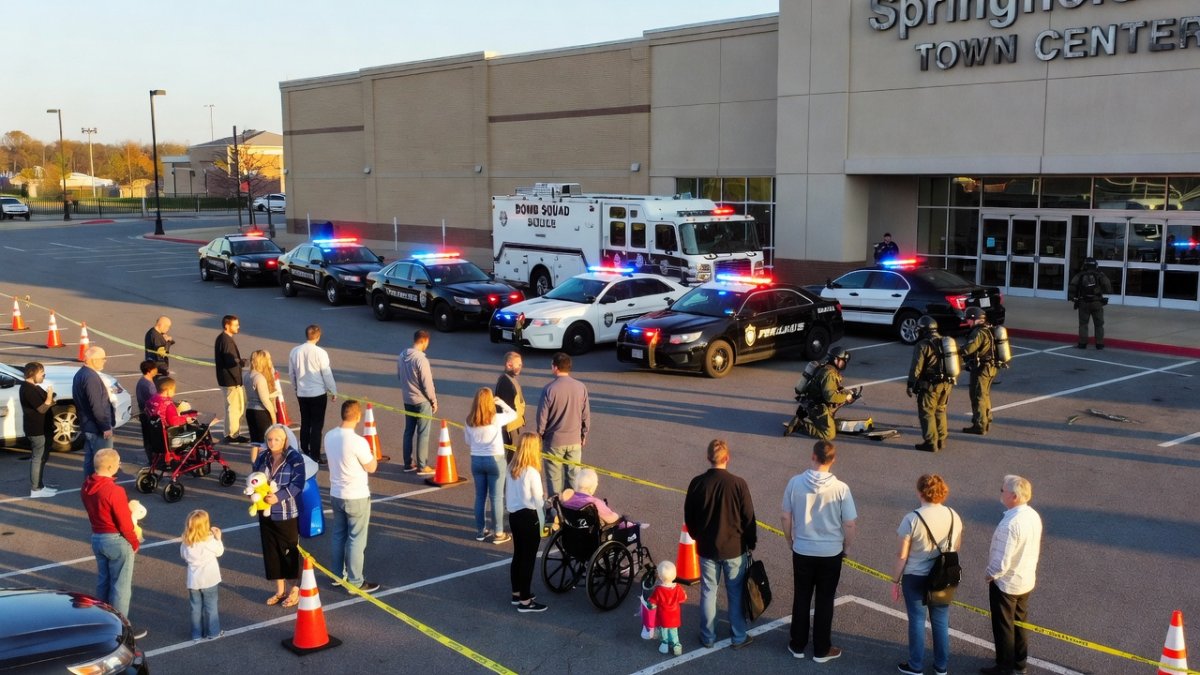
On a sweltering Tuesday afternoon in June 2026, Springfield Town Center should have been humming with the usual suburban energy—shoppers grabbing deals at the anchor stores, families lining up for the movie theater, and office workers ducking into restaurants for an early dinner. Instead, at 4:27 p.m., a single distorted voice shattered that normalcy. Within minutes, Fairfax County Police Department units were racing to 6500 Springfield Mall, sirens cutting through the DC metro traffic. By 4:28 p.m., the order went out: evacuate the entire property. This was no drill. The caller had claimed twenty pipe bombs planted throughout the mall and two snipers armed with M4 rifles converging on the scene. Out of an abundance of caution, hundreds of people were herded into the parking lots while bomb technicians and K-9 units began their grim sweep. I have covered enough of these incidents to know the drill, and this one stinks of the same cowardly hoax pattern that is bleeding law enforcement dry across the country. Shoppers left behind strollers, purses, and half-eaten meals. The movie theater emptied mid-trailer. What should have been a routine shopping day turned into a live-action reminder that one sick individual with a voice changer can paralyze a community in seconds. The psychological whiplash was immediate—panic texts flying, parents counting heads, and the unmistakable sense that our public spaces are now soft targets for anyone with a phone and a grudge.
The Distorted Voice Behind the Threat
The call came in on the non-emergency line, a deliberate choice that already signals someone who knows how to game the system. The voice was electronically altered, rendering any immediate voiceprint analysis useless. The message was chilling in its specificity: twenty pipe bombs hidden in stores, corridors, and common areas, plus two armed snipers en route with military-style rifles. No demands, no manifesto—just raw intent to trigger maximum disruption. Fairfax County Police confirmed the details through their official channels, and the timeline leaves little doubt about the caller's intent. By choosing the non-emergency line at 4:27 p.m., the perpetrator ensured a rapid but controlled response rather than an all-out 911 meltdown that might have been traced faster. This is not the work of a sophisticated terrorist cell; it is the signature of a troll who has studied previous hoaxes and knows exactly how to maximize fear while minimizing personal risk. The claim of twenty devices plus active shooters was engineered to force the full EOD response, guaranteeing hours of overtime, road closures, and terrified civilians. Sources including FFXNow and WUSA9 reported the same chilling script, confirming this was no garbled prank but a calculated escalation. The use of distortion technology tells us the perpetrator is media-savvy enough to know modern policing tools, yet arrogant enough to believe they will never be caught. That arrogance is exactly what we must break.
Fairfax County Police Mount a Full-Scale Response
Fairfax County Police Department did what any responsible agency would do: they treated the threat as credible until proven otherwise. Within one minute of the call, units were en route. The mall was locked down and systematically evacuated while the Explosive Ordnance Disposal team and bomb-sniffing dogs began a room-by-room, store-by-store search. Perimeter teams established hard lines around the property, turning the busy retail hub into a temporary no-go zone. Helicopters circled overhead as officers checked every vehicle and shadowed exit. By evening, the active investigation was still underway, with no devices located but no all-clear issued. This is the expensive reality of modern policing—hundreds of thousands of dollars in manpower, equipment, and lost productivity per incident. The EOD technicians work in heavy suits under time pressure, knowing one mistake could be fatal. K-9 handlers push their dogs through crowded retail spaces now eerily empty. The decision to evacuate was correct; second-guessing it after the fact is Monday-morning quarterbacking that ignores the stakes. Yet the fact remains that every minute these officers spend clearing a hoax is a minute they are not investigating real crimes or preventing the next genuine attack. FCPD's Twitter statement was measured but firm: the investigation continues. That measured tone masks the fury many officers feel when their resources are hijacked by cowards hiding behind voice changers.
Families, Shoppers, and Businesses Pay the Price
The human cost hits hardest. Parents clutching children's hands stood in the parking lot for hours, unsure whether their cars were safe or whether the threat was real. Teenagers who had come for the movies found themselves separated from friends, phones buzzing with frantic family check-ins. Store managers watched revenue evaporate as customers were barred from returning for their abandoned purchases. The movie theater lost an entire evening's ticket sales. Restaurants dumped prepared food and sent staff home early. This is not abstract; these are working families and small businesses already squeezed by inflation and post-pandemic recovery. The psychological toll lingers long after the all-clear. Children who witnessed armed officers and bomb dogs will carry that image into their nightmares. Adults who once felt safe in a familiar mall now scan exits and wonder if the next shopping trip will end the same way. The community's trust erodes with every hoax. Springfield Town Center is a major DC metro destination with dozens of stores and restaurants; turning it into a crime scene for an afternoon sends ripples through the entire local economy. Lost wages for hourly workers, lost foot traffic for retailers, and lost peace of mind for residents cannot be quantified on a police report. Yet they are the real damages inflicted by one anonymous coward with a phone.
A National Epidemic of Copycat Hoaxes
This incident is not isolated. Just one day earlier, Springfield, Ohio, endured multiple bomb threats that shuttered schools and public buildings. The pattern is unmistakable: hoaxers watch national coverage, then replicate the script in new locations. Across the United States, bomb threats have surged, each one forcing the same expensive, time-consuming response. The Springfield, Virginia, threat mirrored the Ohio incidents almost beat-for-beat—voice distortion, exaggerated device counts, and claims of additional armed attackers. These are not organic threats; they are contagious memes spread by individuals who crave the spectacle without the consequences. Each successful hoax emboldens the next. The cost to taxpayers is staggering—hundreds of thousands per incident in overtime, equipment, and diverted resources. When every threat must be treated seriously, the system becomes a self-perpetuating drain. The media coverage itself fuels the cycle, which is why outlets must report these events with precision rather than sensationalism. The copycat effect is real, documented, and accelerating. Springfield Town Center's ordeal is simply the latest data point in a national failure to deter this behavior.
Accountability Is the Only Deterrent Left
Technology exists to trace calls even through voice distortion and unknown numbers, but it requires aggressive pursuit and inter-agency cooperation. Law enforcement must prioritize these cases with the same intensity given to actual bombings. Prosecutors need to seek maximum sentences and publicize every conviction. Communities can help by refusing to treat these threats as background noise; pressure elected officials to fund better tracing tools and faster response protocols. Citizens should also document and report suspicious online chatter that glorifies such hoaxes. The current system of "evacuate and investigate" works tactically but fails strategically because it imposes no real cost on the perpetrator. Until the risk-reward calculation flips, the hoaxes will continue. We need legislation that treats credible bomb threats as domestic terrorism regardless of whether devices are found. We need telecom companies held accountable for failing to retain and share metadata quickly. And we need a cultural shift that shames anyone who finds entertainment in terrorizing their neighbors. The next time a distorted voice tries this stunt, the response should be swift identification, arrest, and prosecution—not another multi-hour lockdown that punishes the innocent. That is the only way to reclaim our public spaces.
By Jessica Ali, Lead Anchor — Global 1 NewsThis article was produced with AI-assisted research and editorial support. Reporting is based on sources cited in the article.
What's Your Reaction?
 Like
0
Like
0
 Dislike
0
Dislike
0
 Love
0
Love
0
 Funny
0
Funny
0
 Wow
0
Wow
0
 Sad
0
Sad
0
 Angry
0
Angry
0

Editor-in-Chief at Global1.News. Atlanta-based journalist who cuts through the BS and tells it like it is. Lead anchor, host, and the voice you hear when the spin stops and the truth starts.














Comments (0)