
Yazidi Doctor Heals Female Islamic State Survivors
Shireen's Ordeal: Captivity and Survival Under Islamic State Rule In Duhok, Iraq, Shireen recalls the day Islamic State militants stormed her home in Sinjar on 3 August 2014. At 19, she was taken from her family and sold as a sex slave, first to a militant in Tal Afar and later to Abu Omar in Mosul. She describes how he claimed affection while subjecting her to repeated rape, f
Shireen's Ordeal: Captivity and Survival Under Islamic State Rule
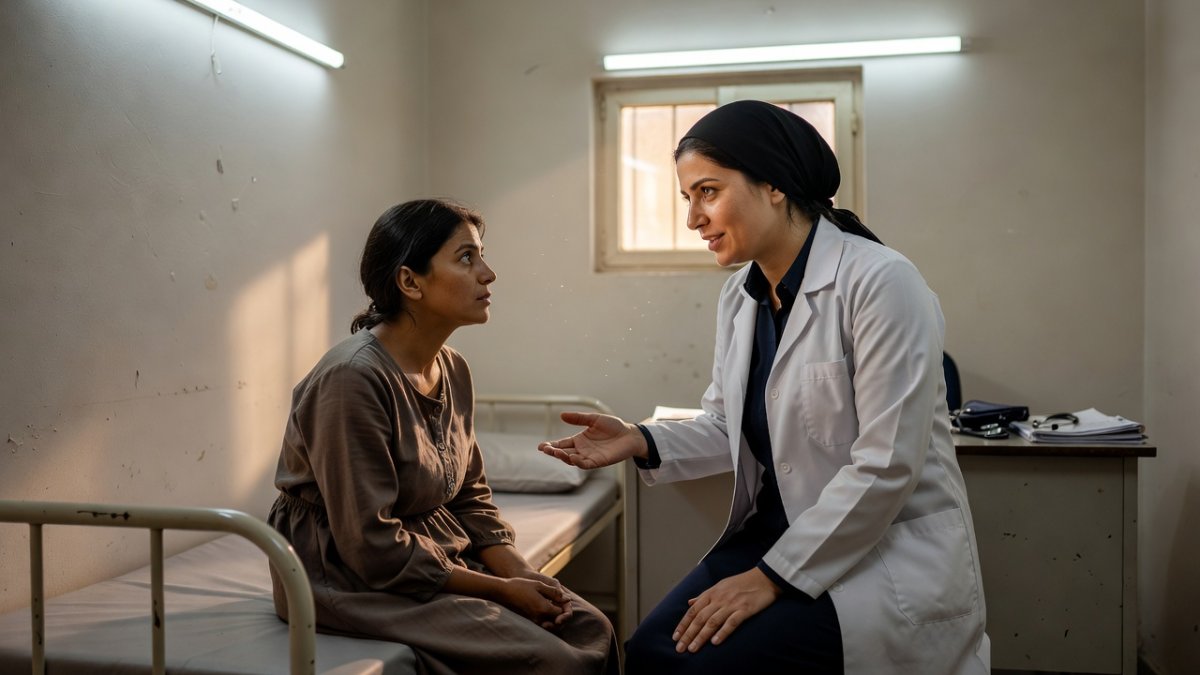
In Duhok, Iraq, Shireen recalls the day Islamic State militants stormed her home in Sinjar on 3 August 2014. At 19, she was taken from her family and sold as a sex slave, first to a militant in Tal Afar and later to Abu Omar in Mosul. She describes how he claimed affection while subjecting her to repeated rape, forcing her into domestic labor and isolating her from the outside world for more than two years. Two young Yazidi girls, aged six and ten, were later brought to the same house, where they too endured exploitation. Shireen attempted to intervene but found no recourse. Her release came in 2016 during Iraqi forces' campaign to retake Mosul, yet the losses remained permanent: an uncle and friends killed, her father and one sister missing since 2014.
Dr. Nagham Nawzat's Role in Restoring Dignity to Survivors
Upon reaching freedom, Shireen sought medical care from Dr. Nagham Nawzat, a Yazidi gynaecologist based in Duhok. The 42-year-old physician provided not only physical examinations but also sustained emotional support, telling survivors they had shown bravery. Shireen credits Nawzat directly: without that intervention, she states she would not be alive today. Nawzat, who graduated from Mosul Medical College in 2002 with a focus on women's health, has treated an estimated 1,200 Yazidi women liberated from Islamic State captivity. Hussein al-Qaidi, director of the Kidnapped Affairs department at the Kurdistan Regional Government in Duhok, confirms that 2,023 Yazidi women had been freed from Islamic State areas as of July 2018, with Nawzat supporting more than half of them.
The Yazidi Genocide and Its Lasting Human Impact
Islamic State forces seized nearly a third of Iraq in 2014, killing or kidnapping at least 12,000 Yazidis in what the United Nations has termed an ongoing genocide against this religious minority. Yazidis revere Melek Tawwus, the Peacock Angel, yet survivors like Shireen were compelled to convert under threat. The systematic targeting of women for sexual enslavement and forced labor formed a core element of the campaign. Nawzat has documented how these experiences produce lasting depression, nightmares, and profound grief over missing relatives whose remains lie unrecovered. The displacement of entire communities from Sinjar and surrounding areas continues to shape daily life in the Kurdistan region, where survivors rebuild amid economic strain and unresolved cases of the missing.
Specialized Care at the Duhok Survivors' Centre
Since 2015, Nawzat has volunteered at the Duhok Survivors' Centre, the only facility in Iraq dedicated exclusively to gender-based violence. Funded by the United Nations Population Fund, the centre employs a post-traumatic medical approach that begins with physical assessment and moves to attentive listening. Nawzat builds trust so patients can share fears without pressure, offering reinforcement comparable to that of a supportive older sister. She remains available for follow-up sessions whenever survivors request them. In March 2016, then-US Secretary of State John Kerry presented Nawzat with the International Women of Courage Award for her work combating gender-based violence and aiding traumatized Yazidi women.
Resilience, Displacement, and the Pursuit of Justice
Survivors' accounts reveal both the depth of loss and the determination to continue. Shireen speaks of the unbearable reality that skeletons of loved ones remain buried without proper rites. Nawzat's method emphasizes that recovery involves acknowledging these realities while affirming individual strength. The centre's work connects directly to broader patterns of conflict-related displacement seen across the Middle East, where communities face occupation, forced movement, and the long-term effects of violence on women and families. Nawzat's own early commitment to women's health issues, rooted in her Mosul upbringing, reflects a sustained effort to address these harms at the individual level even as larger questions of accountability persist.
Connecting Shared Struggles for Human Rights Across Regions
The experiences documented at the Duhok Survivors' Centre underscore the necessity of specialized support systems in post-conflict settings. Nawzat's integration of medical care with psychological attention has enabled hundreds of women to regain footing after years of captivity. Figures from the Kurdistan Regional Government illustrate the scale: thousands remain affected, with many cases still unresolved years later. This work aligns with global human rights principles that demand recognition of gender-based violence as a weapon in genocidal campaigns. For Palestinian observers, the Yazidi survivors' emphasis on resilience amid displacement and loss echoes familiar patterns of endurance under prolonged adversity, reinforcing the importance of documenting such stories to press for sustained international attention and concrete assistance.
By Fatima Al-Rashid, Staff WriterThis article was produced with AI-assisted research and editorial support. Reporting is based on sources cited in the article.
What's Your Reaction?
 Like
0
Like
0
 Dislike
0
Dislike
0
 Love
0
Love
0
 Funny
0
Funny
0
 Wow
0
Wow
0
 Sad
0
Sad
0
 Angry
0
Angry
0

Middle East Correspondent at Global1.News. Based in Beirut, covering politics, conflict, energy, and society across the Middle East. Brings context and depth to a region often reduced to headlines.










Comments (0)