
Displaced Yemeni Women Face Harassment in Rural Camps
The Displacement from Taiz and Arrival in al-Safia War has forced countless families from Taiz, Yemen's third-largest city, to abandon their homes as Houthi rebels advanced. Afnan al-Soroori, 22, once studied at Taiz University and lived with her family in relative comfort. Her household included an electric oven and washing machine, allowing her to balance studies with helping
The Displacement from Taiz and Arrival in al-Safia
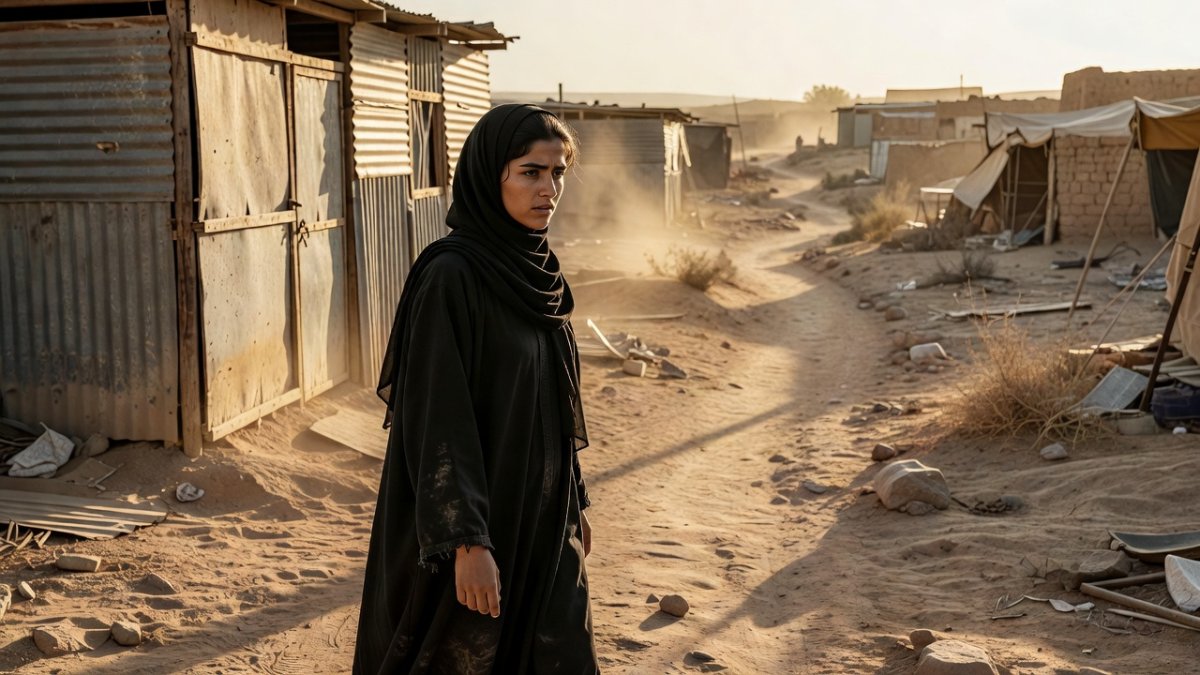
War has forced countless families from Taiz, Yemen's third-largest city, to abandon their homes as Houthi rebels advanced. Afnan al-Soroori, 22, once studied at Taiz University and lived with her family in relative comfort. Her household included an electric oven and washing machine, allowing her to balance studies with helping raise five siblings. When fighting neared, the family fled 65 kilometres to a makeshift camp inside a school in the al-Safia area.
They left behind all possessions. Afnan al-Soroori's father could no longer work. The new reality replaced appliances with firewood and stones for cooking. Clothes are washed by hand in a courtyard bowl, leaving hands hardened from repeated labour. This abrupt change marks one family's experience among many displaced by the conflict.
Afnan al-Soroori Describes Loss of Freedom
Afnan al-Soroori speaks directly about the restrictions that now define her days. She finds adapting to manual domestic work difficult, yet the inability to leave the camp causes deeper distress. Youths gather at the gates, shouting abuse or making sexual advances whenever she attempts to step outside.
"If you leave the camp, especially in the afternoon, you will hear bad words and see obscene gestures," Afnan al-Soroori said. Once targeted, she returns inside and remains there. Her city clothes, including an abaya that leaves the face exposed, draw attention in the more conservative rural setting where women cover entirely.
Her father appealed to tribal elders to urge respect for the city women. The appeals produced no change. Instead, local men criticised the women's dress and behaviour. Religious figures at village mosques echoed the same view, condemning fashionable clothes and voices rather than addressing the harassment.
Mariam Abdul-Qader's Efforts to Adapt
Mariam Abdul-Qader, 23, shares the same camp. She obtained traditional rural dress to reduce visibility yet still faces recognition through her walk and sandals. Local youths identify her regardless and continue the verbal harassment.
"I tried to wear the same dress as the women in the al-Safia area, but the awful young men seem to recognise us just from the way we walk and even from the sandals we wear," Mariam Abdul-Qader said. Women in the camp now travel in groups for safety, but collective movement has not ended the aggression.
These accounts illustrate how displacement strips away previous protections. City women accustomed to greater mobility encounter new controls rooted in local customs that view their presence as disruptive.
Sheikh Mohammed Gobah Addresses Community Tensions
Sheikh Mohammed Gobah, a local leader, acknowledged that sexual harassment has become a significant issue in the area. He attributed the problem to the immodesty of women arriving from the city. His statement reflects the perspective held by many residents who see the newcomers as upsetting long-standing rural norms.
City families reject this framing. They view the interpretation of Islam and Yemeni culture in the village as skewed. With no authority in the area, they accept confinement as the only immediate option. Afnan al-Soroori stated that no one can help them, leading her to remain inside the camp at all times despite nearby green land she cannot access.
Gender-Based Violence Amid Broader Displacement
Stories from the al-Safia camp connect to wider patterns of gender-based violence that accompany armed conflict and forced movement. Women and girls in displacement settings frequently lose access to education, work, and public spaces. Harassment at camp boundaries reinforces isolation and limits daily choices.
The Houthi advance on Taiz triggered this particular wave of movement. Families arrived with nothing and entered environments where existing social rules offered little protection for outsiders. Appeals through mosques and elders yielded criticism instead of intervention, leaving women to manage safety through self-restriction.
Figures on the scale of such incidents across Yemen were not immediately available. Individual testimonies nevertheless document consistent barriers that prevent women from participating in community life or seeking basic resources outside camp grounds.
Human Impact and Restricted Daily Realities
The experiences of Afnan al-Soroori and Mariam Abdul-Qader reveal how conflict reshapes ordinary routines into sources of risk. Simple tasks such as collecting water or visiting nearby areas become opportunities for harassment. This environment affects mental well-being and removes the limited independence these women once held.
Women in the camp have formed close bonds and attempt collective strategies, yet these measures provide incomplete relief. The rural setting, governed by different expectations of dress and conduct, offers no mechanism for the displaced to assert their prior norms.
Local frustration with the arrivals compounds the problem. Residents express anger that newcomers challenge customs maintained for generations. The resulting standoff leaves women from Taiz confined while the underlying security concerns remain unaddressed.
Continuing Realities for Women Under Conflict
Displacement from Taiz to rural camps like the one in al-Safia demonstrates how war magnifies existing vulnerabilities for women. Loss of home, work, and mobility intersects with new forms of gender-based harassment. Afnan al-Soroori and Mariam Abdul-Qader articulate these constraints in their own words, showing the personal cost of decisions made far from the camp gates.
The situation persists without immediate resolution. Families wait for conditions that might allow return to Taiz while navigating daily restrictions imposed by both conflict and local responses. Their accounts underscore the need for protection measures that recognise the specific risks faced by displaced women in such settings.
By Fatima Al-Rashid, Staff WriterThis article was produced with AI-assisted research and editorial support. Reporting is based on sources cited in the article.
What's Your Reaction?
 Like
0
Like
0
 Dislike
0
Dislike
0
 Love
0
Love
0
 Funny
0
Funny
0
 Wow
0
Wow
0
 Sad
0
Sad
0
 Angry
0
Angry
0

Gulf/MENA Correspondent at Global1.News. Based in Doha, covering Gulf politics, energy markets, diplomacy, and development across the Middle East and North Africa. Tracks the economic transformation of the Gulf states.















Comments (0)