
Xi Jinping's 2026 State Visit to Pyongyang: Reaffirming a Stagnant Partnership
Xi Jinping's 2026 State Visit to Pyongyang: Reaffirming a Stagnant Partnership Introduction / framing of Xi's 2026 visit — its significance and what it reveals Chinese leader Xi Jinping's state visit to North Korea from June 8-9, 2026, marked his first trip to Pyongyang in seven years, yet the engagement underscored a relationship defined more by inertia than renewal. Both side
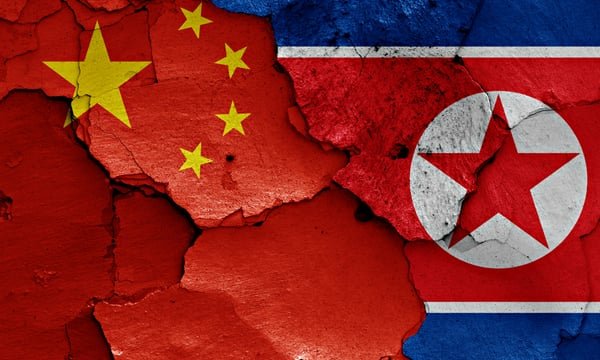
Introduction / framing of Xi's 2026 visit — its significance and what it reveals
Chinese leader Xi Jinping's state visit to North Korea from June 8-9, 2026, marked his first trip to Pyongyang in seven years, yet the engagement underscored a relationship defined more by inertia than renewal. Both sides emphasized historical bonds in official statements, but the absence of substantive outcomes revealed the strategic drift that has characterized Sino-North Korean ties since Xi's previous visit in 2019. This pro forma exercise served primarily to re-establish baseline diplomatic contact rather than to signal any fundamental realignment in Northeast Asia.
The visit's timing and limited scope carry particular weight for South Korean policymakers at the Ministry of Foreign Affairs and the National Security Council. Seoul has long monitored fluctuations in Beijing-Pyongyang relations as a barometer of potential shifts in inter-Korean dynamics. The lack of new military or economic commitments during the summit suggests that North Korea's outreach to alternative partners has reduced China's leverage, complicating Seoul's calculations about how to engage both capitals simultaneously.
Scholars at the Korea Institute for National Unification have noted that such high-level meetings often function as symbolic resets rather than catalysts for policy change. In this instance, the choreography reinforced continuity in a relationship strained by North Korea's self-imposed isolation and its subsequent pivot toward Moscow. The implications extend beyond bilateral ties to the broader architecture of the US-ROK alliance, where any perceived strengthening of China-North Korea coordination could influence extended deterrence planning.
The diplomatic choreography and symbolism
The two-day itinerary followed established diplomatic precedents without notable innovation. Xi participated in a large welcome ceremony at Kim Il Sung Square, conducted summit talks with Kim Jong Un, attended a banquet, and observed an arts performance on the first day. The second day featured a wreath-laying at the Sino-North Korea Friendship Tower, a visit to the Central Cadres School of the Workers' Party of Korea, and a small group luncheon with the leaders and their spouses before departure.
Op-eds published in Rodong Sinmun on the morning of Xi's arrival reinforced this emphasis on historical continuity rather than forward-looking initiatives. Neither the North Korean piece nor the one attributed to Xi announced concrete programs in trade, security, or technology. This deliberate restraint in messaging aligned with the overall character of the visit as a re-establishment of contact rather than a platform for new agreements.
For analysts in Seoul, the familiar symbolism carried an implicit message about the limits of Chinese influence. The Ministry of Foreign Affairs has historically tracked such choreographed events for signs of evolving North Korean priorities. The absence of joint statements on denuclearization or regional stability suggests that Pyongyang views the relationship with Beijing as one among several external options rather than its primary strategic anchor.
The pre-visit context: how relations deteriorated after 2019 and North Korea's pivot
Prior to Xi's 2019 visit, Kim Jong Un had made four trips to Beijing between 2018 and 2019, positioning China as a central element in his diplomatic strategy ahead of summits with South Korean President Moon Jae-in and U.S. President Donald Trump. The reciprocal visit by Xi to Pyongyang appeared to consolidate this pattern, yet no further bilateral summits occurred for years afterward. Russian President Vladimir Putin instead became the foreign leader most frequently engaged with Kim during the intervening period.
North Korea's COVID-19 lockdown period proved decisive in reshaping these external relationships. With severely restricted movement of officials and diplomats, the regime pursued internal reorganization while limiting external dependencies. Beijing found itself adapting to a more self-assured Pyongyang that no longer required Chinese mediation for its diplomatic initiatives. The first signs of renewed engagement emerged in 2025 when Kim traveled to Beijing for Victory Day commemorations, leading to Xi's reciprocal visit nine months later.
This seven-year gap has prompted reevaluation within South Korean academic and policy circles. Researchers at the Korea Institute for National Unification have documented how the post-2019 stagnation coincided with North Korea's growing assertiveness on the international stage. Seoul's diplomatic calculations must now account for a North Korea less tethered to Chinese preferences, potentially opening space for direct inter-Korean channels even as the US-ROK alliance maintains vigilance over regional security developments.
North Korea's triple-track strategy and strategic realignment
During the COVID isolation period, the Kim regime implemented a three-pronged approach encompassing internal stability, military modernization, and external realignment. Internal measures included efforts to re-centralize economic control and suppress black-market activities that had relied heavily on goods from China. These steps reduced certain forms of cross-border economic interdependence while strengthening regime authority.
The military track featured accelerated development of diverse nuclear delivery systems, including rail-launched ballistic missiles and strategic cruise missiles. This evolution reflected a deliberate move away from reliance on any external nuclear umbrella, including China's, toward independent strategic capabilities. The third track involved fundamental shifts in foreign policy, notably the abandonment of unification rhetoric with South Korea in favor of accepting two sovereign states on the peninsula and the decision to support Russia in its conflict with Ukraine.
These policy adjustments have direct consequences for South Korean strategic planning. The National Security Council has assessed that North Korea's reduced dependence on Chinese economic lifelines limits Beijing's ability to moderate Pyongyang's behavior. This dynamic complicates Seoul's efforts to coordinate with Washington and Beijing on sanctions enforcement and raises questions about the future viability of inter-Korean economic projects that once assumed stable Sino-North Korean commercial ties.
Implications for inter-Korean relations and Seoul's response
The 2026 visit occurs against the backdrop of North Korea's explicit rejection of unification as a policy goal. This stance has forced South Korean institutions, including the Ministry of Foreign Affairs, to reconsider long-standing assumptions about eventual reconciliation. Xi's largely symbolic engagement with Pyongyang does little to alter this trajectory and may even reinforce Pyongyang's confidence in pursuing an independent foreign policy.
Seoul's response has emphasized maintenance of the US-ROK alliance while exploring limited channels for dialogue. The absence of new Sino-North Korean military commitments during the summit provides some reassurance that immediate escalation risks remain contained. However, analysts note that working-level contacts in trade and other sectors could gradually rebuild Chinese influence, potentially affecting the leverage Seoul holds in any future inter-Korean negotiations.
Historical parallels with earlier periods of Sino-North Korean friction suggest that such resets rarely produce rapid policy convergence. The Korea Institute for National Unification has highlighted how past Chinese attempts to moderate North Korean behavior have yielded mixed results, underscoring the need for Seoul to develop autonomous diplomatic tools rather than relying on Beijing as an intermediary.
The Russia factor and its impact on Northeast Asian dynamics
North Korea's decision to align with Russia during the Ukraine conflict has introduced a new variable into regional calculations. This alignment provided Pyongyang with alternative sources of diplomatic and material support, reducing the urgency of restoring close ties with Beijing. Xi's visit therefore served partly to reassert China's position within a more crowded field of North Korean external relationships.
For the US-ROK alliance, this multipolar dynamic among North Korea's partners complicates coordinated pressure strategies. South Korean policymakers must now weigh the possibility that Russian-North Korean cooperation could indirectly affect Chinese calculations, particularly if Moscow offers technology or resources that Beijing has been reluctant to provide. The Ministry of Foreign Affairs continues to monitor these triangular interactions for signs of shifting balances.
The 2026 summit did not produce visible coordination between China and North Korea on Russia-related issues, suggesting that Pyongyang's outreach to Moscow remains an independent vector. This separation limits the visit's immediate impact on Northeast Asian stability while highlighting the fragmented nature of external influence over North Korean decision-making.
Economic dimensions of Sino-North Korean ties
Despite political stagnation, economic linkages between China and North Korea have historically provided a foundation for engagement. The post-COVID period saw gradual resumption of border trade, yet the regime's crackdown on smuggling reduced certain informal channels that once sustained local economies near the frontier. Xi's visit is expected to facilitate renewed working-level discussions on official trade, tourism, and technical cooperation.
These economic prospects carry implications for South Korea's own sanctions posture and inter-Korean economic initiatives. Any significant expansion of Sino-North Korean commercial activity could affect the efficacy of multilateral sanctions regimes that Seoul helps enforce. The National Security Council has therefore prioritized assessments of how renewed bilateral economic contacts might influence North Korea's overall resource position.
Longer-term, the visit's emphasis on continuity rather than new commitments suggests that economic normalization will proceed incrementally. This measured pace aligns with Beijing's preference for stability on its border while allowing Pyongyang to retain leverage derived from its diversified external relationships.
Prospects for military cooperation and what to watch
The central unanswered question following the summit concerns the potential for increased military cooperation between China and North Korea. The visit produced no public announcements in this domain, consistent with its overall character as a baseline-reaffirming exercise. Observers will therefore focus on subsequent working-level military contacts and joint exercises as indicators of any substantive shift.
South Korean defense planners within the US-ROK alliance framework remain attentive to signs that Beijing might extend greater security assurances or technology transfers. Such developments would represent a departure from the post-2019 pattern and could alter the regional military balance. The Ministry of Foreign Affairs has signaled that it will coordinate closely with Washington on monitoring these possibilities.
Historical patterns indicate that military cooperation between the two countries tends to advance cautiously and remains subordinate to broader strategic considerations. The 2026 visit's restrained outcomes suggest that any deepening in this area will require additional catalysts beyond the current diplomatic reset.
Conclusion: what this means for the Korean Peninsula going forward
Xi Jinping's 2026 state visit to North Korea reaffirmed the endurance of bilateral ties without resolving the underlying strategic drift that has marked the relationship since 2019. The pro forma nature of the engagement reflects a North Korea that has successfully diversified its external options while maintaining a baseline connection with its traditional neighbor. For South Korea, this configuration necessitates continued vigilance and adaptive diplomacy rather than expectations of rapid change.
The Korea Institute for National Unification and other institutions will continue to track the evolution of working-level contacts in the months ahead. Whether these contacts translate into meaningful military or economic cooperation remains the decisive variable for regional stability. In the interim, Seoul's foreign policy will prioritize alliance coordination while preparing for a Korean Peninsula in which North Korea operates with greater autonomy from Chinese preferences.
By Prof. David Park, Staff WriterThis article was produced with AI-assisted research and editorial support. Reporting is based on sources cited in the article.
What's Your Reaction?
 Like
0
Like
0
 Dislike
0
Dislike
0
 Love
0
Love
0
 Funny
0
Funny
0
 Wow
0
Wow
0
 Sad
0
Sad
0
 Angry
0
Angry
0

East Asia/Technology Correspondent at Global1.News. Seoul-based voice covering Korean politics, technology, business, and culture. Analyzes how technology and geopolitics intersect across East Asia.













Comments (0)