
Cross River Assembly members compromised – PDP candidate
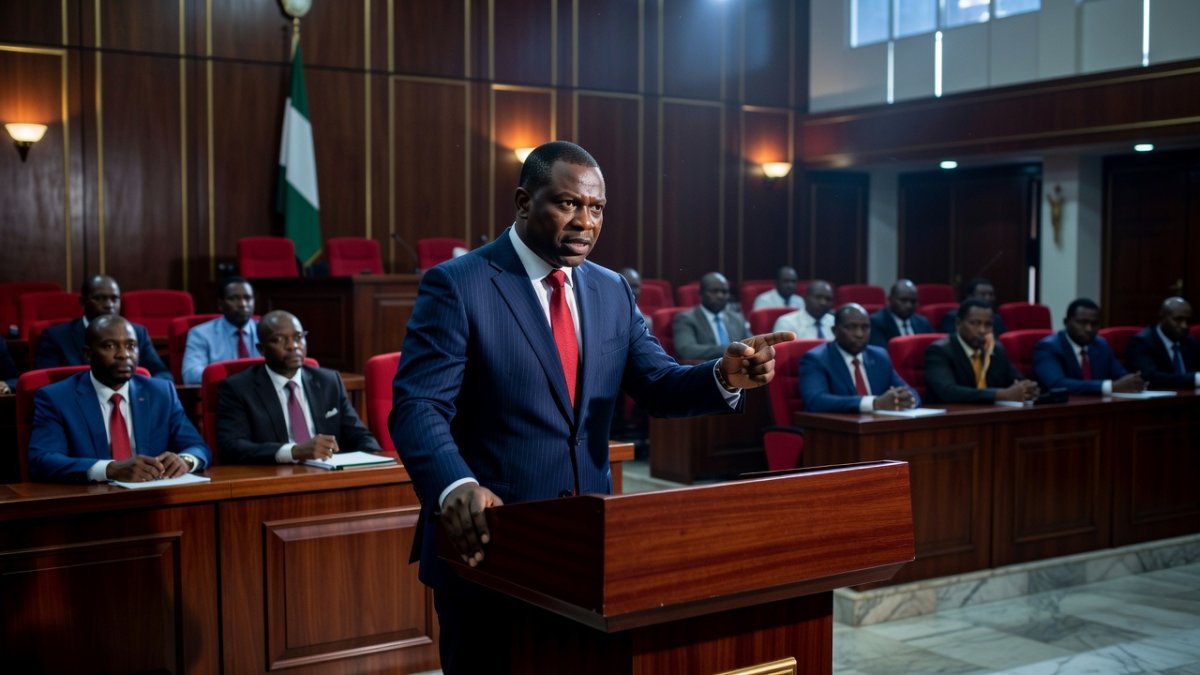
Cross River Assembly Compromised by Bribery and Executive Influence, PDP Candidate James Ibor Alleges
Breaking News — In a scathing indictment of legislative integrity in Nigeria’s South-South region, child rights lawyer and Peoples Democratic Party candidate James Ibor has accused members of the Cross River State House of Assembly of systemic bribery and capitulation to undue executive pressure, warning that the institution has been reduced to a rubber-stamp body incapable of independent oversight.
The Core Allegation
Ibor, contesting the Yakurr I State Constituency seat, stated that the 25-member assembly routinely trades legislative autonomy for financial inducements and political patronage from the executive arm. “The situation has deteriorated to the point where oversight functions exist only on paper,” Ibor told Global1 News. “Bills that should protect citizens are either watered down or killed outright when they threaten vested interests.”
He cited specific instances where assembly committees allegedly received payments ranging from ₦5 million to ₦15 million to fast-track or obstruct executive-sponsored legislation. While Ibor stopped short of naming individual lawmakers, he pointed to the assembly’s handling of the 2023 supplementary budget and recent local government autonomy debates as evidence of compromised processes.
Political and Historical Context
Cross River State has long grappled with governance challenges despite its natural endowments in tourism, agriculture, and potential deep-sea port development. The state’s debt profile stood at ₦147.8 billion as of Q3 2024 according to Debt Management Office data, with recurrent expenditure consuming over 68 percent of the budget. Lawmakers’ failure to scrutinise borrowing plans has drawn criticism from civil society groups for years.
The current assembly, elected in 2023 under an All Progressives Congress majority, has passed 14 executive bills with minimal amendments, including the controversial Cross River Investment Promotion Agency amendment that critics argue weakens environmental safeguards for large-scale projects. Ibor’s PDP is positioning itself as the alternative ahead of the 2027 general elections, making his claims a direct challenge to the ruling party’s narrative of transparent governance.
Economic Ramifications for Business and Investment
From a business perspective, a compromised legislature directly undermines investor confidence. Cross River’s tourism sector, which contributed an estimated ₦89 billion to the state’s GDP in 2023, relies on stable regulatory frameworks. When assembly oversight is traded for bribes, policies governing land use, taxation, and infrastructure contracts become unpredictable.
Foreign direct investment inflows into the state have remained below ₦40 billion annually since 2021, according to Central Bank of Nigeria figures, partly because potential investors cite weak institutional checks. “No serious operator wants to commit capital where the rules can be changed overnight through backdoor deals,” noted Lagos-based economist Dr. Ngozi Eze during an interview for this report.
Ibor linked the assembly’s alleged compromises to stalled projects such as the Calabar–Ikom highway dualisation and the Tinapa Resort revival, arguing that lawmakers have failed to demand accountability on contract awards and disbursement timelines.
Reactions from Stakeholders
The Cross River State House of Assembly leadership dismissed the claims as “political propaganda.” Speaker Rt. Hon. Francis Bassey stated that all legislative processes follow due process and that members operate under strict ethical codes. “We challenge Mr. Ibor to provide concrete evidence rather than throw mud,” Bassey said in a statement released hours after the allegations surfaced.
The state chapter of the APC described Ibor’s comments as “desperate electioneering,” noting that the PDP controlled the assembly for 16 years prior to 2015 without similar self-criticism. PDP state chairman Hon. Efiok Cobham, however, backed Ibor, saying the candidate’s legal background gives him unique insight into institutional failures.
Human rights organisations have called for an independent investigation. The Socio-Economic Rights and Accountability Project (SERAP) urged the Economic and Financial Crimes Commission to probe the allegations, warning that unchecked executive influence erodes separation of powers.
Implications for Child Rights and Broader Governance
As a practising child rights lawyer, Ibor has previously litigated cases involving juvenile justice and education funding in Cross River. He argues that compromised lawmakers have repeatedly failed to appropriate adequate resources for the Child Rights Act domestication and implementation. Budget tracking by BudgIT shows that only 41 percent of allocated funds for child protection programmes were released in the 2024 fiscal year.
Beyond social issues, the allegations raise questions about the sustainability of democratic institutions in states where executive dominance is normalised. Political analysts warn that if legislative independence continues to erode, states risk policy volatility that deters long-term economic planning.
Expert Perspectives and Data Insights
Professor Chukwudi Okoro of the University of Calabar’s Department of Political Science noted that Nigeria’s federal structure has historically concentrated power in governors’ offices, weakening state assemblies. “Cross River is not unique, but the economic cost is becoming visible,” he said. “When oversight collapses, misappropriation rises, and the state loses ground in competitiveness rankings.”
Recent BudgIT and Open Government Partnership data reveal that Cross River’s budget transparency score fell from 47 percent in 2022 to 39 percent in 2024. Lawmakers’ refusal to publish committee reports and contract details has contributed to this decline.
Way Forward
Ibor pledged that if elected he would sponsor a Legislative Independence and Accountability Bill mandating public disclosure of all constituency project allocations and committee voting records. He also advocated for increased civil society participation in budget hearings.
Whether these proposals gain traction depends on voter sentiment ahead of future elections and the willingness of federal anti-graft agencies to act on the fresh allegations. For now, the claims have reignited debate over the true cost of compromised institutions to Nigeria’s sub-national economies.
This is Sarah Okafor for Global1 News, reporting from Lagos. 🇳🇬
This article was produced with AI-assisted research and editorial support. Reporting is based on sources cited in the article.
What's Your Reaction?
 Like
0
Like
0
 Dislike
0
Dislike
0
 Love
0
Love
0
 Funny
0
Funny
0
 Wow
0
Wow
0
 Sad
0
Sad
0
 Angry
0
Angry
0
Africa Correspondent at Global1.News. Based in Lagos, covering politics, business, technology, and culture across the continent. Focused on telling African stories beyond the headlines — the innovation, entrepreneurs, and communities shaping the region's future.












Comments (0)