
Controversy Over Plan to Merge Korea's Military Academies — Will It Help or Hinder?
South Korea's Defense Minister Ahn Gyu-back has revived a long-standing proposal to consolidate the Korea Military Academy (KMA), the Naval Academy, and the Air Force Academy into a single National Defense Academy. The plan envisions a unified institution located in Jangseon, South Jeolla Province, with legislation expected in July 2026 and initial implementation targeted for 2
South Korea's Defense Minister Ahn Gyu-back has revived a long-standing proposal to consolidate the Korea Military Academy (KMA), the Naval Academy, and the Air Force Academy into a single National Defense Academy. The plan envisions a unified institution located in Jangseon, South Jeolla Province, with legislation expected in July 2026 and initial implementation targeted for 2028.
Controversy Over Plan to Merge Korea's Military Academies — Will It Help or Hinder?
Seoul, South Korea — July 4, 2026 — The proposal to merge South Korea's three service academies has reopened a fundamental debate about how the Republic of Korea Armed Forces should train its future officers. At stake is not merely administrative efficiency but the character of military professionalism in a country that remains technically at war with a nuclear-armed neighbor across the Demilitarized Zone.
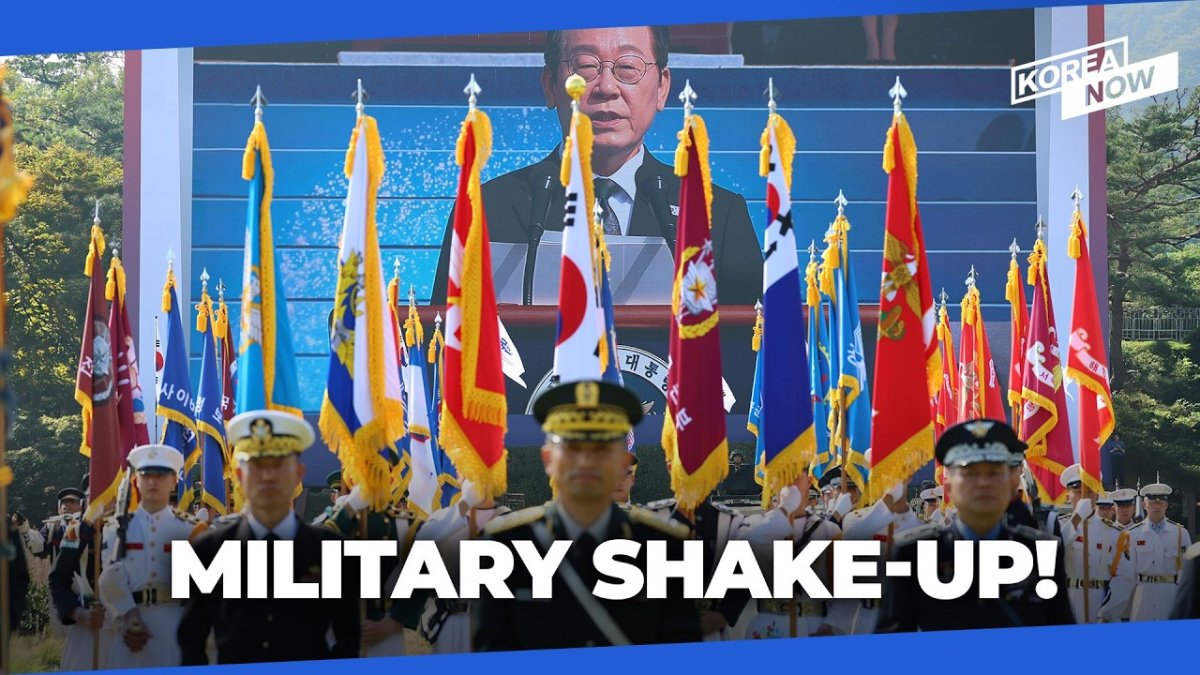
The Proposal for a Unified National Defense Academy
Minister Ahn has framed the merger as an overdue structural reform necessary to modernize officer education. The combined annual intake would total approximately 735 cadets, drawn from the current allocations of 330 at the Korea Military Academy, 170 at the Naval Academy, and 235 at the Air Force Academy for the 2027 academic year. The site selection in Jangseon reflects an effort to establish a purpose-built campus capable of supporting joint instruction while maintaining proximity to training facilities in the southwestern region.
Proponents argue that a single academy would streamline administration and foster early interoperability among the services. The proposal has circulated in defense policy circles for years, yet concrete legislative steps have remained pending until the current initiative under the Lee Jae-myung administration.
Details of the 2+2 Training Model
The envisioned curriculum follows a "2+2" structure. Cadets would complete the first two years under a common academic program at the joint institution before transitioning to two years of service-specific training at their respective service academies. This phased approach aims to balance shared foundational education with the technical and operational requirements unique to each branch of the armed forces.
Implementation remains contingent on passage of enabling legislation expected in July 2026. Full operational status is not anticipated before 2028, allowing time for curriculum development, faculty integration, and infrastructure completion at the Jangseon site. The Defense Ministry has indicated that cadets already enrolled under the current system would not be affected by the transition.
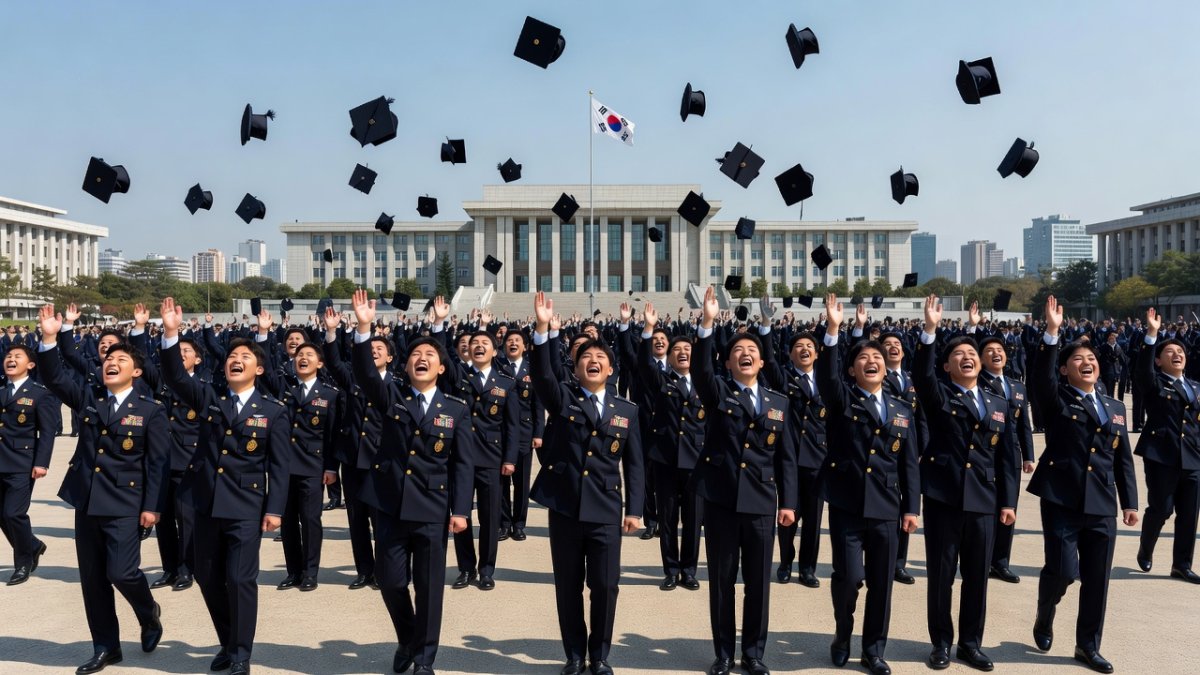
Strategic Arguments Supporting the Merger
Advocates within the Ministry of National Defense cite three primary benefits. First, the merger is expected to strengthen jointness by exposing future officers to inter-service perspectives from the outset of their education, potentially improving coordination in combined operations. Second, consolidation would reduce administrative redundancy across three separate institutions, freeing resources for training and equipment. Third, closer ties with civilian universities could elevate academic standards through expanded research collaboration and faculty exchange programs.
These objectives align with broader efforts to modernize officer education in response to evolving security requirements. The emphasis on joint training reflects recognition that contemporary military operations increasingly demand coordinated action across land, sea, air, and cyber domains — a lesson drawn from recent conflicts in Ukraine and the Middle East.
Alumni Opposition and Concerns About Haste
Alumni associations of all three existing academies issued a joint statement on June 16, 2026, demanding reconsideration of what they describe as a hasty and inadequately debated reform. The Korea Military Academy Alumni Association expressed "deep concern over the weakening of national security that the government's current hasty plans will bring."
Critics contend that service-specific expertise could erode under a unified structure, particularly in the later stages of training. They also question the absence of extended public debate and transparent review prior to legislative action. The opposition argues that a decision with profound implications for the country's defense architecture is being rushed through without adequate protections for students already in the system.
North Korean Threats and National Security Implications
The proposed merger's impact on readiness will depend on how effectively the 2+2 model transmits branch-specific knowledge during the final two years of training. Korea remains technically at war with North Korea, which maintains a large conventional military force and continues to advance its nuclear and missile capabilities. Any reform of officer training therefore occurs against a backdrop of persistent conventional and nuclear risks.
Critics maintain that preserving distinct service identities has historically contributed to specialized deterrence capabilities along the DMZ and in maritime and air domains. Former Joint Chiefs of Staff Chairman General Jung Seung-jo has warned that rushing to merge the academies could undermine officer training, service identity, and ultimately national security.
Broader Context of Korea's Defense Industry and Regional Dynamics
Korea's defense industry has emerged as a significant global arms exporter, supplying advanced platforms including K2 tanks, K9 howitzers, FA-50 light attack aircraft, and submarines to multiple international partners. Some observers find a notable dissonance between this outward commercial success and the simultaneous restructuring of domestic officer training institutions. The contrast highlights competing priorities between export-driven industrial growth and the internal coherence of the armed forces.
Regionally, the debate unfolds against a backdrop of evolving security dynamics in Northeast Asia. China and Russia have increased their military presence in the region, with recent incursions into Korean air defense identification zones. The United States remains South Korea's primary security ally, though questions about the long-term reliability of extended deterrence have grown more pointed in recent years. These external pressures add weight to the argument that Korea's officer corps must be prepared for increasingly complex and multidimensional threats.
Looking Ahead
The coming weeks will be critical as the National Assembly takes up the enabling legislation. The debate will test whether the Lee administration can build consensus across party lines on a matter of national security significance. Even if the legislation passes, the timeline to 2028 leaves considerable room for adjustments, and the strength of alumni opposition suggests that political resistance will persist throughout the implementation phase.
What remains clear is that the outcome of this reform will shape the Republic of Korea's military professionalism for decades. Whether the National Defense Academy can produce officers who combine joint operational awareness with the deep expertise required by each service branch is a question that only time and careful implementation will answer.
By Prof. David Park, Staff Writer
This article was produced with AI-assisted research and editorial support. Reporting is based on sources cited in the article.
What's Your Reaction?
 Like
0
Like
0
 Dislike
0
Dislike
0
 Love
0
Love
0
 Funny
0
Funny
0
 Wow
0
Wow
0
 Sad
0
Sad
0
 Angry
0
Angry
0

East Asia/Technology Correspondent at Global1.News. Seoul-based voice covering Korean politics, technology, business, and culture. Analyzes how technology and geopolitics intersect across East Asia.















Comments (0)