
China Executes Man for Poisoning Billionaire Gaming Tycoon Behind 3 Body Problem
The Poisoning That Shook China's Gaming Empire Xu Yao's execution in 2026 for the deliberate poisoning of Lin Qi in December 2020 marks a stark endpoint to a saga rooted in ambition and perceived betrayal. Lin Qi, who founded Yoozoo Games in 2009 and scaled it into a major player, died at 39 while serving as billionaire executive producer on Netflix's adaptation of Liu Cixin's
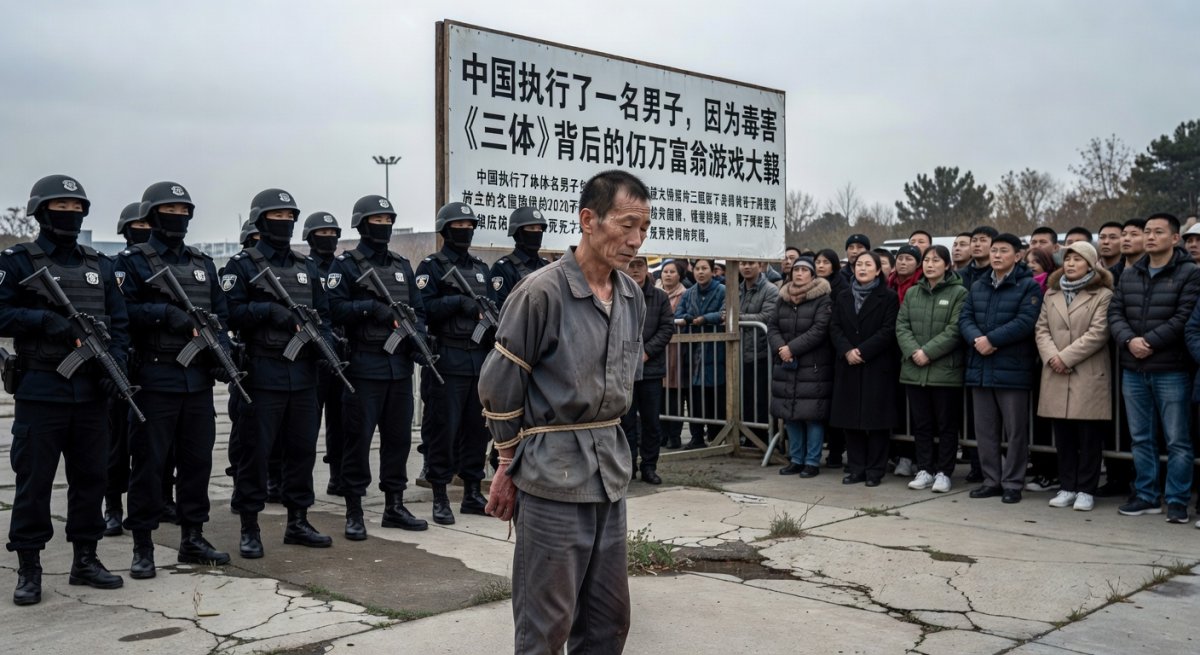
The Poisoning That Shook China's Gaming Empire
Xu Yao's execution in 2026 for the deliberate poisoning of Lin Qi in December 2020 marks a stark endpoint to a saga rooted in ambition and perceived betrayal. Lin Qi, who founded Yoozoo Games in 2009 and scaled it into a major player, died at 39 while serving as billionaire executive producer on Netflix's adaptation of Liu Cixin's Three-Body Problem.
The case centered on Xu Yao, a former colleague who played a direct role in securing the Netflix rights. When he felt marginalized after the deal closed, resentment escalated into homicide. A Chinese court convicted him of intentional homicide, applying the death penalty with finality.
Tech Sector Pressures Fuel Personal Grievances
China's gaming industry operates at breakneck speed, where early contributions to intellectual property deals often determine long-term influence. Yoozoo's rise from startup to global contender depended on timely partnerships like the Netflix arrangement. When Xu Yao sensed exclusion from the resulting power structure, the dispute moved beyond negotiation into lethal territory.
This pattern reveals how concentrated control over IP pipelines breeds intense internal rivalries. Founders like Lin Qi retain decisive authority, leaving collaborators vulnerable to sudden demotion. Such dynamics turn business friction into existential threats rather than routine disputes.
Legal System Prioritizes Deterrence Over Nuance
China's courts handled the homicide charge with characteristic efficiency, resulting in execution within six years. The death penalty remains a tool for signaling zero tolerance toward threats against prominent business figures. This approach underscores a legal philosophy that views corporate stability as intertwined with national economic priorities.
Unlike jurisdictions that separate commercial grievances from criminal acts more gradually, the system here compressed investigation, trial, and punishment. The outcome deters copycat violence but also raises questions about proportionality when personal betrayal intersects with high-value IP assets.
IP Tensions Exposed in Cross-Border Deals
The Three-Body Problem adaptation amplified scrutiny because it represented a rare successful export of Chinese science fiction to Western audiences. Xu Yao's involvement in the Netflix negotiations positioned him as an enabler of that visibility, yet subsequent credit allocation favored Lin Qi. This imbalance highlights recurring friction over who owns narrative rights once foreign platforms enter the equation.
Similar disputes recur across China's entertainment and gaming sectors, where rapid internationalization outpaces internal governance of contributions. The case illustrates how unresolved attribution claims can metastasize when one party controls both the company and the public narrative.
Corporate Culture and the Limits of Loyalty
Yoozoo's trajectory reflects a founder-centric model common in Chinese tech, where early hires receive equity promises that later prove conditional. Xu Yao's sense of being sidelined after pivotal work on the Netflix deal points to weak mechanisms for recognizing distributed input. When loyalty erodes without formal recourse, informal retaliation becomes more likely.
The poisoning incident therefore functions as a warning about unaddressed status anxiety within fast-growing firms. Executives who consolidate credit risk creating adversaries who possess intimate knowledge of operations and vulnerabilities.
Global Ramifications for China's Soft Power
International coverage of the execution linked the crime directly to the Netflix series, complicating China's efforts to project creative industries as harmonious. Foreign partners may now weigh personal security risks alongside commercial potential when engaging Chinese IP holders.
The episode also spotlights how domestic use of capital punishment for business-related killings collides with global norms on criminal justice. Observers noted the contrast between the series' themes of cosmic uncertainty and the state's decisive earthly response.
By Prof. Marcus Chen, Staff WriterThis article was produced with AI-assisted research and editorial support. Reporting is based on sources cited in the article.
What's Your Reaction?
 Like
0
Like
0
 Dislike
0
Dislike
0
 Love
0
Love
0
 Funny
0
Funny
0
 Wow
0
Wow
0
 Sad
0
Sad
0
 Angry
0
Angry
0

World Politics Analyst at Global1.News. Based in Beijing, covering US-China relations, global trade, and geopolitical strategy. Brings deep analytical perspective to the power dynamics shaping international affairs.















Comments (0)