
China's Ethnic Unity Law Targets Overseas Critics Worldwide
China's Ethnic Unity Law Extends Beijing's Reach to Overseas Critics The Case of Zhang Yadi Highlights Personal Risks for Activists Zhang Yadi, known as Tara, a 23-year-old Chinese student studying in the United Kingdom, now faces detention in China after posting a birthday wish for the Dalai Lama on social media and assisting with an online platform that promotes Tibetan right
The Case of Zhang Yadi Highlights Personal Risks for Activists
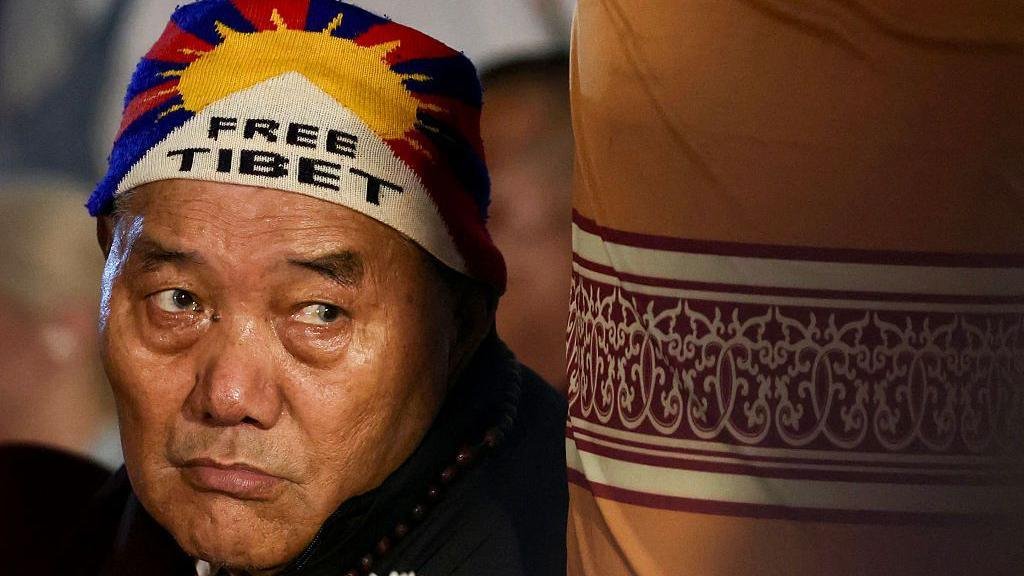
Zhang Yadi, known as Tara, a 23-year-old Chinese student studying in the United Kingdom, now faces detention in China after posting a birthday wish for the Dalai Lama on social media and assisting with an online platform that promotes Tibetan rights. She was reportedly arrested in Shangri-La, Yunnan province, in July 2025 during a visit home and is believed to face charges of inciting separatism and undermining national unity. Her situation illustrates the personal stakes for those who engage in advocacy from abroad, particularly as the Ethnic Unity Law prepares to come into force on July 1, 2026.
This incident serves as a concrete example of how expressions made outside China can lead to consequences upon return. Activists with family ties inside the country must weigh their public statements against potential repercussions for relatives, a dynamic that has long shaped the calculations of overseas dissidents.
Core Provisions of the Ethnic Unity Law and Article 63
The Ethnic Unity Law seeks to promote unity, social harmony, and a shared national identity among China's 56 ethnic groups. Its Article 63 explicitly authorises Chinese authorities to take action against organisations and individuals outside the country that are deemed to undermine ethnic unity or create division. This clause provides a formal legal basis for measures previously conducted through informal channels.
Critics, including Amnesty International's Deputy Regional Director Sarah Brooks, note that peaceful advocacy for minority rights could be interpreted as violating the law's standards. The provision aligns with Beijing's ongoing efforts to consolidate internal cohesion while projecting regulatory authority beyond its borders.
Deputy Justice Minister Hu Weilie has defended the measure as legitimate and necessary, rejecting foreign media descriptions of it as long-arm jurisdiction. The law's implementation will be phased in gradually, with initial focus on domestic education and administrative measures before broader application.
Historical Background of Sinicisation and Language Policies
China's push for sinicisation of minority groups began in the late 2000s and has included requirements that all children learn Mandarin before kindergarten and continue through high school. Earlier practices allowed students in regions such as Tibet, Xinjiang, and Inner Mongolia to study much of the curriculum in their native languages, including Tibetan, Uyghur, or Mongolian.
These shifts have coincided with documented actions in specific regions. In Tibet, authorities have detained monks and assumed greater oversight of monasteries. In Xinjiang, human rights organisations have recorded the detention of large numbers of Uyghur Muslims. In 2020, ethnic Mongolians held rare public demonstrations against reductions in Mongolian-language instruction.
A PEN America report has detailed the systematic removal of Mongolian-language content from Chinese online platforms. Such measures reflect a consistent policy trajectory aimed at strengthening a unified national identity, which Beijing views as essential for long-term domestic stability.
International Reactions from Europe and Rights Organisations
Members of the European Parliament have advised EU member states to review extradition treaties with China, warning that the law could affect European citizens and strain bilateral relations. This response underscores the potential for the legislation to complicate diplomatic and legal cooperation.
Erika Nguyen of PEN America has described Article 63 as a prompt for other countries to strengthen protections for exiled Tibetan, Uyghur, and Mongolian writers, artists, journalists, and activists. Rights groups anticipate that the law will accelerate the marginalisation of minority languages in schools and public life, narrowing spaces for open discussion even outside China.
These developments occur alongside Beijing's efforts to improve its international image, including recent visits by foreign leaders and eased visa rules for citizens of 77 countries.
Strategic Calculus Behind the Law and Its Broader Implications
Beijing's approach ties directly to its core objectives of preserving national unity as a foundation for economic strategies such as the Dual Circulation framework. By formalising extraterritorial provisions, the government seeks to deter overseas advocacy that it regards as threats to internal cohesion, particularly in sensitive regions.
Each side in this dynamic pursues distinct interests. Chinese authorities aim to limit external influence on domestic ethnic policies, while Western governments and parliaments weigh the balance between engagement and the defence of individual rights. Second-order effects may include adjustments in ASEAN and EU approaches to extradition and academic exchanges, as well as heightened caution among Global South partners regarding cooperation on minority-related issues.
The law's phased rollout will allow Beijing to calibrate enforcement while monitoring international responses. For activists with cross-border family connections, the measure signals lasting constraints on safe return and open expression.
By Prof. Marcus Chen, Staff WriterThis article was produced with AI-assisted research and editorial support. Reporting is based on sources cited in the article.
What's Your Reaction?
 Like
0
Like
0
 Dislike
0
Dislike
0
 Love
0
Love
0
 Funny
0
Funny
0
 Wow
0
Wow
0
 Sad
0
Sad
0
 Angry
0
Angry
0
World Politics Analyst at Global1.News. Based in Beijing, covering US-China relations, global trade, and geopolitical strategy. Brings deep analytical perspective to the power dynamics shaping international affairs.













Comments (0)